
Rich Retrospectives- The Room (2003)

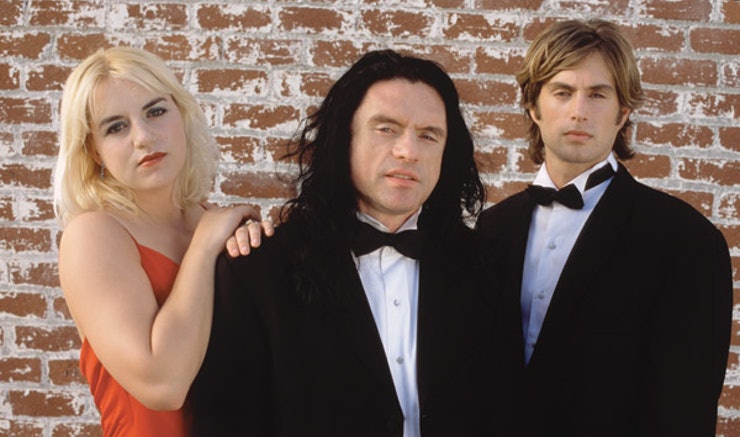
Tommy Wiseau is the type of filmmaker that I’d both readily thank for his work and mock him for it, and no sign is there of the popularity of that sentiment than in the upcoming film based on Greg Sestero’s memoir The Disaster Artist. The memoir on which the upcoming film is based tells a bizarrely genuine story of friendship in the film industry, as well as one of the simultaneous joys and dangers of belief in one’s dreams. The greater story of The Room‘s troubled production, the cult following that resulted from the film’s release, and the secretive life and career of its director and star, Tommy Wiseau, has gone on to attract endless media attention, but this story, along with the impending release of The Disaster Artist, has birthed a recurring question: Is The Room truly that amazing in its ineptitude? In preparation for its December release, I’m here to revisit the original cult classic and find out.

Johnny (Tommy Wiseau) is a successful banker who has it all: a beautiful home in California, a steady income, a caring best friend in Mark (Greg Sestero), and a beautiful girlfriend named Lisa (Juliette Danielle). This high life is turned completely on its head, however, as Lisa begins a clandestine affair with Mark. Tensions rise and Lisa’s scheming becomes more frequent, all while Johnny becomes increasingly paranoid of the truth behind his friends and their interactions with him. Adding to the gripping drama of the days that follow are completely unrelated side-plots involving drug use, breast cancer, and false pregnancies, all of which join together with the performances of the main cast and the central conflict to create a postmodern defiance of standards of quality in film.

In the interest of saving the most obvious criticisms for last, I’ll start out by saying that the plot above is as convoluted and hackneyed as it sounds. Taken on their own, the side-plots are already something you’d find out of a guidebook to drama film plots, but compressed together like they are here, they make for an overarching plot that would have been utterly tedious if it weren’t made hilarious by the acting. Tommy Wiseau’s performance is an unmistakably crucial element of that appeal, since his delivery hits a previously unimaginable middle ground between cartoonishly hammy and flatly wooden, and his physical acting (most notable, his erratic arm movements and repeated glances into the camera) render theoretically dramatic moments a complete joke. Still, credit is due for the performances of the rest of the cast, as their readily apparent frustration and boredom adds the type of glimpse into the troubled production that adds considerable to the already-present hilarity. The cinematography is also amateur, and at times, very bizarre, with city skyline transitions that wouldn’t be out of place on a low-budget sitcom and green-screens that look like low-quality CGI paintings. Typically, I’d be all too willing to write this off as a soulless, talentless independent effort, had it not been for the fact that Tommy Wiseau seems to refuse to be just a bad filmmaker.

If Wiseau’s on-screen gusto and history leading up to the production of The Room are to be believed, he is anything but dispassionate as a filmmaker. As much of a mess as this film was,  it’d be impossible to say that the obvious faults were born from careless disregard for the end product. In fact, as someone who’s decently well-read on the film’s production (and Greg Sestero’s recounting thereof), I’d say that passion is the reason why the film is as equally loved and mocked as it is. The Room is still an unambiguously bad movie, but not for the reasons critics typically list, nor for the things that personally irk me about the bad movies I’ve seen. On its own, the film was made memorable enough by Wiseau’s bizarre non-sequiturs (“I did not hit her, I did NOT… Oh hi, Mark!”) and by the incredibly out-of place football-throwing scenes, but knowing what audiences will soon know thanks to the upcoming Disaster Artist film makes it out to be the overzealous type of mess.

Like the man behind it, The Room is a troubled, bizarre, and clumsy picture of bad filmmaking, but it’s those qualities that drew people (me included) to it in the first place. There’s a certain mindset that’s imperative to enjoying this, but if you can ironically enjoy a bad movie, this is a must-see, assuming you haven’t checked it out already. Tommy Wiseau’s ironically-enjoyed masterpiece has to be seen to be believed, and seeing it now makes me even more excited to see the story behind it on the big screen.

Rich Retrospectives- Evil Dead 2

Happy Halloween, dear readers… BEWARE OF SPOILERS…!

Whether or not they’re fans of the horror genre, it seems that everyone has that one movie they watch every year on All Hallow’s Eve. Whether they’re looking for outright terror or a good mix of cheap thrills and laughs, moviegoers and critics everywhere tend to either seek out the latest in horror films or pay homage to the classics that make a good Halloween movie night. What strikes me as interesting about the most popular choices, however, is that they can all be more or less assigned to a genre of horror. For instance, you’ve got the Universal monster movies, like “Frankenstein”, “The Wolfman”, and “Dracula”; and you’ve also got the staples of the age of slasher movies, such as “Friday the 13th”, “A Nightmare on Elm Street”, and “Halloween”. Even more grounded thrillers like “Psycho” and the first “Texas Chainsaw Massacre” can be put into their own genre. But how do you talk about a movie that has a little bit of every layer of horror? Can a horror movie be shocking, hilarious, and uncomfortably tense all at once?

My answer would be yes, because Sam Raimi is in the film industry.

I, too, have a Halloween tradition. It’s with that, then, that I’d like to examine Evil Dead 2’s funny genius while offering some (hopefully original) perspective on one of my favorite movies of all time.

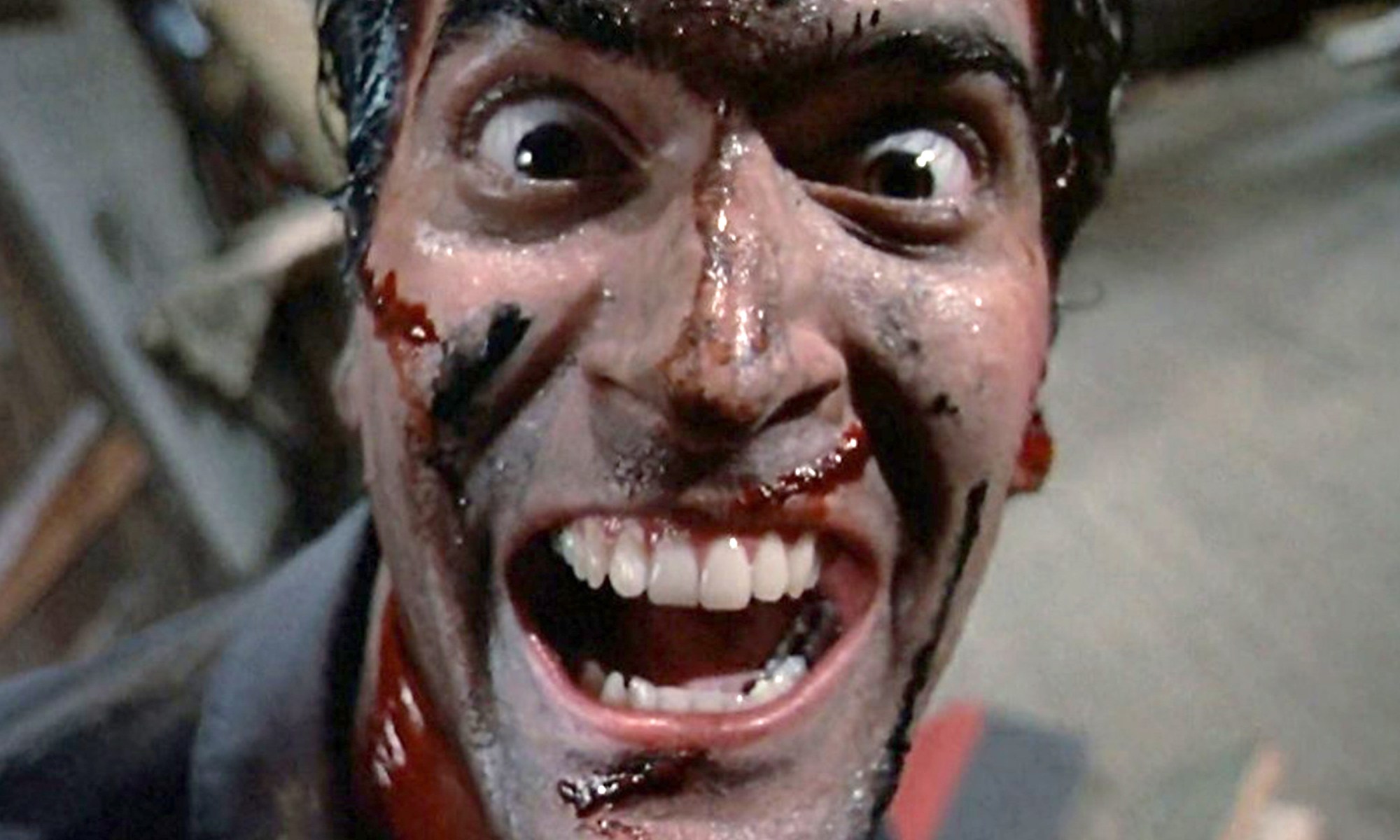
Less a sequel and more a fundamental remake of Sam Raimi’s cult classic horror film, Evil Dead 2 begins with Ash Williams’ romantic cabin getaway coming to a twisted and bloody halt upon the discovery of the Necronomicon ex Mortis”, the book of the dead. Chaos, demonic possession, and mass dismemberment follows the pre-recorded reading of the book’s passages, and Ash is put through the fight of his life. As if being forced to kill his girlfriend, fighting his demonically possessed hand and being stranded in the cabin weren’t enough, the daughter of the book’s researcher comes to the site of the book’s finding with a small research team, determined to discover the fate of her father and the secrets of the book. Has salvation come for the broken Ash Williams? Or is Annie and her ragtag group just as doomed as others who summoned the book’s monstrosities?

A simple setup, to be sure, but as with most premises, success is all in the execution. The most obvious high point in this regard is definitely Sam Raimi’s mastery of camera work. Even in one of his earlier works, Raimi’s point-of-view tracking shots were spot on, and special mention must be given to the scene in which the unseen threat chases Ash all throughout the cabin. So dedicated was the director to the tension and panic of the scene that the camera even smashes through the window of a car and through the door inside the cabin. Actually, the practical effects as a whole are incredible, and there’s an impressive dimension in the fact that the actors and sets are actually getting as messy and bloody as they appear to be. Second most obvious is Evil Dead 2‘s masterful balance of horror and humor. Part of the beauty of this “Evil Dead” movie in particular is its lack of limitations in what could be a threat. Corpses, dismembered limbs, trees, and even furniture are out to get the heroes, and the result is as unnerving as it is hilarious. The horrific deaths of the cast are played mostly straight, but there’s a hint of Three Stooges-style slapstick to the more violent scenes. Ash in particular is as hilarious as he is tragic in how much abuse he takes from the “deadites”, and Bruce Campbell’s bombastic portrayal of the character’s initial cowardice and growing heroic charisma is a definite highlight of the movie.

Speaking of the protagonist, one thing that I think is overlooked is the movie’s narrative. It’d be easy to set the focus solely on the gory death scenes and gratuitous dismemberment, but serious attention is given to Ash’s struggle for survival. While some of that struggle is played for laughs, the movie makes it clear that the pain he’s receiving is just as mental as it is physical. The fact that the whole environment is against the main characters makes for an understated sense of tension, since literally anything could kill them or posses them at any moment. That tension makes for unparalleled catharsis after seeing Ash in those famous action scenes, and the transparent emotional investment in Ash’s struggle can be traced back to what makes the film work as a whole: it’s heart. It’d be bold to ever accuse Sam Raimi of being dispassionate, even if you’re not a fan of the genres he typically contributes to. It’d be simple to make a cabin-in-the-woods splatter fest, but since “Evil Dead 2” is a Sam Raimi film, its also a slapstick comedy, a character study, and a supernatural, eldritch horror film all at once, and the result is almost perfect because of it.

I think Bruce Campbell described the film perfectly, in-character:

Groovy. 

Announcements- COM 641 and More

Before explaining the out-of-the-ordinary content that will pop up in addition to my regular reviews, I’d like to thank everyone who’s supported my reviews thus far. “Rich Reviews” wouldn’t be what it is without all of you, and it’s out of consideration for my readers that I’m posting this update.

This week, I’m starting to work on weekly assignments for a Social Media class, which is part of my course requirements as a communication graduate student. I’ll do what I can to keep the posts I write for this class off my other platforms, but this site is needed to ensure consistency and moderation in how many sites and platforms I’m managing. In other words, it will be much more convenient for me if all of my required content is in one place. This class is just another step in furthering my career and pursuing everything that I’ll need in the media industry, and its with this mindset that I’ll be keeping my class content and reviews on the same site. Again, I can’t thank you enough for your understanding, and I hope that the temporary change in content does not confuse you.

That said, reviews ARE on the way, and I have every intention of sticking to my bi-weekly schedule. In fact, I have something very special planned for the Halloween weekend: TWO posts of my own decision, including a review of my personal favorite horror movie of all time, and a second post (which will be kept secret until Halloween. Thanks for all of your support, and stay tuned for more content!

Rich Reviews- Blade Runner 2049

Try as we might to nail down what makes great art, filmed or otherwise, it’s an overlooked truth that audiences typically don’t know what they want until they have it. Critics and audiences alike learned this in 1982, when Ridley Scott’s cyberpunk classic “Blade Runner” was released, for while the film was eventually lauded for its explorations of humanity and extraordinary vision of a dystopian future, it was initially dismissed by the public at large and laughed off by the producers that tried to mold it into a patronizing mess. Sadly, it seems history is repeating itself, since the box office returns for its unexpected follow-up are humble in comparison to other major releases. Worse yet, I’d be lying if I said I had the brightest of expectations for a sequel to a film that functioned perfectly well on its own, let alone one more than three decades after the fact. After all, what would modern film techniques and an expansion of the rich world building of an already timeless deconstruction of what it means to be human?

Not much, I thought, before the film managed to render me unable to speak out of shock and amazement. How unqualified I feel for this one…

Set thirty years after the events of the first film, “Blade Runner 2049” tells the story of the return of replicants as the work force of the future. Newer models are built simply to obey, while older, more self aware replicants are hunted as they were thirty years ago. One of the latest and skilled in the new generation of “Blade Runners” is K (Ryan Gosling), a replicant whose entire existence is his work. His dedication to his purpose is put to the test, however, when signs of a replicant childbirth are uncovered. In hopes of preventing human-replicant conflicts from coming about again, K sets out to find the child and erase proof of it before it reaches the wrong individuals. In his search for the true answers to the natures of replicants and humanity, K faces numerous obstacles, including interference from his superiors, the shady dealings of a replicant manufacturing industry, and the  apparent disappearance of ex-blade runner Rick Deckard (Harrison Ford).

Naturally, the complex questions on humanity and what the future of technology means for its definition had to continue in a sequel to a film as thematically driven as the original Blade Runner, but simply acknowledging the presence of those questions in “2049” doesn’t even come close to doing enough justice to how wonderfully crafted the film surrounding them is. In fact, this new “Blade Runner” is so successful in what it sets out to do that I struggled to find anything wrong with it. Every element, both great and small, serves the setting, story, and themes in a way that renders it something I’d call perfect. The effects and visual design, for instance, are spot-on. In spite of the obvious technical updates, this still is the new Los Angeles from the Blade Runner universe, and both its considerable scale and simultaneous sense of technological wonder and underlying moodiness are encapsulated in every shot. Speaking of those shots, the cinematography feels like it was pulled straight from Ridley Scott’s original masterpiece, and especially noteworthy is the film’s mastery of sustained character shots. Audiences may have mixed feelings about the deliberate pace of the film and its editing, but with a tone and thematic mood like “2049’s”, there’s no better approach than to let every little detail and emotion sink in.

Of course, those emotions can only go as far as the performances, but “2049’s” second-best aspect just so happens to be its cast and their collective performances. Fans of the original will inevitably expect to be treated to a hardened, yet vulnerable and gripping performance from Harrison Ford (and be right in those assumptions), but something that must be affirmed here and now is Ryan Gosling’s award-worthy turn as K. Gosling’s strength has always been nuance, and here is no exception. He delivers exactly what reactions one would expect of a professional detective on the edge, but with a level of sensitivity and uncertainty that’s neither understated nor overt, and this sort of character demands that kind of moderation. That sort of perfection rings true for the entire cast, however, as even smaller roles like those of Dave Bautista and Jared Leto command a viewer’s presence and leave a lasting impact. Unsurprisingly, though, this “Blade Runner’s” greatest strength continues to be theme and tone. What stands out this time, however, is how this sequel expands on the existential questions of its predecessor that manages to be simultaneously refreshing and expected in a way that’s so unique that the only due praise I can give it is to demand that everyone see it. In fact, that sort of aggressive recommendation is the only way I can see this review ending, since its position as a sequel to a decades-old sci-fi classic made it’s mastery of cinematic artistry and thematic expression more remarkable than words can convey.

Yes. “Blade Runner 2049” is that good.

Rich Reviews- It: Chapter One

In last week’s review, I discussed the difficulties of film adaptations of lengthy source material, using Stephen King’s best-selling novel “It” as reference material while simultaneously praising the concept of a duology based on the thousand-page book. The most recent film, covertly titled “It: Chapter One”, serves as the first half of that aforementioned duology, and it serves to simultaneously deliver a faithful, loving adaptation of the beloved epic and render the concept fresh and modern enough that the by now-popular story doesn’t grow too stale. The result not only succeeds where the 1990 miniseries fell short, but stands so strongly as its own self-contained horror film that I feel VERY inclined to call this one of my favorite movies based on a Stephen King story.

Following the two-halves structure of the original novel, the first film focuses entirely on the childhoods of the Losers’ Club, consisting of stuttering Bill Denbrough, intellectual, obese Ben Hanscom, wise-cracking Richie Tozier, hypochondriac Eddie Kaspbrak, abused tomboy Beverly Marsh, Jewish boy scout Stan Uris, and African American farm boy Mike Hanlon. The seven are brought together by their mutual encounters with a shape-shifting, fear-mongering monstrosity that primarily manifests as a malicious clown named Pennywise (Bill SkarsgÃ¥rd), and are particularly driven by the death and disappearance of Bill’s younger brother, Georgie. While understandably terrified of the multi-formed menace due to its unpredictable nature and resonance with their own personal demons and troubled home lives, they soon realize that their options are very slim, and limited to either fighting the creature together to allowing its centuries-long grip on their town of Derry to continue.

While the previously-reviewed miniseries based on “It” leaned more heavily on the slice-of-life tone of the story in terms of atmosphere, this film dials back those aspects a notch or two in favor of balancing them out with pure horror. Fortunately, the result of that approach manages to be infinitely more terrifying. While the old film placed more emphasis on the titular creature’s clown form (and Tim Curry’s portrayal thereof), this film sticks more to the source material, in that the monster’s forms are consistently varied, bizarre, and and scary in their own ways. Pennywise himself is also played as much more direct in his hunt for the protagonists, and Bill SkarsgÃ¥rd nails the clown’s novel-rooted sadism and gleeful joy in scaring the protagonists. This Pennywise mocks and tortures his victims mercilessly whenever he appears, and those moments are made more effective due to his appearances being limited to only a few throughout the movie. In addition, the film’s scares end up being much more shocking and powerful as a result of its faithfulness to the details (and the gore that follows), with Georgie’s tragic demise in the film’s beginning being particularly gut-wrenching. When the movie attempts a scare, it almost always succeeds due to the well-timed direction, expertly adaptational editing that moves at the necessary pace at any given time, and the pleasantly surprising presence of practical effects.

That said, the film isn’t so wrapped up in the horror side of things that it forgoes dedication to the characters and their own stories. Humorous, touching scenes of the characters are littered the film’s screen that make the scares as shockingly well-executed as they are, and the child actors playing them all give natural and impressive performances that render the Losers as endearing as one might hope them to be. The actors all capture their characters to a tee, and that sort of dedication to the novel’s spirit is another stand-out feature of this film. Though the time frame has been updated to more modern times (with the past being set in the 80’s as opposed to that decade being the present time in the novel), this still is Stephen King’s story, and the inhabitants of Derry manage to be just as one would expect them to be without rendering the narrative predictable. The story, naturally, is still trimmed down, but the crucial details and memorable scenes from its source material are executed in a way that’s sure to surprise average filmgoers and impress fans of the source material. “It” is so well-executed is in its ambitions that I’m barely even going to acknowledge the paltry few pacing problems the story takes from adapting its source material.

And this is all for good reasons- “It” is a terrifying, well- crafted, and touching send-up of one of Stephen King’s most popular stories, and you owe it to yourself to catch it in theaters if you’re a horror buff or a fan of the original novel.


Rich Reviews- Stephen King’s It (1990 miniseries)

The works of acclaimed horror and fantasy author Stephen King rank among the most difficult subjects for film adaptation in recent memory. The verbose, intricately detailed, and massively interconnected nature of his books (“The Stand and the “Dark Tower” series in particular) render the narratives at play so deliberately paced that any sort of cinematic interpretation runs the risk of being redundant and too slow for its own good. Still, while difficult, such adaptations are by no means impossible, as shown by the fact that the beloved epic “It” was adapted twice with similar levels of considerations of length. While the recent film opts to be a theatrical duology, the 1990 adaptation was made for T.V. and split into two parts. In preparation for the former, I was excited to take a look back on the latter, and the result was as entertaining as it was disappointing on some fronts.

“It” is as much a slice-of-life story as it is a tense horror-thriller, chronicling the life and times of a group of children (dubbed “The Losers’ Club) in the 50’s, as well as their adulthoods nearly three decades later, and focusing specifically on their struggles with a malevolent being that threatens their hometown of Derry, Maine. The titular monstrosity is a being that preys on children, taking numerous forms (especially those of its victims’ greatest fears), but most prominently appearing as a chillingly jovial clown dubbed “Pennywise” (played in this version by Tim Curry). The impending members of the “Losers’ Club” are brought together by their encounters with the nameless horror, along with the losses of friends and families to its presence, and after fighting it once and winning in their youth, the seven “Losers”, Bill, Ben, Richie, Beverly, Eddie, Stanley, and Mike are forced to reunite when it returns in their hometown in their adulthoods.

The original book was, in reality, about the length of two novels, with each half of the text encompassing the childhoods and adulthoods of the main characters and entire chapters detailing the backstories of EVERY character. Naturally, the length of any adaptation for something this large has to simultaneously streamline the details while also remaining faithful to the overarching content. With this in mind, the old miniseries does well in the way of a faithful, yet trimmed down adaptation, but does so with the caveat of many flaws. On the positive end of things, the film has a solid sense of tone. The atmosphere is that of a Goonies-style coming of age story mixed with supernatural horror, and the blending of youthful adventure with instinct-rattling imagery is still an effective one in spite of its campiness. Speaking of which, Tim Curry’s performance as Pennywise continues to be the undisputed highlight of the series, as he mixes eerily jolly humor with genuine menace well enough that neither aspect derails one another. In fact, his performance is so great that it renders the rest of the movie something of a disappointment, for while Curry is able to find that necessary balance, the series itself does not. This interpretation of the book’s events leans more toward the coming of age story involving the Losers, and while there are genuinely creepy moments behind It’s appearance, they never quite approach “terrifying” levels. Much of this problem can be blamed on the acting. Barring the child actors, Tim Curry, and John Ritter as arguable deuteragonist Ben (as an adult), the performances range from passable to downright over-the-top, reminiscent more of low-budget theatre than a narrative such as this one. Still, if nothing else, the aforementioned style has made the “It” miniseries memorable enough to endure, and while it’s nowhere near as gripping as I remember it, I’m certain it will make for great comparison material for the release of the new movie.

All in all, “It” is deeply flawed, but charming and original enough that I’m hoping the new movie stands out in different ways than this one.

Rich Reviews- Death Note (2017)

Screen-Shot-2017-03-22-at-12.03.16-PM-1280x539.jpg

The recent Netflix film adaptation of “Death Note”, as with most American film adaptations of popular anime, was something of a controversial subject among recent films, since its two-hour structure and americanized take on the eponymous award-winning manga/anime franchise rendered changes from the source material as inevitable as the scrutinization those changes would receive from fans. Still, “Death Note” is a grounded enough thriller-mystery that an American adaptation wouldn’t be utterly impossible, and speaking as a casual fan of the beloved anime, the makers of filmed seemed to  have really cared about delivering a fresh and faithful take on the story. While that dedication is shown in places, however, the American “Death Note” film falls apart due to its shortcomings in others.

High school student Light Turner (Nat Wolff) finds himself endlessly bored with his life of academic achievement as he witnesses rampant crime both in his hometown and around the world shown to him by the news. Equally bored is the “shinigami” (death-god) Ryuk (Willem Dafoe), who haphazardly drops his own “Death Note” into the mortal realm to see what it does in the hands of whatever human gets their hands on it. This notebook has the power to kill whoever’s name is written onto the pages, and Light ends up being that human. While skeptical at first, Light finds that the power is very real, and soon becomes dedicated to the elimination of evil and the rise of a new god. The string of supernatural  deaths that follow catches the world’s eye, as Light is recognized as the far-reaching, invisible force of justice known as “Kira”. Roped into the clash of justice and the cycle of death is Mia Sutton (Margaret Qualley), an idealist cheerleader who discovers Light’s secret and joins him as a partner/girlfriend, as is the Interpol detective known only as “L” (Keith Stanfield), who quickly comes to a conclusion that “Kira” is one person and must face true justice.

As one could probably tell, this story is something that should be carefully and deliberately handled due to how much plot is going on at once, and certainly not the type of narrative that should start off with Light obtaining the Death Note within the first two minutes. In fact, it’s truly remarkable how quickly the film’s pacing problems become apparent, as the rules of the Note, Light’s background (and that of his family), and his transformation into Kira are all rushed out much too quickly. Compression of the plot was inevitable, given its standard theatrical length, but Light’s deliberation on the moral issues at play are completely absent, as are the charisma and honor student charm that defined the original Light Yagami in the anime. This Light is much more overt and bitter about the problems surrounding him, which can lead one to wonder how he hasn’t been traced to the killings. While this take on the character works better for an two-hour American interpretation, it makes the character much less relatable as a result of the cut time. The same rings true for Mia (named Misa in the original), for while I agree with the decision to make her a cheerleader as a smaller-scale equivalent to a pop idol, I also feel that her “romance” with Light was much too idealized and rosy in comparison to the visibly unhealthy dynamic in the original. Nat Wolff and Margaret Qualley try their best, but the off-putting takes on their characters and the rapid pace of the narrative undermine their efforts considerably.

That said, the movie is far from being bereft of positives. The direction and cinematography are both eye-catching on a visual level and reminiscent of Death Note without being stale. The shots of the Note-induced deaths, for instance, are appropriately wince-inducing and well-framed. In addition, Willem Dafoe was cast perfectly as the voice of Ryuk, as he balances otherworldly menace and borderline childish fun-seeking quite well.  What really caught my attention, though, was Keith Stanfield as L, who nails the characters brilliance, quirkiness, and curiosity while making his more public appearances totally believable from an adaptational standpoint. Such elements make me feel bad about designating it as just mediocre, for while the the creators really tried, there’s simply too much going on for one movie, to the point where I can only wonder how much it would have improved if it were a full Netflix series.

By itself, the film is as compelling as it is unfocused and muddled. As a “Death Note” adaptation, it’s a loving one, but ultimately misguided. Watch at your own risk.

Rich Reviews- Spider-Man: Homecoming

bg_spiderman.png

The Marvel icon Spider-Man has had a truly fascinating history on the big screen over the past several years. From the campy, yet enjoyable film trilogy by Sam Raimi to the more grounded, yet deeply flawed Amazing Spider-Man movies by Mark Webb, the film medium had no shortage of different interpretations for the web-slinger. Now, with Marvel Studios and Sony coming to something of a truce over the film rights to the character, Spider-Man recently made his solo film debut in the beloved Marvel Cinematic Universe, and the result is as charming and fun as it is compelling.

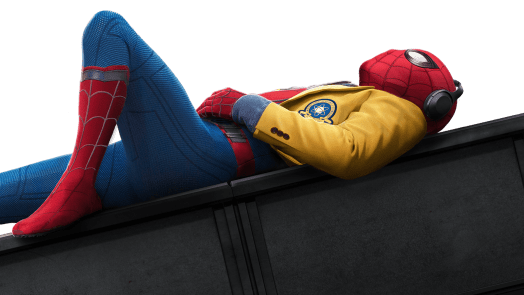
Set shortly after the events of Captain America: Civil War, teen genius Peter Parker (Tom Holland) seeks to prove himself as a worthy candidate for membership in the Avengers. In spite of seeing numerous heroics as Spider-Man firsthand, Tony Stark (Robert Downey Jr.) is adamantly reluctant to allow the inexperienced youngster to graduate from neighborhood crime-fighting. Things become even more complicated when a close friend discovers his dual identity and when Peter discovers Stark’s technology being sold on the black market by a team of disgruntled maintenance workers. When their leader, Adrian Toomes (Michael Keaton) threatens both New York and the safety of Peter’s loved ones, the boy known as Spider-Man is forced to choose between his heroic instincts and safety from the danger he knows lies ahead.

Having excitedly awaited the web-slinger’s solo movie in the MCU since his appearance in Civil War, I’m happy to say that this film delivers the best of any Spider-Man story, and this is thanks in no small part to Tom Holland’s endlessly charming take on the character. He effortlessly captures the wisecracking, fun-loving side of Peter Parker while in the costume, but what makes his performance truly noteworthy is that he also convincingly portrays his not-so-hidden teenage angst and awkwardness, something that previous actors had a harder time pulling off convincingly. Actually, “natural” is the best way to describe the performances of all the cast, and what’s especially impressive is that the comic-esque action and story don’t detract from the fact that the characters are vulnerable human beings. Even the villain manages to be an understandable and intriguing, if not sympathetic, character within the chaos of the story, and Michael Keaton’s portrayal of that dichotomy is a highlight among the already-excellent cast.

That said, the film isn’t too caught up in the melodrama that fun is completely absent. In fact, the humor (often mixed into the web-swinging action scenes to great effect) is perfectly in tune with the spirit of the character, and not since either of the Guardians of the Galaxy movies did I laugh this hard at a Marvel movie. Spider-Man: Homecoming isn’t flawless of course, since its status as a MCU film takes away from the self-containment of the story a bit, but there’s much less to really shake your head at than in previous big-screen takes on Spider-Man.

In short, Spider-Man is an almost perfect movie for fans of the character or people looking for a fun superhero movie: funny, sometimes touching, and with at least fifty things to put a smile on the faces of moviegoers.