Rich Retrospectives- Top 10 Movie Dads

Happy Father’s Day, readers.

It should come as no surprise that there are countless depictions of fatherhood among movies of various ages and genres, and in tribute to some of the most memorable of those depictions, I’ve compiled the entries for Rich Reviews’s first “Top 10” list. Keep in mind that, as with future lists on this site, the entries are more subjective and will consist primarily of films I’ve seen as of the writing. As such, personal entries or recommendations I might have missed are welcome and open for comments and discussion. In addition, a spoiler warning is warranted for this list, since I’ll be discussing each of these dad’s actions in fair amounts of detail. Still, any sort of father (biological, adoptive or otherwise) is fair game here. All of that said, this one’s a list of the most dedicated, determined, or otherwise intriguing dads that I’ve thus far encountered on the big and small screens. Starting with…

10. Bryan Mills (Taken) 
article-2348048-15539345000005DC-106_634x427
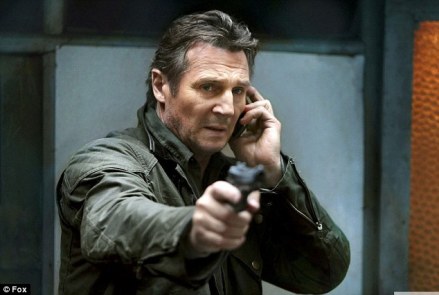
One could hardly accuse this movie of being the brightest or most original action movie out there, but fewer people could accuse Bryan Mills’s fight to save his daughter to be free of emotional investment and thrills. This retired CIA operative might be actively looking to avoid his old line of work, but that desire erodes completely when his daughter is kidnapped to be sold by sex traffickers. Mills’s determination and dedication to his daughter’s rescue is visible through every bone-crunching scuffle he’s forced into, and the result manages to be quite touching at times. He warned the kidnappers he’d find and kill them, and he meant it.

9. Mr. Incredible/Robert Parr (The Incredibles/The Incredibles 2) Mr._Incredible.png
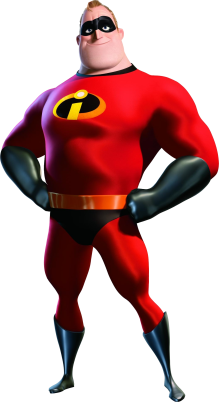
This superhero-turned-family man lands a bit lower on the list for letting his mid-life crisis get the better of his judgement during some of the film’s length, but still makes it for nonetheless demonstrating a genuine dedication to his family through all of those struggles. When he’s not guarding the city from harm with his inhuman strength and durability, he’s raising his kids with a mix of pride, sternness and humor that one could probably expect of a super-heroic dad. While he does go in over his head at times, Mr. Incredible cemented himself onto this list for being as approachable as he was as a father to Dash and Violet, and there’s proof enough of his commendable parenting in the unbridled rage he holds for the villainous Syndrome for threatening his family in the third act. Best of all the sequel seems to lean more heavily on the family dynamic, and I can’t wait to see how he keeps it up.

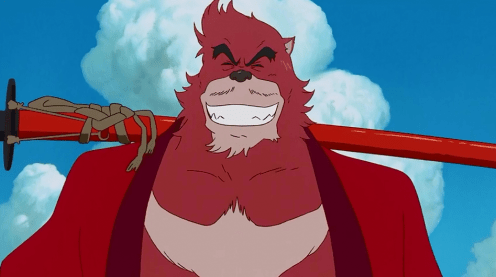
8. Kumatetsu (The Boy and the Beast)
abf137ef0327b0b5db695a382b6bd52c.png
Movies don’t always acknowledge it, but fathers are seldom perfect. Oftentimes, mistakes are made for the sake of children,  and the underrated anime film The Boy and the Beast shows that it’s especially tough in an adoptive family dynamic. In spite of his roughness with his adoptive son Kyuta/Ren, however, Kumatetsu still had enough compassion in his heart to care for the boy after the death of his mother and teach him the values of courage and determination in a hidden world populated by beast-people. At once a Rocky-esque coming-of-age story and a commentary on the nature of father-son dynamics, The Boy and the Beast is a thrilling and heartwarming story of an adoptive father’s eventual acceptance of a son he might have considered weak, and their dynamic is so wonderfully memorable that I’m glad this list allowed me to recommend seeing it for yourself. And speaking of imperfect fathers…

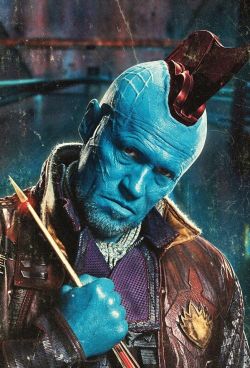
7. Yondu Udonta (Guardians of the Galaxy Vol. 1/2)
04ff5d8bdb98106ecf48885e4c73cc61--yondu-udonta-yondu-art.jpg

One might think it’s a stretch, but no. Yondu very much is an adoptive father to Peter Quill/Star-Lord, and a terribly flawed one at that. In fact, most of the appeal of the Guardians of the Galaxy movies is seeing the evolution of a makeshift family firsthand. Don’t let the science-fiction setting detract from the drama, because Yondu’s increased understanding of his relationship with Peter is very much reminiscent of more prickly parental dynamics in real-life. So, how does the borderline abusive space pirate make this list? By proving himself at the very end of the second film, in which he finally admits that he views the Guardians’ leader as his son and acts on that sentiment in the most meaningful way possible. Lineage be damned, Yondu really is Peter’s “daddy”.

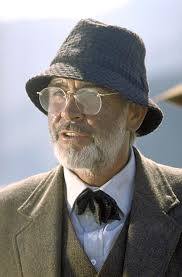
6. Henry Jones Sr. (Indiana Jones)
main-qimg-7244708d77012566e026bdc77636f600-c.jpg

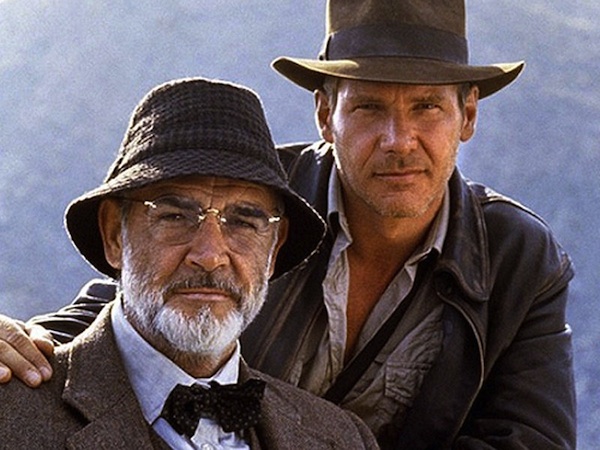
Redemption and overcoming parental flaws seems to be a pattern with this list, but the first Dr. Jones is a much more lighthearted example of this. In spite of a brief disappearance, the father of “Indiana” Jones would later reveal himself to be a resourceful partner and loving father to his son in his older age, and Sean Connery’s performance is a ceaselessly entertaining one to watch, especially with fictional father and son on screen together. If this were a list of the most entertaining dads, Papa Jones would probably land higher, but alas, there’s much more where he came from. Speaking of which…

5. Every Steve Martin Dad (Father of the Bride, Parenthood, Planes, Trains and Automobiles, etc.)

father-of-the-bride-steve-martin.jpg

I’m aware that it borders on cheating, but I just couldn’t chose between all of them. Regardless of the film in question, Steve Martin is just perfect when it comes to his ability to portray fathers in movies. It’s difficult to nail down, but the key to Martin’s success is a welcome and accurate balance between exhaustion, tenderness, and occasional clumsiness that perfectly encapsulate the trials and joys of parenthood. Numerous as the examples are, none are better for illustrating my point than his performances in Father of the Bride, Parenthood, and Planes, Trains, and Automobiles, all of which are sure to make you laugh and cry in equal measure, thanks in no small part to Steve Martin’s mastery of parental nuance.

4. Man (The Road)

the_road35.jpg

Of all the movies mentioned on this list, The Road is undeniably the hardest to watch. Bleak and draining as this story of post-apocalyptic survival is, however, there’s no denying the true strength of the film adaptation of Cormac McCarthy’s classic: Viggo Mortenson’s turn as the nameless father. Uncompromising as he is in trying to keep himself and his son alive, the dedication to his son is so palpable that the most questionable of his decisions could be forgotten. Though the tone of the movie is consistent to a fault in this regard, it probably won’t stop audiences from drowning in their tears seeing how father and son’s travels play out until the end.

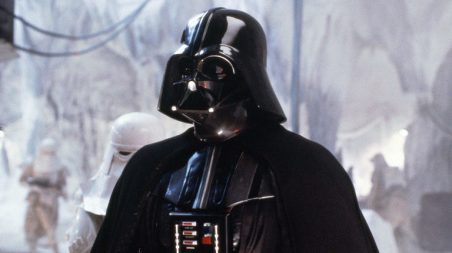
3. Darth Vader/Anakin Skywalker (Star Wars)
Darth-Vader_6bda9114.jpeg

The reveal of this Star Wars villain’s ultimate identity is a surprise to few at this point, but what struck me as truly fascinating in hindsight is how Anakin’s (pre-prequel) depth of character often goes unexamined. As relentless as the Empire’s most terrifying leader is with the conquest of Rebel systems, he makes every effort imaginable to spare and convert his son Luke in spite of his son’s determination to end the Dark Side of the Force. Given this, it’s only perfect that Return of the Jedi ended the way it did, with father and son fighting with all their mights to reason with one another. Despicable? Maybe. But never let it be said that Darth Vader didn’t prove himself as a father in the end.


2. Marlin (Finding Nemo/Finding Dory)

Marlin-FN.png

Oh, how I debated internally about Marlin taking the number one spot. After all, Finding Nemo is arguably one of the most famous animated films with a message directed at parents, rather than the typical audience for mainstream cartoon movies. That message in mind, Marlin’s development as a father and his eventual acknowledgement of his own trauma-born neuroses is a joy to behold as he meets more and more colorful and insightful characters in his search across the seas for his son. This spot-on replication of an overprotective father’s meditation on his mistakes and relationship with his son might have certainly made it to the top, had it not been for…

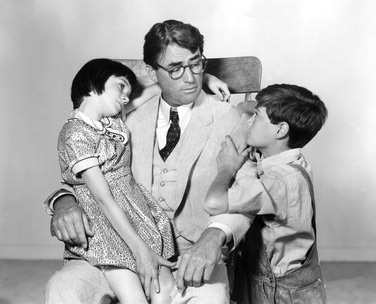
1. Atticus Finch (To Kill a Mockingbird) 
atticus-and-kids.jpg

Was there any doubt? Print and film alike have depicted the dedication and love that Atticus Finch has for his children in spite of the troubling climate of the era in which To Kill a Mockingbird was written. Say what you will about the actual conviction behind his defense of an unfairly accused black man, and the coldness that he demonstrates with the people that surround him. Both are true, and Mr. Finch is far from the nicest guy, but this list is about neither of those. Rather, it’s all about these characters’ strengths as fathers, and memorable as everyone else on this list is, you can’t get much better than the tender-hearted, protective man in the shell of an unfeeling lawyer. For imparting what lessons he does to Scout throughout the story, and for Gregory Peck’s spot-on performance, the number one spot goes to Atticus Finch.
Rich Retrospectives- Spirited Away

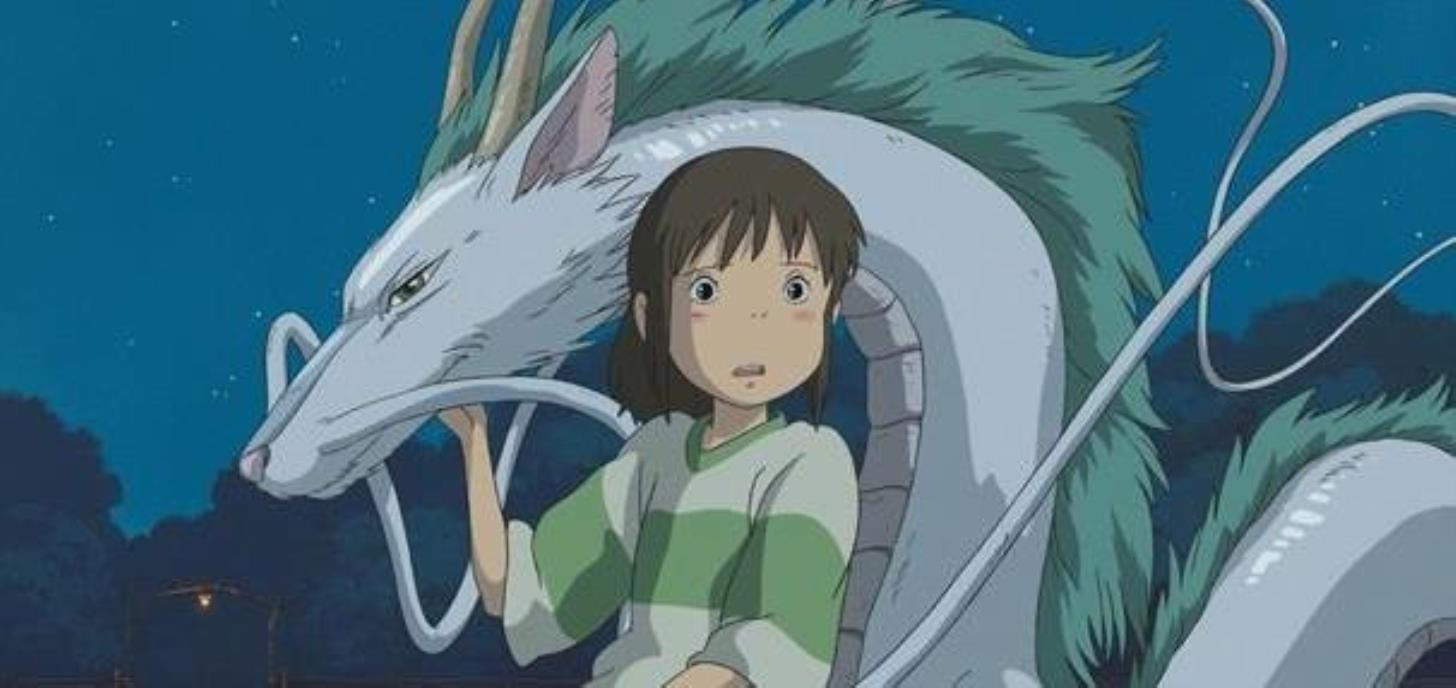
One of the most frustrating questions to ask any critic or enthusiast of narrative media like film is “What’s your favorite movie?”. This isn’t to say the question shouldn’t be asked to critics, but it does make for a rather protracted reflection on their part, since it’s impossible to name an encapsulating example of everything an individual loves about film. Still, in the interest of breaking the hiatus that I imposed on myself for way too long, I’d like to use my birthday as a platform to discuss a movie that has shaped my tastes for film as art and a narrative media since I was young: Hayao Miyazaki’s “Spirited Away”. At once a surrealist journey into the Japanese spirit world, a coming-of-age story, and a showcase for the underestimated power of hand-drawn animation, this film is something that has followed me to this day in spite of all the media I’ve consumed, and it’s unlikely to disappear from what place it has in my heart. I hope you’ll all forgive me, then, for the length at which I’ll need to gush about this one.

Ten-year-old Chihiro Ogino is on her way to move to a new home with her family, and far from happy about it. Reasonably bitter and sad about leaving home, she nonetheless punctuates the trip with petulant whining and apathy. The trip takes a bizarre detour, however, when Chihiro’s family comes across a supposedly abandoned amusement park, and while her parents gorge themselves on the food from one of the somehow-functioning restaurants, she is warned by a mysterious boy named Haku to leave the park before sundown. Chihiro heeds his warning without hesitation and rushes to the exit to leave with her parents, only to discover that the food has turned them both into pigs, and that the park thought to be defunct is actually a bathhouse and resort for spirits and deities of Japanese mythology. With no exit in sight and her transformed parents at the mercy of the bathhouse’s ethereal staff, Chihiro is left with no other choice but to secure a job at the resort and put her literal name on the line to reach her parents. To make matters worse, allies are scarce among the gods, as the resort is run by the name-stealing Yubaba, the miserly witch that runs the bathhouse and has even the most benevolent spirits under her thumb. With every possible odd against her in this strange new world, Chihiro, now called “Sen”, develops courage, perseverance, and maturity on the journey to save her family.

Explaining why this film in particular is the most important to me is ultimately a matter of personal investments and appreciations, but those are far from the only things that make me love “Spirited Away” as I do. For instance, the animation and visual storytelling are among the best of Miyazaki’s work, which truly means something given the director’ and his studio’s track record. Basing the world and characters off of yokai (Japanese ghosts) and other spirits of Japanese folklore lends itself wonderfully to hand-drawn animation, but what’s especially impressive about this film’s animation in art is how fluidly and borderline realistically the characters all move in spite of their varied designs. Every background is reminiscent of an expertly-composed painting, and every character as expressive in their movements as they are through dialogue. That level of visual expressiveness is in service of a story with a wonderfully-built world, which manages to be beautiful in spite of (or perhaps because of) its bizarre and unwelcoming atmosphere. The spirit world Miyazaki sets up in “Spirited Away” is a restful retreat to spirits, but a deathtrap for those who stumble into it, and the visuals do wonders in balancing both of these dimensions of the film’s setting. Topping all of this off is a masterful score crafted by veteran composer Joe Hisashi, which strikes a natural balance of whimsy and intensity from scene to scene.

Given the atmosphere set up in the bathhouse, it should come as no surprise that the story is mainly concerned with the cast’s struggles in adjusting to or working in the spirit world, and to this end, the characters are wonderfully written into that story. The film has a truly brilliant protagonist in Chihiro, who manages to be an endlessly sympathetic protagonist in spite starting out as a spoiled brat in many respects. Her growth as a character is made all the more compelling and endearing by the dangers of the world she’s forced to work in, and this world is populated by a diverse cast of side characters that do wonders in driving home the themes of the story. Like Chihiro, these characters (from the helpful, yet troubled Haku to grumpy, yet compassionate bathhouse workers like Lin and Kamaji) are not defined by being on either side of “good vs. evil”, but by their interactions with one another and by what good points they have amidst their unwavering self-interest. Even Yubaba, the clear antagonist of the story, manages to be entertaining and even sympathetic in some places, thanks to her interactions with the protagonist and some of the main cast. The beauty of this cast is equally apparent in either language, but the localization is especially commendable for how perfectly it captures the essence of the cast in spite of the obvious hard work that goes into translations. The cast was perfectly assembled, thanks to a choice combination of staple Disney voice actors and only a few noteworthy Hollywood actors, with Daveigh Chase’s feisty and vulnerable Chihiro being a readily apparent standout along with Jason Marsden’s nuanced Haku and Susanne Pleshette’s deliciously slimy and imposing take on Yubaba.

Obviously, the production and writing has given many a critic a reason to gush over “Spirited Away”, but upon reflection, I’ve found this film is as resonant with me as it is due to when I first saw it, and due to how well it’s held up since then. I first saw this film in the 6th grade, just a few years before high school), and I distinctly remember the story and message being different than most movies I watched at that age. For one thing, the characters were more neutral in their moralities, and there was no clear hero besides Chihiro, who herself had more than a few flaws starting out. In addition, I found myself endeared to the distinguishing elements (both visually and story-wise), and to the protagonist’s instinctual ability to survive and assist others in spite of the obvious risks. In those respects, “Spirited Away” taps into two ageless themes: the perpetual presence of adversity in life, and the natural human want to do as much good as possible in the face of that adversity. While tenacity, compassion, and openness manage to persist in this film’s story, selfishness and greed are not defeated, but rather pushed aside. Those narrative aspects are what compose the movie’s ultimate message: the value of endurance and compassion. Though I’ve been somewhat vague in the interest of averting spoilers, it’s only because seeing this movie succeed in these ways is something that changes viewers, and because everyone deserves to see that for themselves.

All of that said, I’m glad to finally be back, and (hopefully) to share one of my favorite film memories with all of you. I can’t thank you all enough for reading, and for allowing me that luxury.

Rich Retrospectives- The Room (2003)

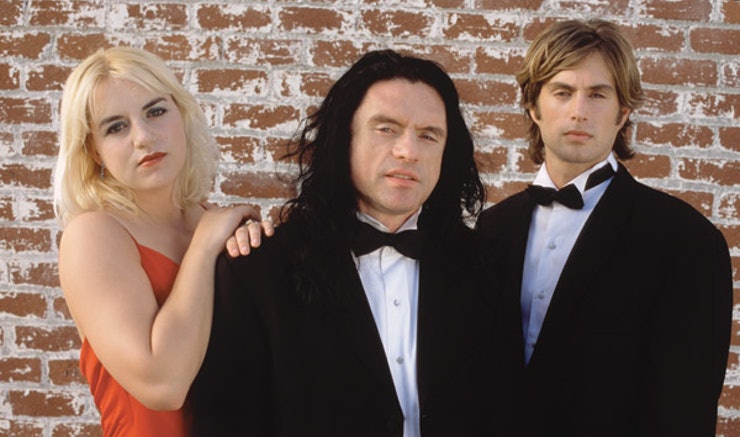
Tommy Wiseau is the type of filmmaker that I’d both readily thank for his work and mock him for it, and no sign is there of the popularity of that sentiment than in the upcoming film based on Greg Sestero’s memoir The Disaster Artist. The memoir on which the upcoming film is based tells a bizarrely genuine story of friendship in the film industry, as well as one of the simultaneous joys and dangers of belief in one’s dreams. The greater story of The Room‘s troubled production, the cult following that resulted from the film’s release, and the secretive life and career of its director and star, Tommy Wiseau, has gone on to attract endless media attention, but this story, along with the impending release of The Disaster Artist, has birthed a recurring question: Is The Room truly that amazing in its ineptitude? In preparation for its December release, I’m here to revisit the original cult classic and find out.

Johnny (Tommy Wiseau) is a successful banker who has it all: a beautiful home in California, a steady income, a caring best friend in Mark (Greg Sestero), and a beautiful girlfriend named Lisa (Juliette Danielle). This high life is turned completely on its head, however, as Lisa begins a clandestine affair with Mark. Tensions rise and Lisa’s scheming becomes more frequent, all while Johnny becomes increasingly paranoid of the truth behind his friends and their interactions with him. Adding to the gripping drama of the days that follow are completely unrelated side-plots involving drug use, breast cancer, and false pregnancies, all of which join together with the performances of the main cast and the central conflict to create a postmodern defiance of standards of quality in film.

In the interest of saving the most obvious criticisms for last, I’ll start out by saying that the plot above is as convoluted and hackneyed as it sounds. Taken on their own, the side-plots are already something you’d find out of a guidebook to drama film plots, but compressed together like they are here, they make for an overarching plot that would have been utterly tedious if it weren’t made hilarious by the acting. Tommy Wiseau’s performance is an unmistakably crucial element of that appeal, since his delivery hits a previously unimaginable middle ground between cartoonishly hammy and flatly wooden, and his physical acting (most notable, his erratic arm movements and repeated glances into the camera) render theoretically dramatic moments a complete joke. Still, credit is due for the performances of the rest of the cast, as their readily apparent frustration and boredom adds the type of glimpse into the troubled production that adds considerable to the already-present hilarity. The cinematography is also amateur, and at times, very bizarre, with city skyline transitions that wouldn’t be out of place on a low-budget sitcom and green-screens that look like low-quality CGI paintings. Typically, I’d be all too willing to write this off as a soulless, talentless independent effort, had it not been for the fact that Tommy Wiseau seems to refuse to be just a bad filmmaker.

If Wiseau’s on-screen gusto and history leading up to the production of The Room are to be believed, he is anything but dispassionate as a filmmaker. As much of a mess as this film was,  it’d be impossible to say that the obvious faults were born from careless disregard for the end product. In fact, as someone who’s decently well-read on the film’s production (and Greg Sestero’s recounting thereof), I’d say that passion is the reason why the film is as equally loved and mocked as it is. The Room is still an unambiguously bad movie, but not for the reasons critics typically list, nor for the things that personally irk me about the bad movies I’ve seen. On its own, the film was made memorable enough by Wiseau’s bizarre non-sequiturs (“I did not hit her, I did NOT… Oh hi, Mark!”) and by the incredibly out-of place football-throwing scenes, but knowing what audiences will soon know thanks to the upcoming Disaster Artist film makes it out to be the overzealous type of mess.

Like the man behind it, The Room is a troubled, bizarre, and clumsy picture of bad filmmaking, but it’s those qualities that drew people (me included) to it in the first place. There’s a certain mindset that’s imperative to enjoying this, but if you can ironically enjoy a bad movie, this is a must-see, assuming you haven’t checked it out already. Tommy Wiseau’s ironically-enjoyed masterpiece has to be seen to be believed, and seeing it now makes me even more excited to see the story behind it on the big screen.

Rich Retrospectives- Evil Dead 2

Happy Halloween, dear readers… BEWARE OF SPOILERS…!

Whether or not they’re fans of the horror genre, it seems that everyone has that one movie they watch every year on All Hallow’s Eve. Whether they’re looking for outright terror or a good mix of cheap thrills and laughs, moviegoers and critics everywhere tend to either seek out the latest in horror films or pay homage to the classics that make a good Halloween movie night. What strikes me as interesting about the most popular choices, however, is that they can all be more or less assigned to a genre of horror. For instance, you’ve got the Universal monster movies, like “Frankenstein”, “The Wolfman”, and “Dracula”; and you’ve also got the staples of the age of slasher movies, such as “Friday the 13th”, “A Nightmare on Elm Street”, and “Halloween”. Even more grounded thrillers like “Psycho” and the first “Texas Chainsaw Massacre” can be put into their own genre. But how do you talk about a movie that has a little bit of every layer of horror? Can a horror movie be shocking, hilarious, and uncomfortably tense all at once?

My answer would be yes, because Sam Raimi is in the film industry.

I, too, have a Halloween tradition. It’s with that, then, that I’d like to examine Evil Dead 2’s funny genius while offering some (hopefully original) perspective on one of my favorite movies of all time.

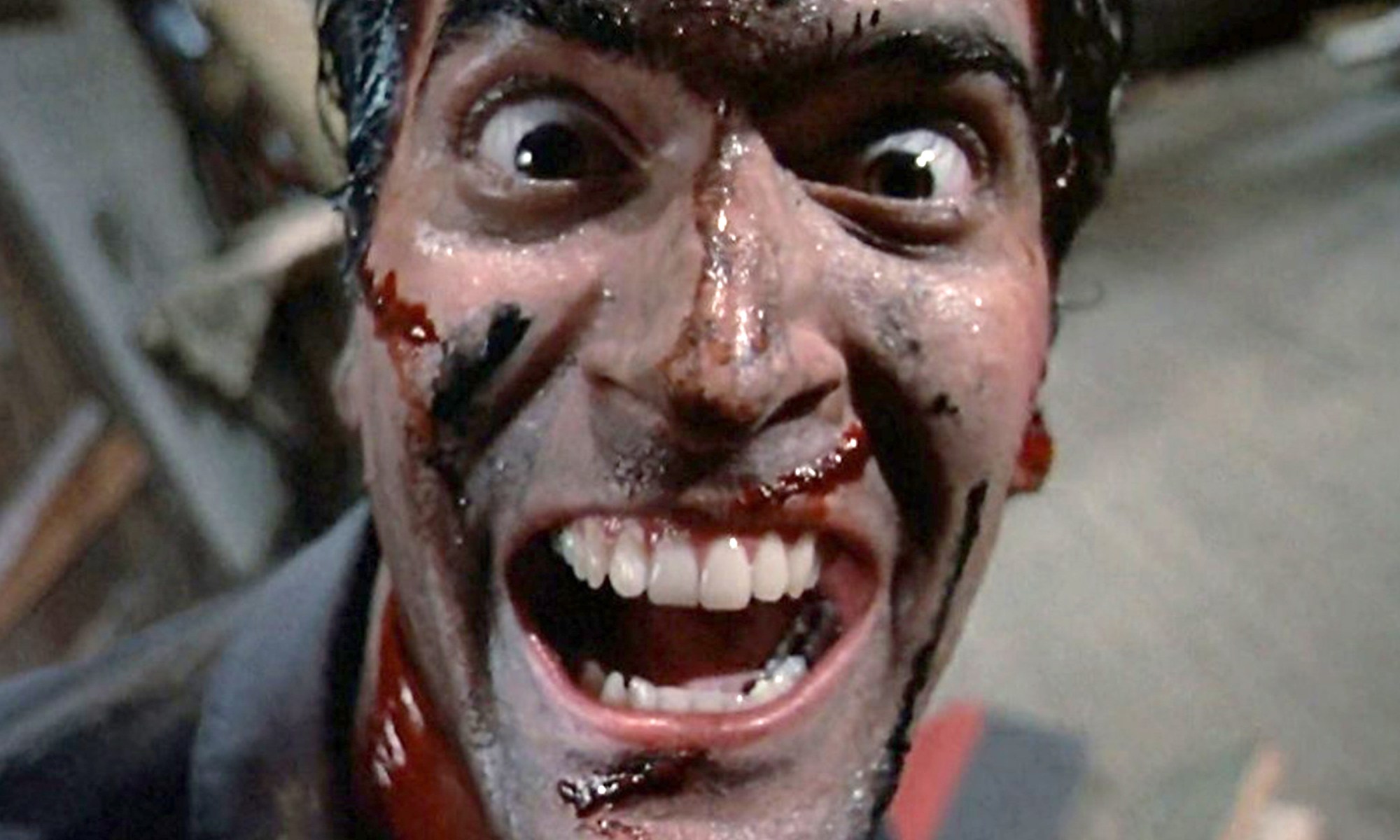
Less a sequel and more a fundamental remake of Sam Raimi’s cult classic horror film, Evil Dead 2 begins with Ash Williams’ romantic cabin getaway coming to a twisted and bloody halt upon the discovery of the Necronomicon ex Mortis”, the book of the dead. Chaos, demonic possession, and mass dismemberment follows the pre-recorded reading of the book’s passages, and Ash is put through the fight of his life. As if being forced to kill his girlfriend, fighting his demonically possessed hand and being stranded in the cabin weren’t enough, the daughter of the book’s researcher comes to the site of the book’s finding with a small research team, determined to discover the fate of her father and the secrets of the book. Has salvation come for the broken Ash Williams? Or is Annie and her ragtag group just as doomed as others who summoned the book’s monstrosities?

A simple setup, to be sure, but as with most premises, success is all in the execution. The most obvious high point in this regard is definitely Sam Raimi’s mastery of camera work. Even in one of his earlier works, Raimi’s point-of-view tracking shots were spot on, and special mention must be given to the scene in which the unseen threat chases Ash all throughout the cabin. So dedicated was the director to the tension and panic of the scene that the camera even smashes through the window of a car and through the door inside the cabin. Actually, the practical effects as a whole are incredible, and there’s an impressive dimension in the fact that the actors and sets are actually getting as messy and bloody as they appear to be. Second most obvious is Evil Dead 2‘s masterful balance of horror and humor. Part of the beauty of this “Evil Dead” movie in particular is its lack of limitations in what could be a threat. Corpses, dismembered limbs, trees, and even furniture are out to get the heroes, and the result is as unnerving as it is hilarious. The horrific deaths of the cast are played mostly straight, but there’s a hint of Three Stooges-style slapstick to the more violent scenes. Ash in particular is as hilarious as he is tragic in how much abuse he takes from the “deadites”, and Bruce Campbell’s bombastic portrayal of the character’s initial cowardice and growing heroic charisma is a definite highlight of the movie.

Speaking of the protagonist, one thing that I think is overlooked is the movie’s narrative. It’d be easy to set the focus solely on the gory death scenes and gratuitous dismemberment, but serious attention is given to Ash’s struggle for survival. While some of that struggle is played for laughs, the movie makes it clear that the pain he’s receiving is just as mental as it is physical. The fact that the whole environment is against the main characters makes for an understated sense of tension, since literally anything could kill them or posses them at any moment. That tension makes for unparalleled catharsis after seeing Ash in those famous action scenes, and the transparent emotional investment in Ash’s struggle can be traced back to what makes the film work as a whole: it’s heart. It’d be bold to ever accuse Sam Raimi of being dispassionate, even if you’re not a fan of the genres he typically contributes to. It’d be simple to make a cabin-in-the-woods splatter fest, but since “Evil Dead 2” is a Sam Raimi film, its also a slapstick comedy, a character study, and a supernatural, eldritch horror film all at once, and the result is almost perfect because of it.

I think Bruce Campbell described the film perfectly, in-character:

Groovy. 

Rich Retropectives- Independence Day

The first review since my tenure at La Salle has been a long time coming, and in (belated) tribute to the Fourth of July, I’ll be taking a look at the Roland Emmerich sci-fi action film “Independence Day”. The cult classic has been on the receiving end of a myriad of opinions ranging from positive to abysmal during its successful run in theaters, and it’s here that I hope to see what about the film has led to that kind of attention.

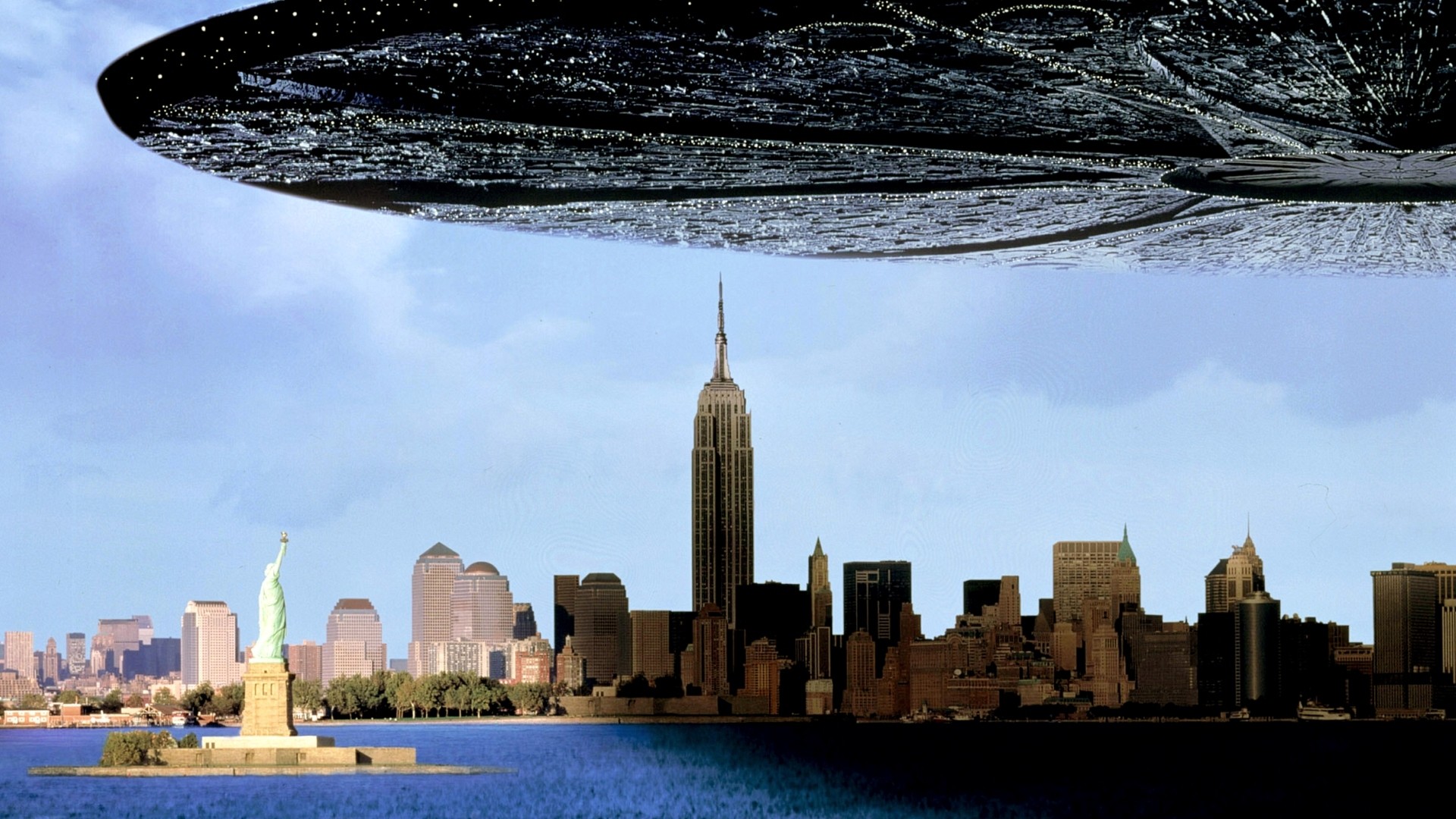
A catastrophic threat literally looms over the nations of Earth on July 1996, when an alien mothership arrives bringing battalions of invaders. In the midst of the impending disaster, numerous survivors, including the (then) current president (played by Bill Pullman), a hot-headed marine fighter pilot (played by Will Smith), and an aloof satellite technician (played by Jeff Goldblum) race against the threat to their lives and their world, oblivious to the fact that their journeys will soon lead them to one path of unity and resistance against the extraterrestrial force.

As one could probably expect from that synopsis, the setup for this story is less than revolutionary, and the plot doesn’t take many unpredictable turns, save for the explosive, eye-popping action scenes. Still, where the film lacks in originality, it has continued to endure for its sheer, unadulterated sense of energy and fun. The tone, for instance, is noticeably campy, but intentionally so. One would probably think Roland Emmerich never heard the word “subtlety” in his life, but this results in some of the best action one could hope to see from an alien invasion flick. The explosions are particularly well utilized, and what works best about them is that they’re used sparingly and expertly in contrast to modern action films. The actors seem perfectly in tune with the campy vibe of the film’s writing and premise, and special props should be given to Will Smith, whose rebellious charisma and energy makes certain lines (i.e. “Welcome to Earth!”) work much better than they would have in other actors’ hands. The key thing to remember when going to see this movie, though, is that it’s completely divorced from subtlety, and unless you turn off your brain, you’re likely to notice those predictable plot turns and the lack of deep thematic elements. For a 4th of July celebration or a regular summer movie day, though, you won’t find a movie that’s much more entertaining or aware of its own bombastic, ridiculous appeal.

In short, Independence Day isn’t perfect, but you probably knew that coming in, so it never needed to be.