Seeing how many studios attempt the shared “cinematic universe” formula in recent memory, a question’s been hovering over the head of Marvel Studios since they were the first to popularize it in a recent context:
“When will Marvel movies finally get stale?”
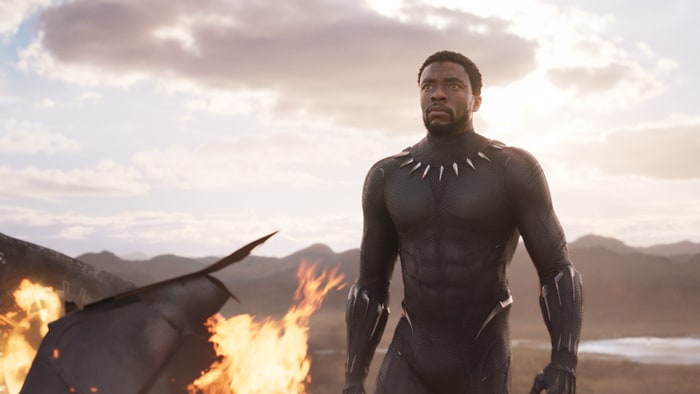
That’s not to say the recent series of Marvel movies has a stainless record. After all, “Thor: The Dark World” and “The Incredible Hulk” certainly pale in comparison to the others in terms of audience reception and critical praise. But the worst of the Marvel movies have only ever been mediocre or derivative, rather than outright bad. Still, mediocrity could have been downright poisonous for a movie based on one of the most beloved black superheroes in the history of comics, especially seeing how “Black Panther” was as built up as it was since the character’s appearance in “Captain America: Civil War”. In other words, nothing but the best talent and care could have made this movie live up to expectations. Marvel knew that, acted accordingly, and got one of its most remarkable efforts to date out of it. Those expectations, in essence, quickly and visibly ceased to matter within the film’s opening minutes.
Even following the death of its most recent king, T’Chaka (during the events of “Civil War”), the covert African nation of Wakanda continues to thrive as the most advanced civilizations on Earth. Its advanced technology, keen global awareness, and access to the indestructible metal called “Vibranium” allows it to thrive in isolation from the conflicts of the outsides world, and prospects look even brighter upon the return and coronation of the new Black Panther, Prince T’Challa (Chadwick Boseman). Continuing Wakanda’s traditions as the new king, however, is not nearly as simple as he thought it would be, as his abidance to Wakandan isolationism sparks objections from the Wakandan spy Nakia (Lupita Nyong’o), a former lover of T’Challa who wishes to aid the outside world with the country’s resources. Worse yet, an old enemy of Wakanda appears in the form of arms dealer Ulysses Klaue (Andy Serkis), whose partnership with a mysterious terrorist (Michael B. Jordan) makes the fact of outside knowledge terrifyingly clear to the people of the secret civilization. Soon, the history of Wakanda, the legacy of T’Challa’s family, and the future of the country and the world surrounding it are thrown into uncertainty as the troubled king endeavors to put an end to the emerging threats.
Save for a few twists later in the film, the plot doesn’t have too much in the way of surprises, especially concerning T’Challa’s journey as the new king of Wakanda. Still, where the film lacks in revolutionary storytelling, it makes up for in raw, unmistakable passion. As stated before, something that could have killed this movie is mediocrity, and in that regard, T’Challa is something of a lesser point of the movie. While he’s far from lacking in relatable conflicts, and benefits greatly from the fact that Chadwick Boseman’s nuanced performance lacks the corny humor of his Marvel contemporaries, the character’s arc suffers from the fact that his progression is one-note until later in the film. This hangup does erode rather quickly as the film goes on, however, especially considering that it’s about the only negative it has. The supporting cast, for instance, never ceases to be compelling, and I’ll go so far as to say that it’s one of Marvel’s best to date. I’m especially happy to see Lupita Nyong’o continue her mastery of both tenderness and strength as Nakia, whose performance makes her one of the most magnetic of the main supporters in an already spot-on cast (comprised of other masters like Danai Gurira, Forrest Whitaker, and Martin Freeman). What especially surprised me about the cast, however, were the villains. Seeing Marvel’s villains improve more and more with each film has certainly been a fascinating journey, but the villains here are undoubtedly the best written and most threatening in the entire cinematic franchise. Michael B. Jordan in particular plays a character whom I won’t dare spoil here, and his seemingly instinctual balance between sly charisma and tranquil rage makes for an unrelentingly imposing antagonist that audiences could otherwise sympathize with.
The plights of the characters are made even more intriguing by the world-building and design of Wakanda. We’ve seen many a technologically advanced society in science fiction films, but the combining of futuristic and African tribal aesthetics makes for something as original as it is beautiful on a visual level. One of the best elements is seeing just how many facets of science and living the Wakandan people have mastered, and given its level of development and involvement in the story, one could say that the nation of Wakanda is as much a character as the Black Panther himself. After all, the plots conflicts revolve around the subjects of isolationism vs. expansion, the values and dangers of tradition, racial pride, and the lengths people are willing to go for the continued success of their country. That a big-budget superhero movie managed to breath as much life and perspective as it did into the world and the characters living in it speak volumes of “Black Panther’s” subtle profundities. While the slow-boiling protagonist and the film’s unavoidable obligations towards connectivity do hold the film back ever so slightly, those are as far away from deal-breakers as flaws can get.
Don’t let the hype dissuade you here: “Black Panther” is a heartfelt and expertly crafted movie, simultaneously one one about heroes and intercultural tensions, that wears both coats proudly and beautifully.
 Rich Reviews