
Rich Reviews- Death Note (2017)

Screen-Shot-2017-03-22-at-12.03.16-PM-1280x539.jpg

The recent Netflix film adaptation of “Death Note”, as with most American film adaptations of popular anime, was something of a controversial subject among recent films, since its two-hour structure and americanized take on the eponymous award-winning manga/anime franchise rendered changes from the source material as inevitable as the scrutinization those changes would receive from fans. Still, “Death Note” is a grounded enough thriller-mystery that an American adaptation wouldn’t be utterly impossible, and speaking as a casual fan of the beloved anime, the makers of filmed seemed to  have really cared about delivering a fresh and faithful take on the story. While that dedication is shown in places, however, the American “Death Note” film falls apart due to its shortcomings in others.

High school student Light Turner (Nat Wolff) finds himself endlessly bored with his life of academic achievement as he witnesses rampant crime both in his hometown and around the world shown to him by the news. Equally bored is the “shinigami” (death-god) Ryuk (Willem Dafoe), who haphazardly drops his own “Death Note” into the mortal realm to see what it does in the hands of whatever human gets their hands on it. This notebook has the power to kill whoever’s name is written onto the pages, and Light ends up being that human. While skeptical at first, Light finds that the power is very real, and soon becomes dedicated to the elimination of evil and the rise of a new god. The string of supernatural  deaths that follow catches the world’s eye, as Light is recognized as the far-reaching, invisible force of justice known as “Kira”. Roped into the clash of justice and the cycle of death is Mia Sutton (Margaret Qualley), an idealist cheerleader who discovers Light’s secret and joins him as a partner/girlfriend, as is the Interpol detective known only as “L” (Keith Stanfield), who quickly comes to a conclusion that “Kira” is one person and must face true justice.

As one could probably tell, this story is something that should be carefully and deliberately handled due to how much plot is going on at once, and certainly not the type of narrative that should start off with Light obtaining the Death Note within the first two minutes. In fact, it’s truly remarkable how quickly the film’s pacing problems become apparent, as the rules of the Note, Light’s background (and that of his family), and his transformation into Kira are all rushed out much too quickly. Compression of the plot was inevitable, given its standard theatrical length, but Light’s deliberation on the moral issues at play are completely absent, as are the charisma and honor student charm that defined the original Light Yagami in the anime. This Light is much more overt and bitter about the problems surrounding him, which can lead one to wonder how he hasn’t been traced to the killings. While this take on the character works better for an two-hour American interpretation, it makes the character much less relatable as a result of the cut time. The same rings true for Mia (named Misa in the original), for while I agree with the decision to make her a cheerleader as a smaller-scale equivalent to a pop idol, I also feel that her “romance” with Light was much too idealized and rosy in comparison to the visibly unhealthy dynamic in the original. Nat Wolff and Margaret Qualley try their best, but the off-putting takes on their characters and the rapid pace of the narrative undermine their efforts considerably.

That said, the movie is far from being bereft of positives. The direction and cinematography are both eye-catching on a visual level and reminiscent of Death Note without being stale. The shots of the Note-induced deaths, for instance, are appropriately wince-inducing and well-framed. In addition, Willem Dafoe was cast perfectly as the voice of Ryuk, as he balances otherworldly menace and borderline childish fun-seeking quite well.  What really caught my attention, though, was Keith Stanfield as L, who nails the characters brilliance, quirkiness, and curiosity while making his more public appearances totally believable from an adaptational standpoint. Such elements make me feel bad about designating it as just mediocre, for while the the creators really tried, there’s simply too much going on for one movie, to the point where I can only wonder how much it would have improved if it were a full Netflix series.

By itself, the film is as compelling as it is unfocused and muddled. As a “Death Note” adaptation, it’s a loving one, but ultimately misguided. Watch at your own risk.

Rich Reviews- Spider-Man: Homecoming

bg_spiderman.png

The Marvel icon Spider-Man has had a truly fascinating history on the big screen over the past several years. From the campy, yet enjoyable film trilogy by Sam Raimi to the more grounded, yet deeply flawed Amazing Spider-Man movies by Mark Webb, the film medium had no shortage of different interpretations for the web-slinger. Now, with Marvel Studios and Sony coming to something of a truce over the film rights to the character, Spider-Man recently made his solo film debut in the beloved Marvel Cinematic Universe, and the result is as charming and fun as it is compelling.

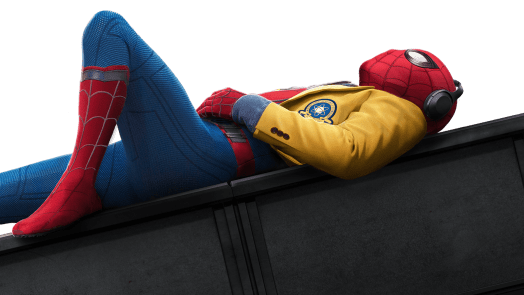
Set shortly after the events of Captain America: Civil War, teen genius Peter Parker (Tom Holland) seeks to prove himself as a worthy candidate for membership in the Avengers. In spite of seeing numerous heroics as Spider-Man firsthand, Tony Stark (Robert Downey Jr.) is adamantly reluctant to allow the inexperienced youngster to graduate from neighborhood crime-fighting. Things become even more complicated when a close friend discovers his dual identity and when Peter discovers Stark’s technology being sold on the black market by a team of disgruntled maintenance workers. When their leader, Adrian Toomes (Michael Keaton) threatens both New York and the safety of Peter’s loved ones, the boy known as Spider-Man is forced to choose between his heroic instincts and safety from the danger he knows lies ahead.

Having excitedly awaited the web-slinger’s solo movie in the MCU since his appearance in Civil War, I’m happy to say that this film delivers the best of any Spider-Man story, and this is thanks in no small part to Tom Holland’s endlessly charming take on the character. He effortlessly captures the wisecracking, fun-loving side of Peter Parker while in the costume, but what makes his performance truly noteworthy is that he also convincingly portrays his not-so-hidden teenage angst and awkwardness, something that previous actors had a harder time pulling off convincingly. Actually, “natural” is the best way to describe the performances of all the cast, and what’s especially impressive is that the comic-esque action and story don’t detract from the fact that the characters are vulnerable human beings. Even the villain manages to be an understandable and intriguing, if not sympathetic, character within the chaos of the story, and Michael Keaton’s portrayal of that dichotomy is a highlight among the already-excellent cast.

That said, the film isn’t too caught up in the melodrama that fun is completely absent. In fact, the humor (often mixed into the web-swinging action scenes to great effect) is perfectly in tune with the spirit of the character, and not since either of the Guardians of the Galaxy movies did I laugh this hard at a Marvel movie. Spider-Man: Homecoming isn’t flawless of course, since its status as a MCU film takes away from the self-containment of the story a bit, but there’s much less to really shake your head at than in previous big-screen takes on Spider-Man.

In short, Spider-Man is an almost perfect movie for fans of the character or people looking for a fun superhero movie: funny, sometimes touching, and with at least fifty things to put a smile on the faces of moviegoers.

Rich Reviews: War for the Planet of the Apes

maxresdefault.jpg

The rebooted “Planet of the Apes” film series is a truly fascinating case in current cinema, especially in regards to how it defines “success”. While the individual movies never lit the world on fire with their mass appeal or box office returns, the new “Planet of the Apes” saga has stood as one of the most critically beloved franchises in cinema over the last few years for its simultaneous narrative and technical strengths. It’s here that we’ll see just what continues to be the secret to that brand of success.

Tensions between the increasingly intelligent apes and the dwindling humans have only escalated since the events of the last movie as the apes are threatened by attack from the military division known as “Alpha-Omega”. After the apes’ longtime leader, Caesar (played once again by Andy Serkis) is attacked in both a personal and literal sense by the unit’s surprise assault, the formerly peace-seeking chimp sets out on a journey to seek vengeance on the ruthless Colonel who led the charge (played by Woody Harrelson). Joined by a party of his closest comrades and ranked tribe members, Caesar seeks out the Alpha-Omega base camp to find the Colonel and open the path for the apes to find a new home, all while discovering humanity’s desperation for continued survival on Earth, and the source of that desperation and hostility towards the increasingly dominant apes.

More than a few critics have credited the new “Planet of the Apes” films with “bringing wonder back into cinema”, and “War’s” dedication to continuing in that tradition is evident from the simplest of glances at it. The motion-capture effects for the apes is probably the best its ever been, and the combination of the stellar, realistic animations and the performances of the “apes” leave little in the way of artificiality. The motion capture actors in this film continue to amaze with their ability to believably emote and move as apes, and nowhere is  it more evident than in Andy Serkis’s long-running performance. If ever there was a film that proved that Serkis deserved an Oscar, this would certainly be the case, as he manages to capture Caesar’s emotional turmoil and staunch determination in ways that make you forget that determined character is a chimpanzee. The film’s greatest strength, though, is how it works as thought-provoking science fiction. Dichotomous as the conflict was in the last two movies, it casts most of the sympathy with the apes’ tribe, and while sympathy is granted to the humans in moments, the humans’ positions of antagonists and threats to their world makes for a refreshing take on the titular war, as do Caesar’s discoveries about humanity’s future (which I won’t dare spoil here). The only regret I might even come close to having about seeing this film is that talking about it simply isn’t enough, and I can only hope that those points will strengthen my argument enough. Just in case, though…

“War for the Planet of the Apes” is brilliant in nearly every way, and you owe it to yourself to see this emotional, thought-provoking masterpiece.

Rich Retropectives- Independence Day

The first review since my tenure at La Salle has been a long time coming, and in (belated) tribute to the Fourth of July, I’ll be taking a look at the Roland Emmerich sci-fi action film “Independence Day”. The cult classic has been on the receiving end of a myriad of opinions ranging from positive to abysmal during its successful run in theaters, and it’s here that I hope to see what about the film has led to that kind of attention.

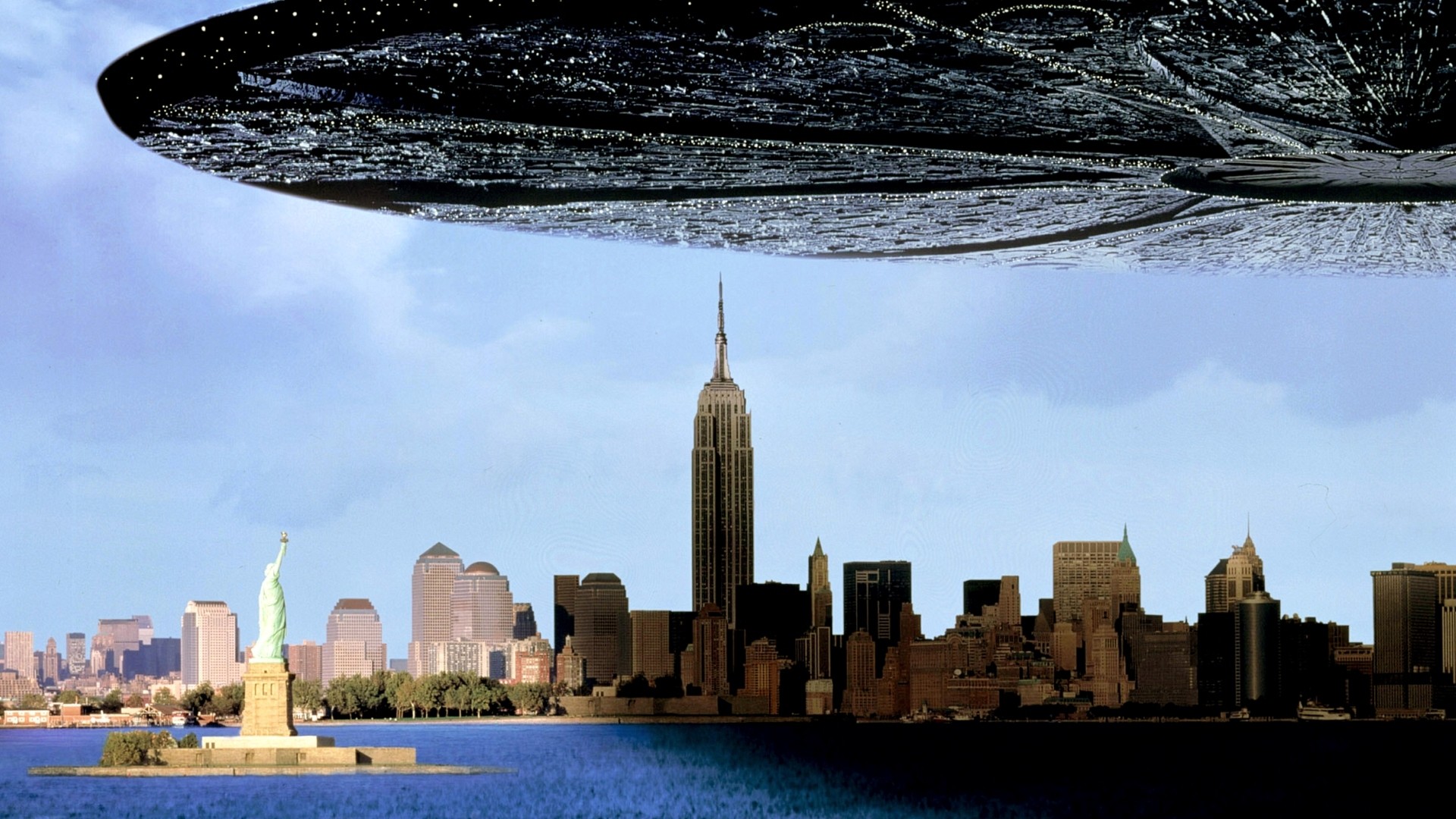
A catastrophic threat literally looms over the nations of Earth on July 1996, when an alien mothership arrives bringing battalions of invaders. In the midst of the impending disaster, numerous survivors, including the (then) current president (played by Bill Pullman), a hot-headed marine fighter pilot (played by Will Smith), and an aloof satellite technician (played by Jeff Goldblum) race against the threat to their lives and their world, oblivious to the fact that their journeys will soon lead them to one path of unity and resistance against the extraterrestrial force.

As one could probably expect from that synopsis, the setup for this story is less than revolutionary, and the plot doesn’t take many unpredictable turns, save for the explosive, eye-popping action scenes. Still, where the film lacks in originality, it has continued to endure for its sheer, unadulterated sense of energy and fun. The tone, for instance, is noticeably campy, but intentionally so. One would probably think Roland Emmerich never heard the word “subtlety” in his life, but this results in some of the best action one could hope to see from an alien invasion flick. The explosions are particularly well utilized, and what works best about them is that they’re used sparingly and expertly in contrast to modern action films. The actors seem perfectly in tune with the campy vibe of the film’s writing and premise, and special props should be given to Will Smith, whose rebellious charisma and energy makes certain lines (i.e. “Welcome to Earth!”) work much better than they would have in other actors’ hands. The key thing to remember when going to see this movie, though, is that it’s completely divorced from subtlety, and unless you turn off your brain, you’re likely to notice those predictable plot turns and the lack of deep thematic elements. For a 4th of July celebration or a regular summer movie day, though, you won’t find a movie that’s much more entertaining or aware of its own bombastic, ridiculous appeal.

In short, Independence Day isn’t perfect, but you probably knew that coming in, so it never needed to be.