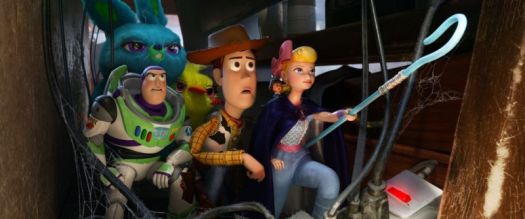
Rich Reviews- Toy Story 4

65ab4c613b88c6d53c05f82c9428c771.jpg

I knew from the outset that I was inevitably going to cover “Toy Story 4” when it was announced and advertised, and not just because I have a childhood history with the franchise. Each and every “Toy Story” film, following the misadventures of sentient toys led by the now-iconic cowboy Woody and space ranger Buzz Lightyear, are animated masterpieces in their own right, as the stories are all well animated, charming, populated by lovable characters, and evocative of the kind of wonder and imagination that goes overlooked in animated film-making these days. In particular, the previous film in the (as of now) tetralogy of movies from Disney/Pixar served as an excellent bookend to the story of the iconic toys come to life, managing to be hilarious, gripping, and emotionally charged in equal measure while giving satisfying answers to the question of the toys’ collective status without their original owner, Andy. To say that a fourth film’s announcement was a divisive subject among fans and critics would be quite the understatement, but unlike most of the internet and film community at large, I was more intrigued than outright dreading the prospect. After all, “Toy Story 3” was once held in caution by those who loved the first two movies before it became many a fan’s favorite in the series, and the idea for a fourth film, in which previously-absent side character Bo Peep returns to reunite with Woody, was pitched long before the trailers aired. Also, I’m kind of sick of the reactionary impulse often reserved for trailers, as there’s only so much a person can gleam from a trailer for a franchise installment consisting of a few minutes at most. Given all of this, my preemptive curiosity was less centered on “will this series top itself?” then “how will this series top itself?”.

The answer to that turned out to be “on several fronts.”. “Toy Story 4” is a movie aware of the blink-and-you’ll-miss-them loose ends left untied by the end of “Toy Story 3”, and the ways in which it sets out to put the knots in place results in an emotional maelstrom of laughs, tears, and character closure that anyone even passively interested in the series should see.

Following “Toy Story 3’s” conclusion, in which Andy’s toys moved over to a newer, younger owner in Bonnie, the gang has found happiness once again and things are as they were back in their old home. Things are far from perfect for everyone, however, as Woody (Tom Hanks), used to being a favorite toy, is played with less and less by Bonnie, and Bonnie herself is terrified at the prospect of going to Kindergarten. Fortunately, she finds comfort during arts and crafts, making a spork toy she names “Forky”, and the DIY plaything quickly becomes her favorite. Unfortunately, a family road trip becomes complicated when the spork gains sentience (and the voice of Tony Hale), and both he and Woody are ejected from the RV while the cowboy attempts to save the new favorite from his own existential doubts. While trying to return to the RV, Woody and Forky discover multiple toys in an antique shop, all of whom are trapped in their own minds thanks to their troubled experiences with being either lost or separated from past owners, with Woody’s old flame Bo Peep (Annie Potts) now among them. With old friends and complicated feelings returning (all with little time to catch up to Bonnie’s family), Woody must save his friends, both new and old, return Forky to Bonnie, and decide where his loyalties will take him, all while Buzz (Tim Allen) attempts to ensure Woody’s rescue mission is successful.

Before my spolier-cautious examination of the movie’s narrative successes, I think it’d be best to talk about “Toy Story 4” on the technical side of things. For one thing, it’s utterly astounding how well this series has done in terms of updating its visuals. For a start, I’m impressed with how the integrity of the main characters’ designs have not been negatively impacted by the increased realism of the animation. Speaking of which, that animation is glorious. Whenever the toy characters are alone on screen without any of the humans, the environments and objects look borderline live-action, and I’m especially wowed by the series’ gradual mastery of plastic visual textures. Little things like the stuffing inside plush toys look remarkably real, but what really makes it all work from a visual standpoint is the balance it makes. The characters are still allowed to be fluid and cartoony as they always were in spite of obvious updates, and that kind of dedication (previously demonstrated in all of Brad Bird’s movies) is commendable, especially for a sequel. In addition, something that will probably go under-appreciated about this film is its score. The tunes and leitmotifs by Randy Newman were always catchy, whimsical and effective, but deserve special mention here for how they are all applied to fit the more intimate, heavy story beats throughout the film, especially towards the end. Still, the strengths of the movie really do lie in that narrative, and transitioning to that end, the voice acting is as impeccable as always. Tom Hanks has had years of experience with Woody’s character under his belt, and that understanding is thoroughly translated through his performance here. In him, we hear the same good-hearted, brave, yet troubled leading man that we’ve come to love since day one, and both his tenderness and his inner turmoil is worn on Hanks’ sleeves, or in this case, his voice. Tim Allen is also still great as Buzz, and helms some of the funnier moments in this movie. In my opinion, however, the highlight vocal performance is unambiguously that of Annie Potts as Bo Peep. The character herself has taken on a braver, more adventurous front since her absence from the series, but it never feels forced or cliched due to how believably Potts plays Bo’s development into that niche. Special mention should also go to Tony Hale’s Forky, for injecting endless charm into a more comedic character who could have been fairly annoying otherwise.

All of this is in service to a story that expands on the thematic aspirations of the other “Toy Story” films in wondrous ways. While it’s true that “Toy Story 3” did wrap up the series in a lot of respects, in that it reached the peak of testing the bonds between the characters and how much the stakes can be raised, those aforementioned loose ends still left just enough room for a sequel. “Toy Story 4” is aware of that space, and thus crafts a more intimate narrative focusing on the major characters and their ideas of what a toy truly is. Without spoiling too much, both Forky’s introduction and Woody’s inner turmoils about where the story has taken him both serve as interesting, multi-layered explanations of that question, and how they play out makes for one of the most bold and commendable climaxes in an individual franchise film. Also, the nature of this film’s narrative focus means there are no true villains, even when menacing ones are introduced, which is equally impressive for a mainstream animated film. The side characters (save for new introductions) are downplayed significantly in terms of screen time, but for a film with “Toy Story 4’s” goals, that’s an arguably necessary approach, and that minor sticking point should never take away from what an effective character study this is for its main players. “Toy Story” and its characters encompass a world that has grown up with its audience and their families, and that it’s consistently succeeded in this over the course of four movies is nothing short of an achievement.

So please, see “Toy Story 4”, and its predecessors, if you haven’t already. “Toy Story” is as much a journey as it is a megabucks flagship franchise from Pixar.


Rich Reviews- Avengers: Endgame

thumb-1920-1003220.png

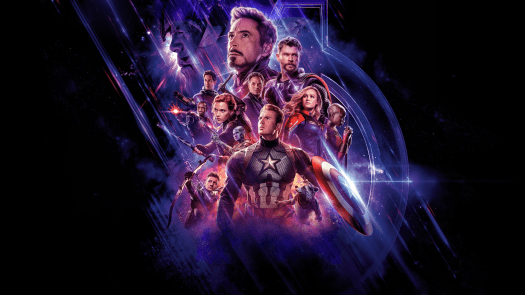
Looking back on some of the films I reviewed, specifically those trying to capture the comet’s tail that was the success of the “Marvel Cinematic Universe”, I can’t help but feel like cinema-goers everywhere have forgotten how much of a feat the franchise’s success truly is. A gigantic series of multi-generational, interconnected films centered on multiple superheroes that occupy vastly different genres and tones had every reason to fail, and every attempt following the “MCU” format has been shaky at best and groan-worthy at worst. I might have said before that the best of these films are the ones that can stand the strongest on their own without the aid of the larger continuity, but while I still stand firmly by that sentiment, part of the reason I did stand by it is because of the seemingly futile buildup that went into both today’s subject and its predecessor, “Avengers: Infinity War”.

“There’s no way the appearance of Thanos could be half as interesting as those post-credits scenes make him out to be!”, thought I, before “Infinity War” blew my mind by presenting a multi-layered tragedy, a veritable superhero epic, and a prime example of paying off a narrative setup.

One of my greatest regrets is not reviewing “Infinity War” when it was the hottest ticket in theaters, since saying that it surpassed all expectations would be an understatement. That film gave us a story of iconic heroes of the Avengers and beyond at arguably their lowest point, in which cosmic stakes are at play and a villain from beyond the stars comes forth to see to the conclusion of his plans for universal restructuring, all while climbing his way to the top of numerous lists for “greatest movie villains”. In short, that film was an event, and one that paradoxically worked due to the strength of continuity and the almost subconscious investment the film-going public has in the greater “MCU”. Superheroes have often been touted as the “Greek myths” of American pop culture over the last few generations, and the strength of the “Marvel Cinematic Universe” has lied in its ability to examine and re-contextualize their iconic characters over the course of an overarching narrative spanning multiple parts. The Marvel films, in this way, are a collective superhero soap opera in the best of ways, and like “Infinity War” before it, “Avengers: Endgame” seeks to complete the payoff for years of buildup to numerous plot points: to the Infinity Stones, to Thanos, but most of all, to a particular era of the Marvel film franchise.

Also much like “Infinity War”, “Endgame” succeeds on pretty much every front, and I’m going to do everything in my power to recommend this movie without hitting plot points too hard.

Following the events of the Avengers’ struggle with Thanos, in which half of all life was erased from the universe by the Infinity Stones, the remaining heroes of the Marvel canon have all but embraced the despair of loss and the fall of superheroes. Even with the immediate threat absent from Earth, the Avengers and their associates have all but disbanded and retired with a few exceptions. Hope seems to return, however, when a previously-absent hero returns from a previously unexplained absence, and discovers that the source of that absence may be the key to reversing Thanos’s universe-shattering snap. Few are willing to take the risk, least of all Tony Stark (Robert Downey Jr.), Steve Rogers (Chris Evans), or Thor (Chris Hemsworth), all of whom are mourning in their own ways, but soon it becomes apparent that a choice must be made between the world left behind by Thanos or the one that might be saved by venturing into the unknown. Whatever the choice, one thing is clear: the end of an era is nigh.

Truthfully, the synopsis may have been the toughest part of that review (among many tough parts), and while I’m aware I’m being quite vague with the details, it’s only because I consider “Avengers: Endgame” a mandatory viewing experience alongside “Infinity War”. That does come with a rather noticeable caveat, in that “Endgame” works better as a followup to its mind-blowing predecessor, but that should not take away from the strengths of the film by any means. The performances, for one thing, are as fantastic as one could imagine from a cast of actors that have years of experience with these characters under their belt. Highlights are near impossible to pin down among the main players and the side characters, and to do so comprehensively would give too much away, but something that struck me as particularly mind-blowing was Robert Downey Jr. as Stark. We’ve all come to know Downey as the cynical, snarky, and unfailingly logical man behind Iron Man, but something that has gone under-examined up to this point is the actor’s almost instinctual ability to sell Stark’s methods of coping with desperation and his personal demons. Again, the particulars cannot be mentioned, but Downey does especially remarkable work as Tony Stark when he’s been backed into a proverbial corner by the accumulating risks brought on by Thanos and his campaign. Speaking of Thanos, Josh Brolin continues to astound me as the villain, and the last two “Avengers” films have been especially remarkable, between the acting and the writing, at giving dimension and nuance to what seems like a generic universal conqueror at first.

Additionally, the film’s visual and cinematic elements are spellbinding in how they manage to engage in spite of its noticeable length. Tonally and visually, “Endgame” is a comprehensive love letter to the “MCU’s” legacy up to this point, and how that is woven into the cinematography and editing must be seen to be believed. Chances are, watching this means you’ve had some sort of investment in at least one of the films preceding it, and after watching “Endgame”, you won’t soon be watching those films the same way again. Still, if there’s one thing I want to avoid being vague about, it’s the film’s ultimate strength: its pathos and mastery of catharsis. A dramatic, climactic film of this nature would be meaningless and empty without proper buildup and care put into it, and “Batman v. Superman” is one of my favorite cinematic punching bags for its lack of understanding of patience and buildup. “Endgame”, however, delivers by virtue of having so much going into it. Say what you will about the greater corporate intentions behind a massive cinematic universe of this nature, but with a few exceptions, one cannot accuse many movies under the “Marvel Cinematic Universe” brand of lacking passion, care or effort. This film, more than anything else, is every bit of that passion, care and effort translated into cinema, and simply calling it a calculated, contractual effort would be reductive logic at the expense of a truly well-crafted movie.

In other words, I cannot say it enough: go see “Avengers: Endgame”. See “Infinity War” before it if need be, but see “Avengers Endgame”. Both it and its predecessor are proof that magic and wonder still exist in the world of film, however thinly spread out it may be.

Rich Retrospectives- Top 10 Movie Moms

Image result for best movie mothers

Boy, is it good to be back.

Oh, and Happy Mother’s Day, readers!

This list has been a long time coming, and I’ve got numerous regrets about how long it’s taken me to put it out. There are several reasons for this, not the least of which was my ever-mounting obligations and current work schedule, but last year’s excuse was simply being unable to properly compile a list of mother characters in order of ascending significance. After all, there are countless stories about motherhood in the medium of film, from animated adventures and family films to more conventional Hollywood dramas to even action and thriller movies. Another reason for my trepidation behind this list was its framing as a tribute. As with the last parental-themed list, I’ll be dedicating this to my own mother, since she’s given me more than enough to think about in terms of choosing the most loving, protective, and most significant mother characters in the history of motion pictures. With that said, I’ll give my usual disclaimer and say that this list is based on movies that I’ve seen, and I actively encourage discussion and suggestions of those moms I might have missed. Like with last year’s “Movie Dad” list, both biological and adoptive mothers are eligible to be entries, and also like last year’s “dad” list, there is potential for spoilers regarding the plots involving these characters. That said, here is my own personal take on the “Top 10 Moms in Movies”.

10. Mrs. Brisby (The Secret of NIMH)
hqdefault.jpg

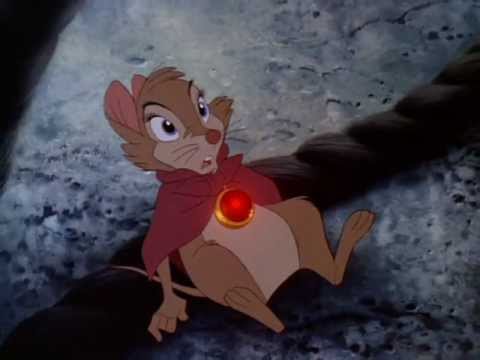
Painful as it is to put this character so low on the list, Mrs. Brisby of the Don Bluth magnum opus The Secret of NIMH loses a few “mom” points for her interactions with the Brisby children being somewhat finite in terms of screen time. That is literally the only mark against this heroic widow, though. Even in the midst of discovering her husband’s role in the founding of a city of hyper-intelligent rats and facing down numerous dangers that even the bravest of these rats find daunting, Mrs. Brisby will stop at nothing to provide for the most sickly of her children and ensure their continued safety against predators, the elements, and the scientists of NIMH. What makes Mrs. Brisby all the more worthwhile is just how much is stacked against her. She’s an admittedly meek housewife, and anything but a seasoned heroine, but still actively risks her own life on her journey, and shows remarkable resourcefulness through it all. Scenes like that towards the end, in which Mrs. Brisby unflinchingly attempts to pull her sinking house from the mud, will stick with me forever, and for the love and determination she demonstrates toward her family, she’s more than earned her spot at #10.

9. Dolores Claiborne (Dolores Claiborne)

dolores_claiborne_2.jpg

That this film didn’t get as much attention as other adaptations of Stephen King stories is a very tragic scene to me, because Dolores Claiborne, such as it’s presented here, is one of the most raw, intense, and remarkably human stories of familial dysfunction associated with King. At once a tense thriller story of murder accusations and a drama about familial estrangement and feminine strength, the movie focuses on the title character, a housekeeper accused of killing both her employer in her mansion. Things get even more complicated as her estranged, depressed journalist daughter enters the picture, and she suspects her mother of killing her father in the past. I won’t go further with the plot, since I want more people to see this movie, but the revelations build and build as the story progresses, all of them standing as instances of maternal love and strength in their own way. Kathy Bates is running an acting triathlon in this movie, delivering a transcendent performance with a mix of tenderness, blunt honesty, and determination. Add that to the story’s themes, and you have a film that’s a difficult, yet rewarding take on family reconciliation, of which Ms. Claiborne is a captivating star.

8. Kate McCallister (Home Alone)

4fgL8-_BfTsl.jpg

One could hardly accuse this mother of being a perfect one (especially seeing as how she repeated her mistakes in the sequel), but the McCallister matriarch makes this list for being a fairly spot-on portrayal of the pressures of raising a huge family (cartoony presesntation notwithstanding). She may be directly responsible for Kevin being left alone while the family rushed to the Christmas vacation, but the film shows just how much she has to deal with, and she spends the rest of the movie going to any lengths to return to her son. Catherine O’Hara does a great job as this overwhelmed mother, and in spite of the numerous flaws the character has as a mother (not the least of which are her harshness towards Kevin starting out), her performance never ceases to make me cheer for her measures in returning home, and never stops me from bawling like a baby towards the film’s heart-melting conclusion. “What kind of mother” is she? Far from the best, but still one worth putting on the list for her redemption.

7. Maria Von Trapp (The Sound of Music)

Image result for maria von trapp

This stepmother and music enthusiast probably would have landed MUCH higher on the list had the list not been a personal and analytical one in equal measure (and had I seen  The Sound of Music a bit more recently than my childhood). Still, while I was firm on my rule of basing the mom list entries on personal evaluation and attachments, it’d also be intellectually dishonest to give no mention to Maria Von Trapp from the iconic Rodgers and Hammerstein musical. The free-spirited young postulant-turned-stepmother to the seven children of a retired naval officer sang her way into the hearts of both the children and movie enthusiasts everywhere, and her achievements as a mother in film are immeasurable considering both the family she entered and the times in which she came into their lives. From introducing the strictly-raised children to the joys of music and love to aiding the family’s escape from the Nazi occupation of Austria, Maria went above and beyond the call of duty, and all for a family that was at first put off by her seemingly infinite optimism. One could hardly accuse her of being the deepest character on the list, but the performance and stellar singing voice of Julie Andrews makes her impossible not to love, and the timeless songs Maria belts throughout the movie makes for an enduring icon of both musical film and movie motherhood.

6. Every Sandra Bullock Mom (The Blind Side, Bird Box, etc.)

Image result for sandra bullock mother characters

Last year, in the Father’s Day list, I gave special, blanket praise to Steve Martin as an actor who perfectly sold parental characterization across multiple roles. There are numerous candidates for such a representative of mothers in film, but in the end, I chose Sandra Bullock’s mother characters for being compelling, heartwarming leads in spite of having often imperfect material to work with. A few months ago, when I reviewed Bird Box, I listed her among the best of the movie’s strengths, and her performance was made such a strength through her development into the role of a mother and her underlying tenderness beneath the stern demeanor. Keep in mind, Bird Box was a flawed film, as was the sports drama The Blind Side, but Bullock also worked wonders as a mom in that film, too. Cast her as a mother, and Sandra Bullock will warm your heart and stand firm in equal measure, and for giving power to characters in mixed bag movies, she deserves special mention for those multiple mother roles.

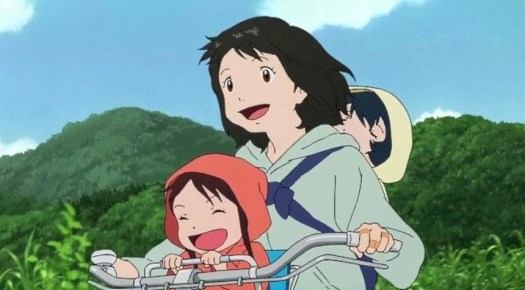
5. Hana (Wolf Children)
Wolf-Children-HK-Blu-ray-ext2-thumb-860xauto-38407.jpg

I’m going to need a good cry after discussing this entry on the list…

That Mamoru Hasoda hasn’t receive Miyazaki-level recognition for his animated filmography is a crime on the part of the Western film world. After all, his films strike a previously inconceivable chord with audiences in spite of their often surreal atmospheres, and for me, the pinnacle of pathos throughout his vast library of films over the last several years has been 2012’s Wolf Children. Its story is one right out of a fairy tale: Hana is a university student who meets an falls with a handsome, quiet man, and the two continue their romance in spite of the discovery that he is, in fact, a werewolf. The two have children and aspire to happily raise a family together, but the father is lost to an accident while hunting, leaving Hana to raise a son and daughter alone. What makes her struggles and determination so endearing here is that her children are both human and animal in equal measure: her children change from kid to wolf with the flip of their emotions, and keeping both them and the house together means that Hana must work herself to the bone. Still, the movie leaves no room for doubt that Hana did her job well, and even though she can’t have all the answers when her children start questioning their natures as either people or wolves, she nonetheless does everything to make sure her children are both happy and safe, and succeeds by the very end in spite of some expected heartbreak. Hana’s all-encompassing love for her children, along with her struggles as a single parent and some spot-on dub voice work from Colleen Clinkenbeard, makes her an imperative mention on this list, and a perfect character to view on Mother’ Day.

4. Nakku Harriet (Queen of Katwe)
Image result for nakku harriet queen of katwe

Back in my days as a critic for the La Salle Collegian, I reviewed a fairly low-key, Disney-produced sports drama about chess, called Queen of Katwe. I liked it, but was kept from loving it thanks to taking some “Hollywood” turns. Still, if there’s one thing that almost made me love this movie, it was Lupita Nyong’o’s performance as Phiona Mutesi’s mother. The story (fairly accurately based on a true account from an ESPN magazine article), is a fairly typical one of balancing glory with familial dedication, in which Phiona finds success and relative fame in chess tournaments and is met with some opposition by an over-protective mother, but unlike with most stories of this nature, Harriet is not portrayed as antagonistic. She, in fact, has numerous reasons for being skeptical about Phiona’s ambitions of making it in the chess world, not the least of which are her struggles raising her and three other children in the titular Katwe slums in Uganda. Her skepticism is born from a mix of fear, parental concern, and acknowledgement of the possibility of losing Phiona, which makes her later support of her daughter’s wish to escape their harsh life all the more surprising and heartwarming. A lot of Nyong’o’s performance relies on silently communicating both cautious concern and maternal warmth, and her acting seems like she’s actively channeling the struggles of a mother in such a bleak situation. You’ll be happy to know that her love was not lost on her daughter’s ears, as she went out of her way to ensure her family knew the same kind of security and happiness once she hit it big in the chess world. I mean, I sure was happy by the film’s end. Harriet, you deserved that happy ending for being the mother you were.

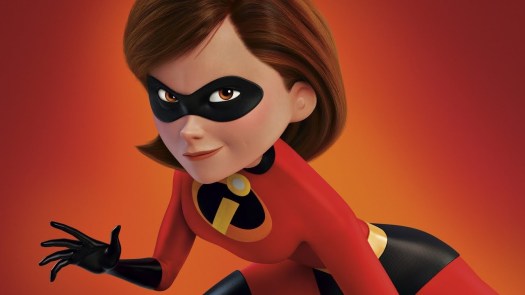
3. Helen Parr/Elastigirl/Mrs. Incredible (The Incredibles)
maxresdefault.jpg

Speaking of Disney, here’s yet another animated entry on the list. Much like Hana after her, Helen Parr deserves some special mention for successfully raising a family under harrowing, supernatural circumstances, albeit with super-powered humans being involved instead of werewolves. Sure, “Elastigirl” might have had some help with her husband around (especially in the sequel, after coming to terms with his midlife crisis), but the first film’s second half was essentially her story, about how she came to terms with the world’s need for super heroes and both her and her family’s need to come to terms with their identities as “supers” in a world that doesn’t quite know how to deal with them. In other words, she had everything against her and then some, and yet she still handles it all with the same barbed wit and determination she had back in her heroic heyday. In spite of her determination to distance herself from the past, she slipped back into the mask and spandex seamlessly, all while raising her three children with equal effortlessness. Flawed as the sequel may be, this franchise nailed the family dynamic, and having acknowledged the accomplishments of Mr. Incredible in the Father’s Day list, it felt only natural to give even more praise to Mrs. Incredible, the woman who basically held the family together.

2. Sarah Connor (The Terminator series)

Image result for sarah connor

Talk about carrying the weight of the world on your shoulders…

Aside from maybe the final entry on this list, Sarah Connor of the Terminator movies probably went through the most hell of any character in pop culture. After all, the young college student probably didn’t expect the worst out of life, let alone to be pursued by a cybernetic killer or to give birth to the eventual savior of humanity. Her struggles are especially palpable by the end of the first movie, in which she barely manages to finish off the titular Terminator, and at the start of the second, during which she’s institutionalized and kept from her only son for her (understandable) mental breakdowns brought about by the revelations. Ms. Connor had every reason to stay locked up and embrace the end, but once the option to protect her son became a viable one…

Boy, did she ever deliver. The antagonist of the movie, the T-1000, could shape-shift, kill efficiently, and brace bullet wounds like paper cuts, yet Sarah willingly and aggressively stood her ground and stood by her son John like she was always there.  The quality drop over the course of the series did her few favors, but I doubt anyone will soon forget her evolution from damsel to danger. Heaven help you when you’re against a mom, robots and aliens everywhere. And speaking of the latter…

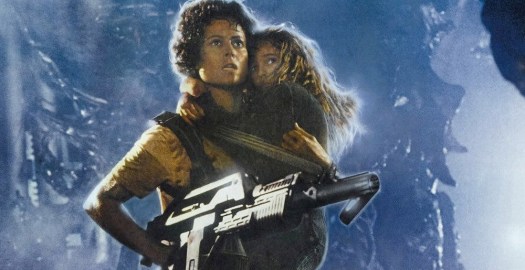
1. Ellen Ripley (The Alien franchise)
Ellen-Ripley.jpg

As I stated before, both biological and adoptive mothers are more than fair game for this particular list, and the number one slot goes to a character who clarifies as both. One could make the argument that Ellen Ripley’s maternal side wasn’t demonstrated until the second movie (and later into it, at that), but there’s more than the plot of Aliens accounting for her placement this high on the list. First of all, she is, in fact, a mother to a biological daughter, and one that she vocally expresses regret for being away from in the first movie. In fact, the length of time that separation went on for becomes especially apparent by the second movie, in which it’s revealed her daughter is dead and she’s entering and age she wasn’t prepared for. Second of these factors is that second film. It’s amazingly how quick she makes the switch from battle-hardened cynic to maternal substitute once Newt enters the story: Ripley expresses either disdain or ambivalence towards nearly every other character starting out, but she immediately jumps to protecting and comforting the orphaned colony child. Moreover, she has little concerns once she’s in “mom” mode. Ripley isn’t just Newt’s “mama” by association, she’s “mama bear“, staring down even the queen Xenomorph alien like she’s nothing but a glorified bug, all because the girl was in danger.

Most of all, though? Ellen Ripley is a mother to all of us, as purveyors of popular culture. Intentionally or not, Sigourney Weaver and James Cameron created the strong woman who would go to stand as a symbol of protectiveness and perseverance in the greater history of films (specifically, in the realms of horror and sci-fi), and she makes the top of the list for significance and long-standing power more than anything else.

Oh, and for reminding me of all the things that I love about my own mom- strength, persistence, and above all, protectiveness.

That said, I hope you all enjoyed the list, and encourage both responses and personal entries. Stay tuned for more in the near future.

Rich Retrospectives- The Easter Bunny is Comin’ to Town

hqdefault.jpg

There’s been a depressing lull in the output of movie reviews lately, for which I’d like to sincerely apologize. I certainly won’t imply that a recent work-induced schedule change has dulled my passion for discussing film, but it has certainly taken some time away from my writing about it. The low-effort April Fools review from a few weeks ago (for which I’d also like to apologize) was also, admittedly, more filler than anything, and that’s the first reason why I was hesitant to cover an Easter-themed movie for an in-between retrospective. I didn’t want to force any sort of seasonal film review simply because my theater visits were dwindling a bit, and at first, I thought that was reason enough to simply wait until my next theater trip to post a review.

The other reason, of course, being that the number of watchable Easter films and specials could probably only be counted on one hand. Most of these Easter specials (outside the famous Charlie Brown one) were entries in a veritable pantheon of stop-motion animated features by warmly-regarded animation studio Rankin-Bass, and only one of those Easter specials, “Here Comes Peter Cottontail”, seems to have held any remembrance in pop culture. This should come as little surprise, seeing as how most of the Rankin-Bass filmography has aged rather poorly in terms of animation and narrative, but some of their holiday specials (like “The Year Without a Santa Claus”, the aforementioned “Peter Cottontail”, and the topic-relevant “Santa Claus is Comin’ to Town) still have an earnestness and charm present in their sentimentality and stories. The last of those three, especially, is a personal favorite of mine, as “Santa Claus is Comin’ to Town” serves as a cute, heartwarming, and surprisingly smart origin story for Saint Nick with likable characters and catchy songs. Given that the special is one of the most fondly remembered of the Rankin-Bass lot, it should come as no surprise that the studio would try to give the “holiday figure origin” story another go for the Easter season, and so, “The Easter Bunny is Comin’ to Town” was made.

And it’s… bad. Even by the standards of bunny-centric Easter specials, “The Easter Bunny is Comin’ to Town” is pretty bad, and if you’ll forgive me for being three days late, I’ll explain how.

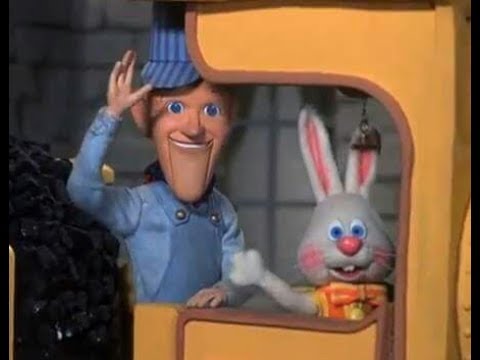
The narrator from the aforementioned “Santa Claus” special (Fred Astaire) continues in his tradition of telling the story of holiday heroes by recounting the beginnings of the tradition of Easter eggs. As it turns out, the tradition begins in a mountainside town called “Kidville”, which, true to its name, is populated exclusively by orphaned children. After finding a lone baby rabbit on the outskirts of Kidville, the local children adopt him, naming him “Sunny” after seeing his love of the spring sun’s rays. As the bunny grows up over the course of a year, he offers to help the kids make ends meet by selling the town’s overabundant eggs as Easter approaches. His journeys to and from the neighboring town, however, are not as simple as they seem, as he must evade the holiday-hating, giant bear known as Gadzooks on each trip, and even the town itself proves a tough one for Sunny to endear himself to. This settlement, known only as “Town”, forces children to move out once they are born, and it has become a dreary, broken place overseen by the lonely young king, Bruce and his overbearing, tyrannical aunt, the local Duchess. Still, none of that will stop Sunny, as he is determined to spread both joy and Easter eggs to the town, encourage Bruce to stand up to his Aunt, and unite the towns on both ends of the mountain, all while indirectly beginning Easter traditions in the process.

If that plot synopsis didn’t make it any more transparent, this Easter special’s plot is basically that of “Santa Claus is Comin’ to Town”, but with an Easter-shaded coat of paint. This need not necessarily be a problem, since the latter holiday special is still endearing and emotionally driven, but the problems with this special become achingly apparent once the story attempts to differentiate itself from its predecessor. For one thing, the “Easter Bunny” special relies heavily on the type of narrative logic that only makes sense in a children’s book, and while that line of thinking was cute and charming in the context of the Santa Claus mythos, it’s only arbitrary and eye-rolling here, like the makers of the special didn’t know how to flesh out a story about the Easter Bunny. This is especially apparent in two respects, the first of which is the Easter Bunny himself. Unlike with the “Santa Claus” Rankin-Bass story, the special doesn’t focus on Sunny’s growth into his role as a holiday herald, and the result is that the rabbit has all the unbridled charisma of a bowl of oatmeal. His main character trait is that he’s vaguely kind and generous, but he lacks the presence of the studio’s take on Santa Claus, who had a likeable, self-sacrificing personality, the voice of Mickey Rooney, and a plethora of good songs to his name. Sunny, meanwhile, gets overshadowed by the rest of the cast, which is a terrible blow against the special since they all range from boring to utterly obnoxious. The worst offenders are the villains, with Gadzooks being a one-note, poorly-voiced brute and the Duchess dialing up her royal twit personality so far that her only motivation for outlawing eggs (yes, I’m serious) amounts to “being evil, rich, and stupid”. None of that probably wouldn’t have mattered if there were memorable songs as with most of the Rankin-Bass specials, but there’s no such music here, since the songs function mainly as filler to distract from the bare-bones story. Good songs, like the ones from the “Santa Claus” special or even “Rudolph the Red-Nosed Reindeer” directly play into the plot, and usually involve more interesting topics than the “chicken or the egg” debate, but the songs, once again, range from generic to obnoxious, and I’d probably blame that “chicken/egg” song for the delays this retrospective faced.

I could go on, but talking more about the failings of “The Easter Bunny is Comin’ to Town” would probably mean expending more effort than was put into the special itself. The plot is a blatant rehash (right down to the title), the characters are grating non-entities, the songs are auditory waste, and the overall special manages to be something that not even the worst of these specials are: boring. The only noteworthy thing I can say about this is that it’s a testament to both the failing of most Easter specials and the waning power of childhood nostalgia.

And though it’s been said twice, I am truly sorry for this dead air, readers. Rest assured that this is not how Rich Reviews goes out, and that I plan on hitting the theaters soon to cleanse our collective pallets of this nonsense.

Rich Retrospectives- The Emoji Movie

the_emoji_movie_2017-t3.jpg

Awhile ago, back in “Spider-Month”, I talked about the most recent effort from Sony Animation, “Spider-Man: Into the Spider-Verse”. In that review, I called the film that studio’s crowning achievement in an otherwise spotty (at best) record. Still, in hindsight, that was a completely unfair assessment of the studio’s combined output, given that they have another timeless animated classic to their name, and given how famous they are for this cinematic achievement. Yes, dear readers: It’s time for another reverent look at an underrated favorite of mine: “The Emoji Movie”. It’s just a sad state of affairs that this surprise piece of perfection made some bad first impressions with some cringe-worthy marketing following its release. Still, if there’s anything I’ve learned after years of covering films as a hobby and as a contribution to La Salle’s entertainment columns, it’s that hindsight is always 20/20, and while my initial expectations for this movie were about as low as the standards of Ben Kingsley’s agents, I’ve found that almost two years of existence has vindicated the unanimous critical praise that has been heaped upon “The Emoji Movie”. Today, I’ll be taking a look at how this timeless, hilarious and meaningful animated classic succeeds on almost every level.

Alex is a fairly unremarkable schoolboy, save for the fact that his smartphone houses a sprawling city of emojis called “Textopolis”. The story that unfolds in this wonderland of phone apps and product placements (which takes no cues whatsoever from any animated movies before it) follows Gene (T.J. Miller), a misfit “Meh” emoji that finds himself diverging from the role of his apathetic-by-design parents by developing emotions beyond his chosen boredom. This is dubbed a “glitch” by Smiler (Maya Rudolph), the leader of the city, who sets Gene up to be deleted from the phone. Fearing this fate, Gene flees and seeks the aid of a hacker emoji, who he believes can fix this perceived defect. What follows is a substantial fable of acceptance of one’s own self, populated by worthwhile characters like the ineffectual, yet hilarious Hi-Five (James Corden), the trickster hacker turned princess named Vanell- I mean Jailbreak (Anna Farris), and the poop emoji, voiced by Patrick Stewart in a casting decision that, much like the concept of the film itself, never at all loses its novelty and goes out of its way to give the base premise some variety.

I’ve said before that familiarity need not necessarily breed contempt, and in the case of “The Emoji Movie”, that little kernel of truth stands firm. For instance, the characters are instantly endearing and memorable, and the world-building is truly unique. One may call the shifting rules of the Textopolis and the functions of the emojis inconsistent and hackneyed, but I’m one to defend such decisions, as the unexplained nature of flitches in Textopolis encourages the audience to leave the facets of the world to their imaginations. Furthermore, the characters’ memorability and endearment work wonders for an already inspired premise of “world inside a smartphone”. Patrick Stewart’s Poop, for instance, has all but ten lines in the whole film, therefore ensuring the one-note joke is still very much funny by not overstaying its welcome, and Hi-Five’s unintentional escalation of the danger our protagonists get into, which is and always has been comedy gold that in no way makes the character a walking annoyance. Add that to pop cultural references that remind us all of the genius of “Casablanca”, and you have a stand-out comic formula Still, those are merely the comic elements of the film, and thankfully, the story of a misfit in a colorful world apart from our own makes the film stand out even more. I could go on and on, but I’d rather you watch this movie based on what I’ve recommended so far, and if you haven’t ever seen…

  • Toy Story
  • Inside Out
  • Wreck-It-Ralph
  • Coco
  • Monsters, Inc.
  • Shrek 1 & 2, or…
  • Come to think of it, most of the greater Pixar filmography…

Then this could very well be the film of the century. And saying that has only caused FIVE blood vessels to pop inside of my brain!


Yes, that’s all. April Fools, dear readers. Now, if you’ll excuse me, I shall now bleach my brain in preparation for actual review content down the line.

Rich Reviews- Alita: Battle Angel

alita-battle-angel.jpg

“Alita: Battle Angel” falls under a certain category of long term passion projects that I could only classify as “films almost certainly doomed to fail”. Not to say that all films stuck in development hell are guaranteed to sink upon release, but if there’s anything we’ve learned from films like the previously-covered “Venom” film, it’s that some things must be released or simply be put out of development, lest the need for that film to be released be completely outdated. “Alita’s” release looked especially grim in this sort of case, since producer and writer James Cameron first became enamored with the original manga and anime “Battle Angel Alita/Gunm” and announced development of a film adaptation back in 2000. Still, if there’s anything I wanted to convey though the films I’ve covered for “Ani-March”, it’s that things are often not as bleak as they are painted. For instance, I distinctly remember laughing along with my friends seeing the trailers for the film and witnessing the wide-eyed, heavily digitized design of its titular cyborg heroine, and as of yesterday, I know I’ll never forget what an original, ambitious, emotionally charged and fun movie “Alita: Battle Angel” truly is. While the cracks in the metaphorical paint of a typical Hollywood anime adaptation are still very much present in places, the proverbial chassis put together by its passionate writer James Cameron and equally tight and talented director Robert Rodriguez is as beautiful as it is ambitious. What’s especially amazing is how “Alita” does the previously unimaginable by being a faithful anime adaptation that makes appropriate changes between mediums while still retaining the source’s essential spirit. Before anything else, I must say that this movie is a theatrical experience worth experiencing while it’s in theaters.

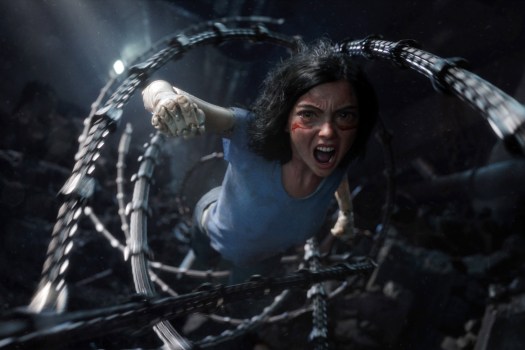
In a bustling,dangerous future city populated by both full-bodied humans and augmented cyborgs, cyber-surgeon Dr. Dyson Ido (Cristoph Waltz) finds an abandoned cyborg’s body in a scrapyard, reduced to the head and chest, and takes it to his home in the city to repair it. Upon awakening, the young female cyborg (Rosa Salazar) finds that she has lost all memory (save for instinctual fighting prowess) of who she was before being repaired, so Dr. Ido gives her both a new surrounding body and a new name: Alita, named after the daughter he had previously built the chassis for. Surprisingly, her first foray into “Iron City” goes fairly well: she experiences the joys of food for the first time, gains a talent for the high-speed sport called “Motorball”, and even finds a love interest in a young man named Hugo (Keenan Johnson), who gives her the “grand tour” of the cybernetic metropolis. Things take a turn for the truly dangerous, however, when Alita finds out that her savior and guardian is secretly a “Hunter-Warrior”, one of several bounty hunters who fights dangerous robotic criminals for a reward, and that he is doing so in an attempt to uncover a mysterious conspiracy from the city above their home, dubbed “Zallom”. After this discovery, during which Alita successfully fights off the assassins defending Dr. Ido, Alita becomes determined to hunt down criminals, make it to the airborne utopia, and discover exactly what memories lie beneath the powers she has only just begun to uncover.

Admittedly, both this film and the Japanese manga/anime franchise it takes cues from offers familiar material in terms of narrative: a young woman is brought into a loving, but protective family, is driven to find her own way, and discovers inner strength in a dangerous world. Still, whatever Alita may lack in story-based originality, it more than compensates in passion and sheer, unadulterated style. For instance, the world of Iron City was beautifully realized by James Cameron’s effects team, and the effects used to render the massive junkyard city are aided by on-point shot compositions and excellent use of cues from anime-style cinematography. What I found especially commendable about the film’s visual elements were the designs of the cyborg characters. From a hunter commanding cyborg dogs to a robotic man with a giant sword and mohawk, there are no two character designs inherently the same, and the sheer variety and creativity at play in their designs and details is simply astounding. On the topic of that aforementioned cinematography, the fight scenes are some of the most daring, well-choreographed, and adrenaline-pumping in any modern action film. The effects take great advantage of the fact that the characters trading blows are cyborgs, and in spite of the obvious difficulties that must have come with translating the acrobatics-heavy fights from the original “Alita”, the filmmakers did wonders putting the individuals impacts and stunts to the big screen.

Helping matters is the fact that every fight has emotional and narrative weight, since “Alita: Battle Angel”, in spite of being a huge film in terms of spectacle, is a strangely intimate story about one young woman’s coming of age. Beneath the meat and bones of a hard-hitting cyberpunk action film beats the heart of a story concerning identity, love, and holding onto inner strength in the face of circumstance. Though balancing that character arc and the action, lore and world building of the manga does make for too fast a narrative pace at times, the somewhat rushed nature of the exposition and dialogue is more than accounted for by the performances, especially that of Alita and her loved ones. Rosa Salazar is a fairly underrated actress, but Alita’s charm and magnetism as a protagonist is all thanks to her balance of innocence, tenderness and determination, and she manages a natural and adorable performance in spite of the brisk pace, and thanks in no small part to the admirable effects work surrounding her design. That design, though off-putting at first, works completely in tandem with Salazar’s performance through its expressiveness and expert integration with the live-action actors. Continuing with those actors, Christoph Waltz makes for a heartwarming supporting character in Dr. Ido, and effortlessly channels parental warmth and stern protectiveness that we briefly saw on display in “Django Unchained”. He’s a very natural and nuanced actor, and even Ido’s more heavy-handed scenes are strengthened by Waltz’s earnest and heartwarming portrayal. A quick nod must also be given to supporting characters like that of Jennifer Connelly, who show true dimension in spite of their characters reflecting the harsh, cynical world in which Alita lives. That world has a lot to it, and that does make the film’s pacing problems much too apparent at times (especially during the romantic exchanges between Alita and Hugo), but that this kind of anime-influenced world and creative style even made it to a mainstream Hollywood film in the first place is nothing short of astounding. One could even call the existence of “Alita: Battle Angel” inspiring in a few ways, since James Cameron finally got to see his take on the story unfold, and since the result is as thoroughly entertaining and heartfelt as it is.

My hope is that mine and other reviews vindicate this film’s need for a sequel, or even simply other film adaptations of this nature, because I feel safe in saying that “Alita: Battle Angel” for all its stumbles and cliches, is in a class by itself and wears its heart on its sleeves. With that enthusiastic recommendation, I’ll close Ani-March by saying that the best films are the ones that may surprise you.


Rich Retrospectives- Guyver: Dark Hero

kinopoisk.ru-Guyver_3A-Dark-Hero-1557316.jpg

Last time on Ani-March, I took a look at one of the lower-rung Hollywood films based on an anime/manga franchise, “The Guyver”. In spite of being a rather low-budget effort with a finite lifespan in theaters, the movie saw to some moderate success on home video, and thus saw to enough revenue to birth a direct-to-video sequel. I’d imagine expectations of audiences going into this one couldn’t possibly be lower, given the circumstances: the first “Guyver” movie is technically impressive in some places, but the glossy monster costumes are in service to a cheesy, unfocused mess with tonal problems bred from a complete lack of faith or investment to the source material. That’s not to say change is inherently negative when it comes to adaptations, but the “Power Rangers” brand of action-comedy should not have been meshed with the dark horror elements of the original franchise. So, how did “Guyver: Dark Hero” fare with an even lower budget and a different creative team than the original film?

Somehow, against all odds, it turned out to be the best American anime film adaptation to date. By dropping most connections to the first film and pursuing a completely separate tone, look, and feel, “Guyver: Dark Hero” manages to be both a truly remarkable sequel and a fun popcorn action film taken on its own. Though this film, admittedly, might be a hard sell to anyone outside of hardcore fans of the genre, I hope I can do well to convince you of this film’s success, especially compared to its predecessor.

Set a year after the events of the first “Guyver” film, “Guyver: Dark Hero” continues following the exploits of Sean Barker (this time played by David Hayter), who now roams the street using the Guyver’s powers to fight crime. He’s driven to isolate himself and look into removing the device after he discovers its murderous tendencies. In his travels, he discovers an archaeological dig site in Utah assigned to a crashed Zoanoid ship, and aids the researchers in their pursuits, thinking he might find some answers about the Guyver. Things take a turn for the harrowing, however, when the Chronos corporation closes in on Sean and the researchers, and to make matters worse, previously undiscovered Zoanoids have taken to pursuing Sean along with his old enemies. With little choice but to fight back, Sean continues in his struggles against Chronos, the new aliens, and the violent impulses brought on by the power he still has yet to truly grasp.

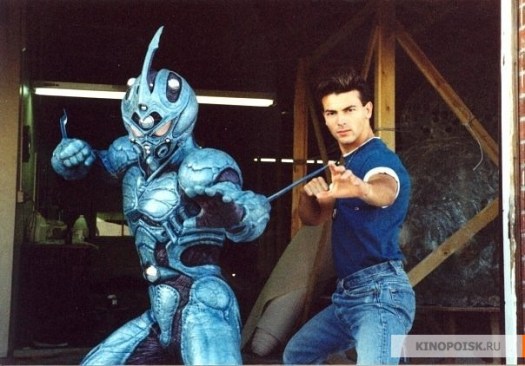
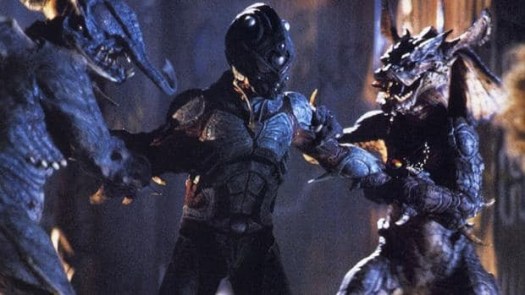
As stated before the synopsis, this sequel takes a much darker tone and goes out of its way to establish several noticeable differences from the first film, the most obvious being its rating. The first “Guyver” film was marred by its desire to have a broad audience, with goofy slapstick action being constantly shoehorned into effects, heavy, darkly shot scenes resulting in a middling “PG-13”. “Dark Hero”, on the other hand, boasts a hard “R” rating, and that shows almost immediately. Still, unlike most R-rated sequels, the darker tone doesn’t come off as too heavy-handed, and the admittedly swear-heavy script keeps its in enough moderation to not be seen as forced. Also in service of the mature tone are the action scenes, which, keeping more in the spirit of the anime and manga, is much gorier and well-choreographed. Characters receive bloody wounds, aliens have limbs ripped off, and the Guyver’s preferred method of execution here is decapitation via the suit’s previously ignored elbow blades. Previous reviews compared such action to an “R-rated ‘Power Rangers'”, and that is an apt description of the film’s unique style. What also makes the fights work so well is their integration. There are fewer fight scenes than before, but they’re considerably longer, and the addition of fight scenes in daylight, rather than simply in the dark, adds some much-needed variety that the fights in the first film were utterly starved for. Even the cut budget didn’t hurt the effects too badly, since the fight scenes actually managed to include the Guyver’s once-underutilized powers to great effect.

The improvements don’t just begin and end with the technical and cinematic elements, though. The acting across the board, while still a little hokey, manages to be a much more dramatic effort on the part of the actors, and minus a few extras, the cast does a fairly good job. What’s especially praise-worthy is David Hayter as the new Sean Barker, who would later come to voice Solid Snake from the “Metal Gear” video game franchise. In those games, Hayter made a name for himself by nailing the grisly, yet conflicted elements of Snake’s character, and i wouldn’t be surprised if “Dark Hero” gave him some experience on that front. He not only exudes much more natural charisma and strength than the unremarkable Armstrong, but also manages to sell the dramatic scenes in what’s otherwise a fairly cheesy movie in places. Hayter would later state in interviews that he loved working on this film and would readily come back to future “Guyver’s”, and it really shows in his performance here. As an added bonus, Hayter even did some of his own stunts whenever Sean is out of the suit, which makes both his performance and the action scenes all the better. What really makes me respect “Guyver: Dark Hero” so much, however, is its commitment to its established tone. While the film’s dark tone never truly allows it to escape the cheesiness brought on by its budget and its predecessor, it makes up for its own limitations by attempting a loving send-up of the ultra-violent anime genre that the “Guyver” franchise occupies. If the rubber suits as low resolution were any clue, this movie is far from perfect, since the cracks in the metaphorical sculpture are as visible as they are. Still, unlike the worst of the American anime-based films, “Guyver: Dark Hero” is unafraid of what it truly is, and does surprisingly well as an adaptation while capturing everything fans tend to love about anime like “Bio-Booster Armor Guyver”.

In short, “Guyver: Dark Hero” may certainly be a niche film, but stands as one of the best successful of its kind. More on the latest story in anime adaptations next review.

Rich Retrospectives- The Guyver


the_guyver.jpg

If there’s something I wish I could talk about more in terms of film-related topics, it would definitely be B-movies. There’s a masochistic sort of joy to be had in experiencing the bad ones, and the good films that just so happen to have a lower budget tend to be pleasant surprises that you didn’t know you needed until you had them. Even the bad low-budget movies have something to enjoy, be it the execution of a cheesy effect or a line read so bizarre one would think an alien was cast in the role of the character spouting it. Ani-March is going to cover both ends of the B-list, direct-to-video spectrum, since two such sci-fi B-movies just so happen to be based on a fairly popular manga and anime franchise. First on this duology is 1991’s “The Guyver”, loosely adapted from the manga “Bio-Booster Armor Guyver”. The story of a Japanese teenager fighting hostile aliens with an uncovered suit of extraterrestrial armor has fallen somewhat into obscurity over the years, but during its debut run in America during the late 80’s and early 90’s, the manga was one of the most popular imports of the decade, and so New Line Cinema released its own film adaptation in 1991. The film was produced on a low budget (around 3 million) and was released to mixed reviews, coming under particular scrutiny for its false marketing of Mark Hamill as the titular hero. Hamill, in fact, is only a supporting character (as you’ll soon see), and film analysts were correct to call the Hamill-centric marketing out as nothing more than a popularity stunt. Still, unlike with “Dragon Ball” or even “Ghost in the Shell”, “Bio-Booster Armor Guyver” is exactly the kind of anime IP that lends itself to an American adaptation, since the characters themselves were less stylized and iconic, and the story was framed with the impetus that the Guyver could fall into any hands, Japanese or otherwise. So, how does this film fair? Well, I’ll open this look at the movie’s many problems by saying it’s a bad look when the direct-to-video sequel was five times better. With that, the story:

The story of “The Guyver” begins shortly after the murder of Dr. Tetsu Segawa, a technological researcher for the enigmatic Chronos Corporation. CIA agent Max Reed (Mark Hamill) soon discovers that Segawa had stolen an advanced suit of alien armor, known as the Guyver unit, and that the doctor was keeping it from Chronos’s CEO, who is, in truth, the leader of a unit of alien invaders known as “Zoanoids”. This discovery leads Reed to coming to the aid of the sole living relative of Segawa, his daughter Mizuki (Vivian Wu), who herself is dating amateur martial artist Sean Barker (Jack Armstrong). During Reed’s investigation, Sean obtains the Guyver from evidence after trailing both him and Mizuki to the crime scene, and after a tussle with some thugs, discovers that the device grants him strength-inducing armor and alien weaponry. That Sean happened upon the Guyver is both a blessing and a curse, for while lackeys of the Zoanoids and Chronos are tripping over themselves to kill Sean for the armor, it may very well be the only thing capable of stopping their plans for world domination and protecting his love from the ever-encroaching alien threats.

Both that synopsis and the earlier-mentioned budget should be a clue for the type of B-movie tone one should expect from “The Guyver”, but what’s baffling about this movie’s tone is that it never truly seems to stick to one direction. The low lighting, almost omnipresent nighttime scenes, and intentionally horrific creature designs seem to be working in the interest of a dark, gritty story like that of the manga and subsequent anime, only for the goofy synth music, corny dialogue and slapstick action scenes to completely shoot that tone in the head and force the movie into a hard left turn towards dumb comedy. This kind of awkward tonal balance bears no small resemblance to the 1990 “Teenage Mutant Ninja Turtles” film (also produced by New Line Cinema), but whereas the comedy in that film was actually funny and served to offset the dangerous atmosphere of that film’s New York City, “The Guyver’s” absolute refusal to space out scenes of those conflicting tones or have well-written dialogue spoken by likable characters makes the film fall completely flat on its face when it tries to thrill or amuse. Speaking of characters, I find it utterly baffling that they so heavily promoted Mark Hamill as the star of the movie, since his character exists to be utterly useless outside of introducing the plot. Never once does this CIA agent even truly use the gun he totes around from scene to scene, and his lack of agency becomes painfully obvious in the second half, which outright confirms that the promotions only wanted his name up there to draw in audiences. Still, I don’t necessarily blame them for their choice in marketing, as the actual star, Jack Armstrong, has all the unbridled charisma of a piece of pocket lint. When he isn’t awkwardly cold reading his way from scene to scene, his character is getting his head handed to him until he gets his hands on the Guyver, after which he invariably wins through his new superpowers. Protagonists like Sean Barker, with no stated strengths outside of plot-granted powers, are utterly uninteresting and infuriating to me, and it’s all the worse here due to Jack Armstrong’s wooden performance and the character’s bad dialogue. On the subject of the acting, the performances across the cast range from wooden and sleepy (as with Mark Hamill and Vivian Wu) to hilariously hammy at best, and grating at worst. On one hand, it’s fun seeing British character actor David Gale ham it up as the Chronos leader, during which he delivers monologues like a fusion of Christopher Walken and Willem Dafoe. On the other hand, the other villains are cringe-worthy, and the worst offender in this regard is “Good Times” actor Jimmie Walker, whose dialogue consists almost exclusively of rapping, and whose only positive is that his role is relatively small in this film. I will grant “The Guyver” this, though- its alien and costume designs are gorgeously constructed, and it kind of makes me miss the days of rubber suits and practical effects for creatures like the ones in this movie. I wouldn’t be surprised if those costumes dealt a blow to the film’s budget, though, since the Guyver suit’s flashier powers are never incorporated into this movie until the very end. It’s a shame, too, because the first “Guyver” movie could have been a lot of fun if it had a tighter budget and a greater sense of focus outside of trying to be a more horror-twinged “Ninja Turtles” or “Power Rangers”.

As is, “The Guyver” is a sloppy, campy, unfocused and agonizing mess of a movie that only benefits from having somehow birthed a much better direct-to-video followup. More on that in the next Ani-March review.


Rich Retrospectives- Dragonball Evolution

dragonball-evolution-masters.jpg

Sometimes, things turn out exactly how one could expect things to be, and this rings especially true for bad movies, adaptations in particular. As much as I go out of my way to find positives in every piece of media and keep an open mind about a film beyond its promotional material, there are times when a movie gives you exactly what you’d think it would, and this usually manifests in the worst way possible. Take Exhibit C of Ani-Month, for instance: “Dragonball Evolution”- an American live-action film based on the Dragon Ball franchise that aims for a more “realistic” (i.e. cheaper to produce) take on the Akira Toriyama story with traces of fan service here and there. Yes– this film aimed for a more conventional and tamer version of the franchise in which explosive fights and bombastic shouting matches would become the norm in its more popular phases. In other words, this movie is just as terrible as the description implies, and if you’ll pardon me for picking a low-hanging fruit, I’ll be taking a look at the anime film that vindicated the dread of fans everywhere.

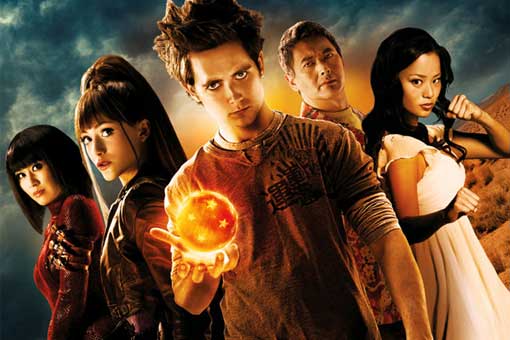
Based very loosely on the original “Dragon Ball” story manga, “Dragonball Evolution” tells the story of Goku (Justin Chatwin), a mild-mannered high school student and martial artist living with his grandfather, Gohan (Randall Duk Kim). He’s relentlessly bullied by all but his crush, Chi-Chi (Jamie Chung) and the only silver lining he has to look forward to (his eighteenth birthday) is cut short when an ancient demon overlord named Piccolo (James Marsters) kills his grandfather for the artifact that was to be given to Goku as a present: one of the seven magic Dragon Balls. These starry glass orbs, sought out by many but found by few, are rumored to have the power to summon a powerful dragon capable of granting wishes, and Goku is instructed by his dying grandfather to seek out the legendary martial arts master Muten Roshi (Chow Yun Fat), who possesses both another Dragon Ball and the skills needed to help Goku continue his training. Joining him too is Chi-Chi, a young engineer named Bulma (Emmy Rossum) and an opportunistic thief named Yamcha (Joon Park), all of them banding together to seek out the Dragon Balls before Lord Piccolo has another chance at ultimate power.

As bad as I suspected this was going to be, I’m at least glad to see some great acting among the otherwise bored, wooden, and unfocused cast. Hong Kong legend Chow Yun Fat as Roshi, for instance, was a great casting choice in spite of the age gap, and he gives a remarkable performance considering the awful script gives him nothing to work with. James Marsters is similarly wasted as Piccolo, as the actor can and has done villains much better than what the movie is letting him portray. Those sorts of limitations, I feel, are reflective of the entire movie itself: a half-hearted effort. For a start, the production was clearly done as cheaply as possible. Every costume (especially Goku’s iconic martial arts uniform) looks like a discount Halloween costume, the sets consist of fake looking blue-screens of desert landscapes, and even the special effects during fight and magic scenes are laughably executed to cut corners. This rings especially true for the ki attacks, all of which look like computer screen-savers. Barring the two that I mentioned, the casting is also completely off, and it’s unambiguously worse here than in “Ghost in the Shell”, since Scarlett Johansson was at least able to deliver a fairly gripping performance. Justin Chatwin as Goku, meanwhile, was entirely miscast, and not just because of the obvious case of whitewashing. I won’t place 100% of the blame on him, especially seeing how meandering the direction is here, but Chatwin delivers the same kind of heroic monologues the original Goku would spout with all the passion of an automated phone caller, and his attempts at wrenching emotions out of theoretically dramatic scenes are rendered laughable as a result of his apparent inability to appear invested in the story. What baffles me most about this, however, is trying to figure out what kind of thought process led someone to make a more “grounded” version of Akira Toriyama’s passion project. Even at its worse, the original manga and many, many series that succeeded this movie’s source material were written with passion and character, both literal and metaphorical. This film could have at least done well to capture the cheesy, action-packed fun of the shows that came after the old “Dragon Ball” manga, but instead, this feels like a cheap mockbuster mean to make as much money as could be gleamed from such a low-effort disaster. Whereas “Ghost in the Shell” at least attempted to save the original themes of the animated film from being lost in Americanization, this film seems more like an internet fan film without the kind of passion and creators’ attachment that would otherwise forgive this sort of amateurishness.

I’d normally go on, but in truth, I don’t enjoy playing the part of the “angry critic”, and really, the only purpose that “Dragonball Evolution” serves is to highlight what purist fans are talking about when they say they dread American adaptations of anime. This is easily the worst of those by miles, and deserved every bit of mockery it’s already received. Avoid, avoid, avoid.

Rich Retrospectives- Ghost in the Shell

GhostintheShell.jpg

The 2017 American adaptation of the beloved, historically significant cyberpunk anime film “Ghost in the Shell” was always going to be a tough film to cover for many reasons, not the least of which is the controversy surrounding its casting. Upon the announcement that Scarlett Johansson was to star in the movie as Motoko Kusanagi (aka The Major), fans and critics were reasonably incensed at the film’s whitewashing of the film’s protagonist. There’s a lot to unpack about the casting decision itself, and while much has been said before and since the film’s release about the tone-deaf nature of the casting, what’s most egregious to me about the decision was how Scarlett Johansson’s presence in the movie was reflective of a more comprehensive problem with the remake: a lack of true attachment to the source material. This is an especially contentious issue given the insurmountable significance of the original film and anime franchise- “Ghost in the Shell” isn’t just important in the history of anime, but for the broader film landscape as well. Films of similar significance, such as “The Matrix”, were inspired by Masamune Shirow’s vision of a cybernetically driven future Japan, and the Mamoru Oshii film that arguably began the anime’s rise to fame is rightfully held in high regard for its groundbreaking animation, direction, and observations on what constitutes sentient life. Additionally, the original film’s world was one that took a de-constructive examination of Japan’s government and relationship with technology, so a remake in which the setting was shifted to something more conventionally American would be a difficult thing to write at best and a display of disrespect for the original at worst. That’s not to say a more Western interpretation of this story couldn‘t work, but the film’s trailers and marketing were insistent on displaying remakes of iconic scenes from the animated film, meaning the film’s setting felt right away like it was torn between the visuals made for one kind of movie and the world building meant for another. The film couldn’t simultaneously be a faithful remake and a reinterpretation, and those clashing elements are exactly what led to the kind of production troubles that hit this movie. It’s a sad state of affairs, too, that I had to talk about the deeper flaws during production at this length, because those flaws, truthfully, are the most interesting things about this bland, paint-by-numbers cyberpunk slog.

“Ghost in the Shell”, much like its source material, is set in a distant future city dubbed “Section 9”, in which cybernetic body enhancements and replacements are the norm. The film’s title refers to the human brains and their relationships with the cyborg bodies being massed produced to house them: the metaphorical “ghosts” within a new, technologically advanced “shells”. Major Mira Killian (Scarlett Johansson) is one such cyborg: a counter-terrorist soldier who serves as one of the best lines of defense against cyber-criminals. When a rise in such criminal activity (involving the hacking of cybernetic bodies) reaches an all-time high, the Major is tasked with investigating and putting a stop to it, all while finding personal investment in taking down those responsible for a city-wide disaster in her past. The Major’s identity, the true motives of her superiors, and the nature of consciousness itself are all thrown into question by her dive into the city, and soon it becomes clear that the stakes at play are deeper than any petty hacker under the city’s streets.

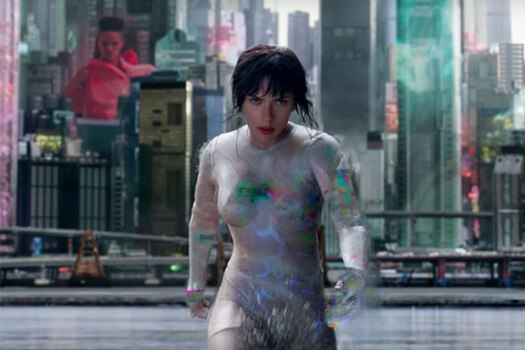
I’ve ragged considerably on this adaptation, and believe me, I’m far from finished, but there are actually a few things that the 2017 “Ghost in the Shell” has going for it. For instance, something that I’m sure anyone can agree on is that the visual effects and design of the live-action Section 9 are unmistakable achievements on the film’s end. It would have been fairly easy to craft just another cyberpunk city, but the art direction and visuals go out of their way to evoke the kind of Neo-Tokyo style of city that was so vividly realized in the animated classic. This movie’s world in colorful, brimming with tech, and rendered even more remarkable by the film’s use of neon light and a few noteworthy camera tricks. Also, while her casting was unmistakably a foolish move brought on by the need for an A-list actor, Scarlett Johansson does manage a fairly gripping performance. Hers is a different take on the Major in the way of characterization, but her increased emotional investment compared to the original character makes her a sympathetic protagonist in spite of the controversy radiating over the film. Additionally, I came fairly close to respecting this movie for its attempts at integrating the original’s themes in spite of the obvious difficulties in transitioning between mediums, as the original’s musings on the distinction between human consciousness and A.I. are still very much present in this movie’s second half.

Unfortunately, while the broad strokes are fairly sound, it’s the little deviations that make this movie utterly unremarkable in a world that already has the Mamoru Oshii anime film. For a start, while I will concede that Johansson did a good job, that aforementioned push to make the Major a more emotional character ends up completely uprooting and undermining her characterization compared to the original. Motoko Kusanagi of the original “Ghost in the Shell” was a stoic, no-nonsense heroine with a rather tedious tendency to be unflinching towards danger… and that tedium was the whole point. While the old Major had her emotional moments, what made her stand out as a character was the ways in which her stoicism reasonably reflected her nature as a cyborg super-soldier and commented on the mechanization of society, both literally and cognitively. Here, they make her considerably more feminine and internally unsure, and while that’s not necessarily a problem, this Major’s characterization lacks the finesse and nuance of the original, whose character revolved more around her independent strengths rather than simply positivity and determination. Where this version’s Major also falls short is in her existential reflection, which are given too much focus and serve only to demonstrate how the original’s character arc was far more polished. Also, aside from Johansson, the rest of the cast seems bored or distracted, like they’re not sure where to take the characters and material. What’s most glaring about the movie’s failings, however, are the deeper meta-textual elements it tries and fails to establish in the same groundbreaking ways as its source material. More is done with the city and designs of Section 9 and its inhabitants in the original film, and its over-emphasis on the Major’s personal stakes means it has less time to truly dive into the philosophical end of Masamune Shirow’s work. The result is that even the remake’s positive elements are the kind of things that remind you that the original film exists, and that you should probably just watch that. Even then, the thematic twists that this film can legitimately call its own are less about putting an interesting spin on the concept of “Ghost in the Shell” and more about serving as meta-textual responses to the film’s pre-release backlash. I won’t spoil exactly how, but this movie attempts to explain the whitewashing of the Major in a way that gels with the rest of the plot, and the result is almost fascinating in how it manages to do more damage than was originally dealt with the casting decision itself. Once again, this decision (along with the rest of the film’s creative decisions) only serves to tell you two things:

  1. The original “Ghost in the Shell” film exists.
  2. The changes here are either insubstantial or downright misguided

In other words, the 2017 “Ghost in the Shell”, while not nearly as painful as anime adaptations before it, is undermined by its attempts to either adapt or differentiate itself from the original film, and you’re better off just watching that instead of this uneven, misguided mess.