Rich Retrospectives- The Watermelon Woman

a62d23_68ff91f6656b4de9bc801f8bf0391e3e~mv2_d_2381_1795_s_2

This review was requested by Alex Palma. If you have a weekly request or review suggestion of your own, please leave your candidates in the comments below.

It’d be an understatement to say that things have become even more harrowing since last I’ve posted. Alas, there is little productivity in ruminating, and I’m at least very happy to report that the quarantine’s isolating effects have given me the time I’ve needed to discover a true cinematic gem from an acclaimed indie director of the “New Queer Cinema” scene. This director’s name is Cheryl Dunye, and the film in question, titled “The Watermelon Woman”, is one that she wrote, directed, and starred in. This film, originally released in 1996 and filmed on the streets of Philadelphia with a budget of $300,000, is proof positive of the notion that some of the most important films are also some of the most unknown. Though I expected something fairly exceptional going in, given that “The Watermelon Woman” was the first feature-length movie to be directed by a black lesbian director, I certainly wasn’t prepared for just how funny, sharply-written, and earnestly charming “The Watermelon Woman” truly is. As much the story of a film’s production as it is a character study about the dynamics of race and sexuality in the film industry, this film is one of the most down-to-earth and human stories that I’ve ever had the pleasure of taking a look at for the purpose of critique. Now, what is the story of “The Watermelon Woman”?

Set in Philadelphia during the mid-90’s, the film tells the story of Cheryl (Cheryl Dunye), a young black lesbian woman and video rental store employee living in Philadelphia, with aspirations of being a filmmaker. She, along with her friend and coworker Tamara (Valarie Walker), sets out to film a documentary about the life and career of the titular “Watermelon Woman”, Fae Richards, an actress made famous by portraying stereotypical “mammy” characters in various early films throughout the 1930’s. What begins as an ambitious film-making debut project becomes a journey of self-reflection for Cheryl as she finds love in the form of a film enthusiast named Diana (Guinevere Turner), discovers her peculiar kinship with Fae Richards, and discovers both the joys and woes of her passions and identity.

Independent movies of this variety are certainly not uncommon, to be sure. As with most cases, however, Cheryl Dunye has more ambition and firsthand experience with the themes and cinematic approach that Hollywood has attempted and failed several times to connect with. Indeed, “The Watermelon Woman” tackles several narrative, cinematic, and character-centric approaches in ways that previous and subsequent films have explored, and does so in an unmistakably raw, relatable and honest fashion. In a previous (and frankly, overly generous) reviews of previous movies, I spoke of how mainstream Hollywood films tend to sterilize or downplay the struggles that minorities of different races and orientations face in their stories, but in the hands of Cheryl Dunye, there is nothing idealized or unrealistic about this particular film’s narrative in spite of that narrative being a work of fiction. On the technical side of things, the most apparent contributor to that down-to-earth tone is the cinematography and editing. “The Watermelon Woman” is a textbook independent effort, and its budget certainly shows, but due to the implementation and context of its unconventional editing tricks, it comes off as keenly directed rather than amateurish. The transitions between the “home movie” documentary footage and the main story are sporadic, but intentionally so, as it plays into Cheryl’s characterization as an up-and-coming director in a way that’s woven smoothly into the overall narrative. Speaking of characterization, the acting and writing also make “The Watermelon Woman” all the more endearing. Most of the actors here are either unknowns or associates of the real Cheryl Dunye (with the exception of Guinevere Turner, who plays a perfect love interest in Diana), but their performances come off as both lively and natural, and they come off less like acting and more like reflecting real-life interactions of African-American lesbians under circumstances similar to those of these characters. Of course, the standout actress here is none other that Cheryl Dunye, whose role as the creator/star of the film could have been cynically called a self-insert has she not projected such a range of emotion on both the positive and negative ends. Such as she’s written here, Cheryl is as ambitious as she is emotionally lost at times, and as caring and vulnerable as she is cynical of the world around her. Hers is a story of a “starving artist” type, but due to the uniqueness of her struggle as a black lesbian filmmaker and the raw honesty of how she is written, that story never comes off as cloying or self-pitying like it would in stories like “Reality Bites” or “Rent”.

Between its well-realized protagonist, expertly-crafted “home movie” aesthetic, and its realistically-structured story of artistic endeavors and identity, it was almost impossible for me to recognize “The Watermelon Woman” as a work of fiction. If anything, this film is less a traditional story and more a compressed slice-of-life, straight from the streets about Philadelphia, that wears the heart of Cheryl Dunye on its sleeve and connects its audience to the director in a way that I can safely say I’ve never witnessed. Even in the more grandiose and theatrical moments, “The Watermelon Woman” never aims to be more than a down-to-earth example of one woman’s struggles, channeled through her own (admittedly rudimentary) cinematic expressions. That this particular film is under-represented even among independent films and films by African-American directors and writers is a fairly sad sight, but if nothing else, it gives me even more of a reason to recommend it. “The Watermelon Woman” has a charming, laid back sense of humor and a great sense of raw dramatic weight that sets it apart on numerous poignant levels, and work like that of Cheryl Dunye deserves much more attention than it has thus far received.
 

Rich Retrospectives- Pretty in Pink

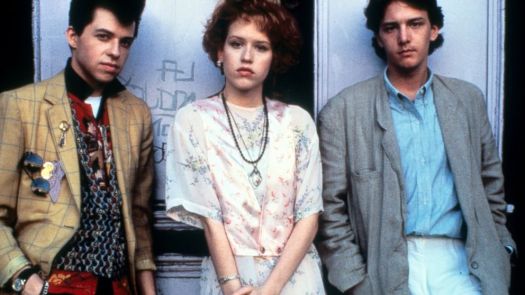
GTY_pretty_in_pink_jef_160226_16x9_992.jpg

Happy Mother’s Day, readers!

Last year on this site, I celebrated Mother’s Day with the typical “top 10” list, paying homage to what I considered some of the most memorable mothers across multiple genres of film. Naturally, I had to switch things up in the interest of avoiding redundancy, but thankfully- I knew almost immediately what the subject of a second Mother’s Day-themed post would be, thanks to the cinematic tastes of my own mother. As far back as I could remember, my mother always cited the John Hughes-scripted movie “Pretty in Pink” as her favorite of all time whenever she was asked, and given the time we had on our hands as of this review’s writing, we both agreed that Mother’s Day would be a great excuse for me to see this romantic comedy classic for the first time. Having seen it, I can definitely see what makes it my mom’s favorite film among others of its genre, because “Pretty in Pink” is definitely a great teen movie among many great teen movies written by Hughes.

Andie Walsh (Molly Ringwald) is a high school senior with a humble disposition and a humble upbringing, as she lives with her father Jack (Harry Dean Stanton) in a Chicago suburb that’s otherwise populated by preppy, upper-class students. Her life is something of a mixed bag- while she’s got a decent support network in the form of her father, her record store employer Iona (Annie Potts), and her secretly-smitten, wisecracking friend “Duckie” (Jon Cryer), but she’s something of a social outcast at school, and she’s having a hard time finding a date for senior prom. Thankfully, she finds one in the form of a handsome, kind preppy boy named Blane (Andrew McCarthy), and he asks her out shortly after a night on the town together. The days leading up to prom night, however, are not so simple, as Duckie begins oozing resentment for the newly-blooming romance and Blane is lambasted from all sides of his social circle for dating an outcast like Andie. With prom night fast approaching and a tangled web of romantic tension looming over Andie, she’s soon left to decide for herself where her love life is going to go.

One of John Hughes’ greatest strengths as a writer, especially earlier in his career, was his ability to write otherwise-typical high school stories and characters in a natural and relatable style, and it’s that sort of characterization ethos that makes films like “The Breakfast Club”, “Sixteen Candles”, and “Pretty in Pink” stand out among a deluge of 80’s teen movies. With a screenwriter like Hughes behind the film, then, it should come as no surprise that the characterization and dialogue are two of the best strengths of “Pretty in Pink”. Modern films tend to be very hit-or-miss with how they write teenagers and children, but John Hughes, especially in his earlier films, tended to write them flawlessly, and the dialogue in this film is snappy and amusing, but more than that, natural. Actually, “natural” would be the perfect way to describe the characters and their dialogue, and their believable interactions are only further bolstered by the performances of this movie’s cast. The undisputed highlight of this cast is definitely Molly Ringwald, who projects innocence and adolescent moodiness effortlessly as Andie, and delivers flawlessly in both comedic scenes and some of the film’s more somber moments. Andie is a different character entirely from “The Breakfast Club’s” Claire Standish, and Ringwald’s performance in this movie demonstrates that she has a lot of emotional range and could portray more than just the typical snobbish rich girl type. That’s not to say that Ringwald carries this movie’s story alone, however, as the supporting cast is also filled to the brim with character actors delivering endearing performances. There’s not a bad performance among the cast, but the standout performances for me were those of Annie Potts, who makes for a charmingly sarcastic, yet tender mentor figure as Iona, and Jon Cryer as Duckie. Duckie seems like an easy character to despise, being the prototypical “nice guy” that comes to Andie’s aid for romantic rewards and acts like a bitter jerk upon being denied those rewards, but his development across the story makes him a layered character, and Cryer’s acting gives some much-needed dimension to what could’ve been a hopeless romantic comic relief character. “Pretty in Pink” is also made memorable and enjoyable by its iconic soundtrack, filled to the brim with some of the best music of that decade’s new wave scene, with highlights including the title track by the Psychedelic Furs and the iconic romantic ballad “If You Leave” by Orchestral Manoeuvres in the Dark. Such great 80’s music would have been nothing without some keen usage, but if there’s anything director Howard Deutch can do, it’s direct a scene to music, and that sharp direction and use of insert songs make “Pretty in Pink” one of the most memorable “Brat Pack” movies from a film making standpoint.

All of these production elements are in service to a heartwarming, cute teenage romance story that comments on the destructive nature of classism and the separation of social spheres in high school, and that story is populated by likable characters that never lose their charm or authenticity in spite of some being much less sympathetic than others. Still, if I had to criticize one thing about “Pretty in Pink”, it’d be the ending and the resolution to the relationship conflicts presented by the narrative. While the prom scenes themselves are not poorly executed or uncompelling in the slightest, part of me wishes more time was focused on the dynamics of Andie and Blane’s relationship, since their interactions toward the end feel fairly rushed. To that end, the conflict surrounding the love interests’ separate social classes seems somewhat forced and under-cooked in places, as if that main plot line was fighting for screen time with the side characters and the B-plot about Andie’s father struggling to find work. Still, since the movie’s aforementioned strengths are as endearing and well-executed as they are, I feel safe in saying that criticism is a comparatively minor one in the grand scheme of things.

With that in mind, anyone thinking about revisiting or introducing themselves to “Pretty in Pink” should definitely do so. It’s sweet, funny, populated by likable characters and great new wave music, and fueled by a lot of heart. Thanks for introducing me to this 80’s classic, mom.


Rich Reviews- Trolls World Tour

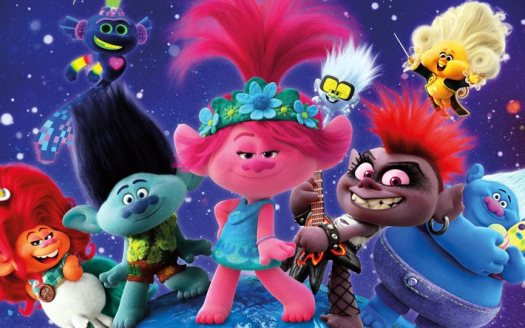
thumb2-trolls-world-tour-2020-4k-characters-promotional-materials.jpg

For the last couple of posts, Rich Reviews and associates have covered films that seem hauntingly apropos in the current climate of social distancing and isolation. Sometimes, when things are grim, films like “Oldboy” and “The Lighthouse” are required viewing material, not only because of their obvious cinematic achievements, but also for the sake of reminding their audiences that things can always get worse. Sometimes, a viewer needs dark reflections of reality in order to put things into perspective, since seeing isolation taken to its devastating extreme in film can truly enrich their pandemic-era media diets.

Sometimes, though, a viewer just needs to watch something simple and colorful with the younger members of their family.

Such was the void that the first “Trolls” film from DreamWorks filled back in 2016, and this is especially true of its sequel. Having seen both films, I can say that the “Trolls” films are best described as beautifully animated, chuckle-worthy, cinematic candy. Neither film is the type I’d go out of my way to watch again, but the first film especially is watchable, fun, and populated by amusing characters, so when I saw trailers for the sequel, in which other troll species based on multiple genres of music, I was mildly interested, if nothing else. The trailers alone showed how colorful and varied the animation and soundtrack was going to be, and with the addition of the Rock Trolls as despotic villains, I saw the potential for commentary on how music listeners are limiting themselves by swearing to just one genre. In other words, I expected to be passively entertained at the very least, and upon watching it with my brother and niece from the comfort of my home, I can happily say that “Trolls World Tour” succeeded in this… for the most part.

Set not too long after the first movie, “Trolls World Tour” once again follows the soon-to-be queen of the trolls, Poppy (Anna Kendrick), celebrating her successful start as the new monarch with her good friend, Branch (Justin Timberlake). Upon receiving a foreboding invitation from the Rock Troll queen Barb (Rachel Bloom), however, our two heroes learn of the divided troll lands, each separated by their own defining genres of music (Pop, Classical, Rock, Techno, Country and Funk) since times long past. When it becomes clear that Queen Barb seeks to steal the six harp strings from the other trolls and leave rock as the last remaining sound of the trolls, Poppy and Branch set out with their closest allies to warn the other tribes of the Rock armies, stop Queen Barb from taking over, and hopefully reunite the six main tribes after years of separation by their own differences. With so much on Poppy’s shoulders and a mix of unspoken love and doubt stewing in Branch’s heart, the two have a harrowing journey ahead of them.

Before giving the typical critique of this film, I want to first clarify that I have no deep-rooted resentment for animated films that simply seek to entertain. While I’ll gladly go out of my way to remind my readers that animation is a much more flexible medium than Hollywood and general audiences give it credit for, I’m okay with a major animated film being somewhat toothless if there’s at least something to enjoy. “Trolls World Tour” may be far from free of flaws, but I’d be lying if I said there wasn’t a lot of things to be amused by. Starting out with the obvious points, the animation and designs for the trolls and their respective musical tribes are poppy, cute, colorful, and varied. I’m especially impressed by how easy it is to identify a troll by their musical genre tribe, since a troll from each faction has a distinct unifying trait among them that can be spotted in spite of how distinct the individual trolls tend to be. The animation as a whole is also vibrant and energetic, and as with the musical numbers from the first movie, the choreography and direction is well-rendered and fun to look at. Something I saw as a highlight to this film’s animation, however, was how its comic timing actively enhances the movie’s sense of humor. The jokes in “Trolls World Tour” are very hit-or-miss, but the hits (specifically, those present in the snappy dialogue) are decently chuckle-worthy, and even the flatter jokes are somewhat saved by the expressiveness and energy of the characters’ movements. The characters are also still fairly likeable in spite of suffering from a bad case of diminishing returns, and it makes sense that the second in a line of animated jukebox musicals would have a message centering on the importance of having variety in one’s musical tastes. Musically, I’m a bit of a rock snob, but I appreciate the cheeky (albeit unsubtle) sub-textual message of not being bound to the “better” genre and keeping your horizons broad.

Unfortunately, that thematic beat, those wonderful visual gimmicks and those characters are only a small part of the movie as a whole, and the overall narrative to which these achievements are in service is what I’d call the biggest failing of “Trolls World Tour”. When the movie sticks to being a light, fun jukebox musical, it remains enjoyable, but when it shifts back into being a story of Poppy’s struggle to be a good queen and Branch’s inability to confess his love to her, it becomes an eye-rolling experience. Of course, every good film needs some conflict, but the interpersonal conflicts that arise in this particular movie are the kind of forced relationship strains that result from a complete lack of communication between our protagonists. There were numerous points throughout the movie that the two main characters could address both of these plot points, but since none of those points occur during the third act, their own issues are not addressed. I know this is far from a unique problem to “Trolls World Tour” (just see my review of “Frozen II” for proof positive of this), but the more I see it in family animated films in particular, the more it strikes me as hackneyed, and the fact this sort of narrative formula still exists in a year that includes the more emotionally mature “Onward” strikes me as a little sad. One could say I’m overthinking a DreamWorks movie, but that’s only because I know they’re capable of more than filling out the typical check-boxes, and I think it’s more intellectually honest to say that the writers of such films are under-thinking their stories.

All in all, “Trolls World Tour” is, as I said before, visual candy. It’s colorful, sweet at heart, and pretty to look at and listen to, but with other films available for streaming at a lower price than what we viewed it for, I’m not sure how enthusiastic my recommendation would be.

If you enjoy my reviews, please consider supporting me and becoming a patron for acknowledgements, requested reviews, and more via the link below-

https://www.patreon.com/user?u=23167206

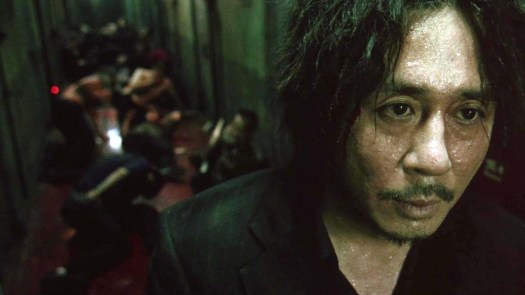
Rich Retrospectives- Oldboy

oldboy.jpg

WARNING: The subject of the following review (and the review itself) contains references to graphic violence, torture, and disturbing imagery. Reader discretion is advised.

“Laugh, and the world laughs with you. Weep, and you weep alone.”

Such a sad, cynical sequence of words seems to ring increasingly true in these harrowing times, and these are the words that Park Chan-wook’s celebrated thriller “Oldboy” begins with. Based loosely on the Japanese manga of the same name, this film about isolation, madness, and the emptiness and destruction of vengeance kept crawling back to my unconscious thoughts as our current climate of social distancing continues. With naught but streaming services and the occasional digital release to cull the shortage of recent review material, I’ve had to look back on either relatively recent films that slipped out of my reach in the past year, or on terrifyingly resonant films made even more so during the last several weeks. Just a few days ago, Daulton, my partner in filling schedule gaps, had revisited the bleak, yet beautiful modern classic “The Lighthouse”, and having seen that movie after his review, I couldn’t help but dwell on the horror of isolation and its portrayal in film. I’m sure every film enthusiast has that one film that evokes such dread in them, and having revisited “Oldboy” for this review, I can safely say that the movie is that such film for me.

This Korean mystery/thriller tells the story of Oh Dae-su (Choi Min-sik), an alcoholic businessman who, following an arrest for public drunkenness, is mysteriously imprisoned in a sealed, discreet hotel room. He has no idea who his kidnapper is, how long he is doomed to be imprisoned, or why he even did it, and to make matters worse, he’s completely sealed off from the outside world, with naught but the daily delivery meal and a T.V. to accompany him. After fifteen years of shadowboxing and tunneling through his wall to escape, Dae-su is released into the world with few clues as to who his captor could be. The year is now 2003, and Dae-su has been framed for the murder of his wife, leaving him with little choice but to embark on a violent and brutal investigation to find his assailant and answers regarding his motive. Aided by the kind hospitality of a young sushi chef (Kang Hye-jung) and driven into vengeful madness by isolation, Dae-su is nonetheless in for more pain than he could have ever imagined.

Admittedly, description alone does little to separate “Oldboy” from the typical revenge story (after all, it is the second installment in director Park Chan-wook’s “Vengeance” trilogy), but the film is nonetheless distinct from other films of this narrative by its unapologetic brutality and grim atmosphere. To that end, the cinematography and editing are both masterful. “Oldboy” is one of a few films that I can safely claim to utilize jump cuts to great effect, as they are used to wonderful effect in demonstrating the passage of time, no matter how short said passage may be. Park Chan-wook seems quite knowledgeable on when to make cuts and when to let a shot drag on, and no better example is there in this film than in its more violent scenes, especially the fights. When Dae-su is forced to fight for his life, the film takes its time more than it does establishing his initial arrest, and while this could be considered filler in most films, it only aids “Oldboy’s” grittiness and harrowing tone. In particular, the iconic hallway fight scene is still a masterwork of action cinema, if not for its goriness, then for the claustrophobic and nerve-wracking tone set by that single, prolonged tracking shot. Also aiding the grim realism of the film’s narrative is the performances, most especially that of Choi Min-sik as Dae-su. Through facial expressions and body language alone, we see firsthand the maddening and toxic effects that total isolation have had on Dae-su’s psyche, and the single-mindedness and pain in his eyes become even more palpable whenever he’s allowed dialogue. All in all, Min-sik’s performance is spot-on, and what’s already a gruesome script is made all the more so by his portrayal of Dae-su’s struggle.

As mentioned before, however, there’s much more to “Oldboy” than directionless cynicism and bloody violence. What separates the movie from other revenge stories is how thoroughly it deconstructs the very concept of vengeance, and it does so wonderfully with its narrative and atmosphere, both of which are aided by the performances and film-making. This atmosphere, at first, is comparable to a nightmare, in which Dae-su is trapped by threats that only he is aware of, before his journey to find escalates so far beyond the point of no return that it has to be seen to be believed. That’s not to say “Oldboy” is the first movie about revenge to comment on its futility- far from it. Still, the mystery at the center of its plot is so uniquely twisted and depraved that it audibly speaks to the intent of its writer/director- putting the ugliness and ripple effect of revenge on full display for his audience. By the time the credits roll, chances are you’ll be thinking about its examinations for hours (once you’re finished taking a nice, long post-screening shower), because few revenge stories are as brutally comprehensive and layered as this one.

I could go on and on about “Oldboy’s” successes, but I do believe it deserves to be seen firsthand. It’s claustrophobic, ghoulishly gory, and certainly not for the faint of heart or squeamish in constitution, but I feel safe in saying that it’s hailed as a classic for a reason.

If you enjoy my reviews, please consider supporting me and becoming a patron for acknowledgements, requested reviews, and more via the link below-

https://www.patreon.com/user?u=23167206


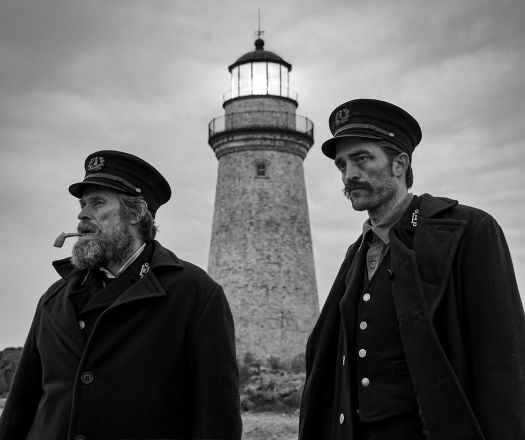
Daulton’s Diatribes- The Lighthouse

001-lh-ss-03805-rc-jpg-1571338342.jpg

 
Isolation is a nasty creature. It’s a concept I’m sure quite a few of you reading this are aware of in the wake of our current global pandemic. I will say that things could be worse, though, and you could be completely cut off from civilization without any friends, family, and stranded on a desolate rock in the sea. This is, of course, the premise behind the latest film from Robert Eggers, director of the critically acclaimed sleeper hit “The Witch”, a film simply known as “The Lighthouse”.

“The Lighthouse” is an excellent throwback to old-fashioned gothic horror in the vein of the more grounded works of Poe and early Lovecraft that even uses the 1.19:1 aspect ratio from the early days of film (circa the late 20s and early 30s), in addition to being shot entirely in black and white. I bring this up because of how gorgeous the film is to look at despite these self imposed limitations- there’s lots of amazing shot composition that shows how desolate and depressing the island is, along with chilling facial framing that makes the normally attractive Robert Pattinson look ghoulish and demented in quite a few scenes. The film, as stated before, is an exercise in minimalism on all fronts, only featuring two actors in the form of the aforementioned Pattinson and the always engaging Willem Dafoe as Winslow and Wake respectively.

In the late 19th century, a man named Winslow takes a job as a lighthouse wickie under the supervision of the veteran wickie and old fashioned man of the sea known as Wake on a desolate isle off the New England coast. The two start off very cold and distant from one another- Winslow is a quiet man who prefers to be lost in his work and Wake tends to throw his seniority in the position around causing further friction between him and Winslow. The month the two are supposed to spend together drags on and tensions flare and rise as it becomes clear that both Winslow and Wake are hiding secrets from one another and a vicious storm leaves them stranded on the island until further notice.

I would love to talk more about the plot, but as I said, it’s a fairly minimalist film and I can’t go further into details on the plot without major spoilers. Still, I don’t think that matters in the case of “The Lighthouse”, as its story isn’t the main draw. The film is absolutely saturated with hidden meanings, mythological allusions, and references to famous disastrous lighthouse incidents from reality that occurred during the time period. The acting is the kind where you really see just how much the craft is enhanced by body language and movement. There’s long stretches without any form of dialogue where I simply marveled at how well Robert Pattinson was able to convey his frustration over his situation entirely through his body language. Willem Dafoe is likewise engaging and hilarious as Wake- he fits the role of your classical old timey man of the sea so well that it’s hard not to burst into laughter when a frustrated Winslow calls him a “walking parody”.

I can easily say that I haven’t enjoyed watching a film in the theaters as much in recent years as I did “The Lighthouse”. The film features visually chilling cinematography, some of the most engaging performances I’ve seen in years, and a vast array of themes to dissect for all the film geeks out there who are into that. “The Lighthouse” asks a lot of its viewers, but if you love either of these actors, psychological horror, and the early days of horror films, then you owe it to yourself to see “The Lighthouse”.

(Special Thanks to Daulton for this post! Tune in to his YouTube Channel for video essays, reviews and more, coming soon: https://www.youtube.com/user/HouseMorrison/featured)

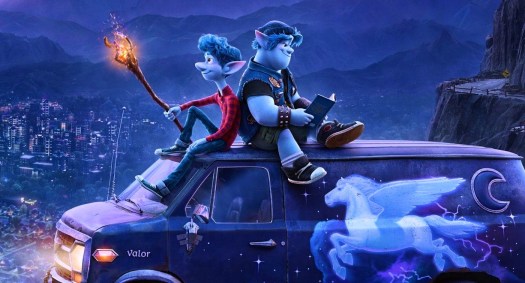
Rich Reviews- Onward

PIXAR-ONWARD_TOM-HOLLAND_CHRIS-PRATT_TRAILER_.jpg

If there’s anything that Disney’s cinematic history and filmography have taught me over years of analyzing films, it’s that audiences at large seem fairly unwilling to accept small successes when it comes to their films. That’s not to say that every film considered “low-tier Disney/Pixar” by critics was criticized unfairly upon its release, but more often that not, I’ve seen both mainline Disney and Pixar films be smart, unique, and valuable animated films in their own right… only to be dismissed by critics as “mediocre” or “just okay” because they either stray from outwardly original territory, follow typical story beats, or fail to break arbitrary box office records (see “Oliver and Company” and “Treasure Planet”, among many others, for proof positive of that). A Disney or Pixar movie, in other words, is not allowed to be flawed, lest a certain subset of their audience lambast the movie as a step down for the company as a whole. Still, while I was no stranger to this critical mindset in my early days of film critique, I don’t consider such a mindset to be productive criticism, and I’m okay with a movie being a little familiar if it means I can enjoy something that the story can call its own. With that in mind, I’d like to take a look at “Onward”, a movie that got decent reviews during its brief theatrical run, yet whose flaws and story beats have rendered the film a “disappointment” by the aforementioned purists. Is “Onward” a masterpiece whose theatrical success was cut tragically short by the ongoing pandemic, or do the people calling the film a mediocre Pixar entry have a point about its flaws? Well, let’s begin with the story…

Ian Lightfoot (Tom Holland) is a meek and perpetually anxious elf attending high school in a world populated by all sorts of fantasy races mythical creatures. This world, once teeming with magic, is now in an industrialized, urban age resembling our own, to the point where the presence of magic and the age of adventurers are all but forgotten. All of this changes, however, when his mother Laurel (Julia Louis-Dreyfus) shows Ian some posthumous 16th birthday gifts from his late father- a wizard’s staff, and a magic gem. With these gifts comes the incantation for a special magic spell- one that will resurrect his father for a day and allow them the bonding time that illness never allowed them to have. The spell goes horribly awry, however, only restoring Ian’s father from the waist down, and forcing Ian to embark on a journey to find a new gem to complete the spell. Thankfully, he’s not alone, with his older brother Barley (Chris Pratt), convinced of the historical accuracy of his favorite fantasy role-playing games, eager to guide the skeptical Ian towards the gem that will revive their father before their time is up. The journey, of course, is far from free of danger, and as they set out, Laurel resolves to follow them, recruiting the help of a retired adventurer and tacky restaurant owner known as The Manticore (Octavia Spencer).

As one could probably guess by the premise, the story and the progression thereof is fairly standard Pixar affair, with an unlikely duo setting out to find something of personal, yet deceptively overarching significance, albeit with a traditional fantasy twist. That story, however, is not as meaningful a flaw of “Onward” as that fantasy twist is, because the world building of this urban fantasy setting is a bit under-cooked. This Tolkien-esque world’s transformation from an enchanted realm to a modern urban setting with elves in place of humans is as straightforward and brief as it sounds, and I feel like they could have implemented the fantasy angle a bit more actively into the urban setting. While the team of magic being overshadowed by the conveniences of technology is given a pointed setup, there’s a lot of potential for portraying creatures like centaurs, fairies and ogres in a setting like this that I felt was under-utilized. In other words, the setting, while gorgeously animated and well-realized by some excellent art direction and designs, feels like little more than just a contemporary urban setting with some fantasy nods here and there.

As one also could have guessed by the telegraphed intro to this review, however, very little of the flaws present in the familiar story and setting matter, if any at all, to “Onward’s” strengths as a film. What “Onward” lacks in an original premise, it makes up for in wonder and sheer, unadulterated heart. While the world itself is a little half-baked, its implementation on the visual side of things is colorful, beautifully animated, and keenly designed, with the artists and animators lending some wonderful visual twists to the tried and true elf and monster designs of similar fantasy films. The animation itself is also a great strength of the visuals, with the timing during the sparingly used comedy scenes being on-point and well utilized. “Dull” is simply not a word you can use to describe the look and feel of “Onward”, as the journey Ian and Barley take is one through a wondrously crafted world full of subtle hints to the magic buried beneath the years of modernization. Speaking of that journey, the characters are also instantly likable in spite of all filling familiar roles, and they come off as much more three-dimensional and human than they would in lesser animated films. Ian, for instance, may seem like the typical introverted skeptic allergic to taking risks, but he’s voiced perfectly by Tom Holland, and the story works in conjunction with the stellar animation and acting to show viewers just how deeply his father’s death affected his ability to grow up. Thus, his progression along the journey to the gem feels all the more believable, and his growth as a protagonist is made all the more endearing by the chemistry he shares with his brother Barley. Barley, like Ian, could’ve easily been annoying comic relief in a different story, but like Ian, he’s excellently voiced, as Chris Pratt is both endearing and chuckle-worthy whenever he’s being the adventurous goofball, but surprisingly even more effective when things get dramatic. Also helping Barley’s likability as a character is his empathy, as his eagerness for adventure is never one that overshadows his protective instincts as an older brother. In fact, the cast as a whole is probably the film’s greatest strength, as there’s not a single unlikable character among the bunch.

What I believe to be the film’s true crowning achievement, however, is the grand journey at the center of its story. Unlike with many contemporary animated films, there are few contrivances for the sake of conflict, nor is there any true villain to set Ian and Barley back. Rather, the primary obstacles in their path are natural hazards and the complications of Ian and Barley’s relationship, and the journey is a well-written story of a young man coming to terms with the legacy of a father he never got to meet, and the importance of fantasy as a means of inspiring creativity and flexibility. In other words, the admittedly familiar and terse fantasy elements are not fatal flaws to a film like “Onward”, since the story is intimate, heartfelt, and impactful enough that it doesn’t need to break too much ground.

As such, “Onward” is a very good film, and possibly could be called “great” for being as heartfelt, wondrous, and beautiful as it is. It’s not nearly as close to flawless as some of the rest of Pixar’s filmography, but for telling a touching and exciting story starring two of the most realistically written brother characters in animated film, “Onward” deserves to be enjoyed at home, be it by a family or just a viewer looking for a good urban fantasy adventure.

Rich Reviews- Tiger King: Murder, Mayhem and Madness

ZSgWmDbGVZUJWAR-800x450-noPad

WARNING: The subject of the following review contains references to real-world criminal violence, animal cruelty, and abuse. Reader discretion is advised.

It’d be an understatement to say that we’re all operating under… harrowing circumstances of late, to the point where even a consistent schedule outside of reviewing films and other media has been hard to maintain. Still, if there’s one tiny silver lining to being under such circumstances, it’s the increase in media being released on home streaming services. Venues such as Netflix, Hulu, and Disney+ had already begun to make headlines for introducing a wide spectrum of T.V. series and films to a more available and receptive audience, but with home entertainment becoming a more imperative asset of life than it possibly ever has been, it should come as no surprise that such services have filled that void for many a home audience. Of course, as with any sort of long-running filmography, the individual level of quality for any given show or movie can startlingly vary, which brings us to the subject of the latest “Rich Review”: the Netflix true crime documentary series “Tiger King”. Presented as an exposé of the crimes and conspiracies perpetrated by incarcerated zoo manager and failed politician “Joe Exotic”, the seven-episode series is, simply put, every bit as chaotic and gruesome as the full title implies, and such content is the source of both its flaws and its intrigue and entertainment value. One could probably expect any documentation of this eccentric, borderline deranged individual to be rife with morbidly enrapturing accounts, but this series’ investigation of Exotic’s business ventures, his associates and his eventual crime-induced fall from “grace” crafts a crime thriller narrative of conspiracy, hubris, and mutual distrust between allies and enemies alike.

Normally, this section is where I’d deliver the typical plot synopsis, but seeing as how I’m exploring thus-uncharted territory for this website by reviewing a true crime series, I’ll be taking a different approach to how I critique this one, so this post will most likely end up on the shorter side length-wise. I’m admittedly unfamiliar with the true crime format of limited series, which is the main reason why “Tiger King” was such a difficult subject to review, but I did have some assistance from a friend who has made a hobby out of binge-watching these kinds of shows. With that in mind, this friend told me that “Tiger King” is fairly weak as a true crime documentary in numerous ways, especially considering how it leaves certain questions about Joe Exotic and activist Carole Baskin unanswered in favor of sensationalizing the business and political antics of the gun-toting zookeeper. Typical documentaries of this format, she says, should focus less on the spectacle and a bit more on the facts, and while this show does shed some light on the evolution of exotic animal law in the United States, I can’t help but feel like my friend had a point about this series being style over substance.

Still, given that tonal approach, I feel like it’s also fair to look at this series from an entertainment perspective, and with my typical critical approach in mind, I have to admit that “Tiger King” does manage to be consistently engaging and entertaining at the very least. For instance, the cinematography present in the transitions between interviews and TV footage is bold, smooth, and well-directed, and the editing ensures that viewers’ attentions are firmly secured. One on-the-nose, yet effective example of this lies in how the series uses Joe Exotic’s country music (yes, really) to accentuate a point being made about him by former employees and business rivals being interviewed. This cinematic style is in service to what I believe to be the greatest strengths of “Tiger King”: spectacle and style. Joe Exotic is an unquestionably despicable individual for how he treated the animals under his care, the workers under his employ, and the activists that posed threats, both real and perceived, to his big cat exhibitions and breeding business. Still, his is a story that needs to be seen to be believed, and the documentary offers a seemingly hyperbolic, yet comprehensive and compelling look at his history as a zookeeper, businessman, entertainer, and unlikely political figure that is a narrative about a hostile underworld of animal rights as much as it is a true crime series.
As a narrative, “Tiger King” is lacking in sympathetic characters, as even the ones that eventually see to Joe’s downfall are painted as self-serving and complicit in crimes in their own ways, but that sort of tonal approach makes the series engaging and suspenseful in the same way that crime movies like “Scarface” and “Uncut Gems” are. Like those films, “Tiger King” tells a story of a man whose charisma and success in his line of work breeds hubris and hostility that proves to be his undoing on numerous levels, and if you’ll forgive me for being vague, it’s only because I think this is worth a watch for how morbidly engaging and readily available it is.

All in all, my thoughts on “Tiger King” are as messy and mixed as the series itself. It’s unquestionably gaudy, and the animal cruelty being exposed will prove undoubtedly difficult to witness (as it was for me), but there’s a sick level of intrigue to this seven-parter that makes it imperative viewing for those confined to their homes.

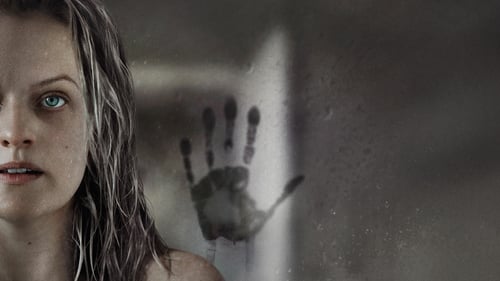
Rich Reviews- The Invisible Man (2020)

uZMZyvarQuXLRqf3xdpdMqzdtjb.jpg

It’s truly a shame how much public expectations (or at least, those of initial onlookers) for the recent re-imagining of H.G. Wells’ “The Invisible Man” were poisoned by the failed cinematic experiment that preceded it. In 2017, Universal released a terrible take on one of its classic movie monsters with “The Mummy”, and the film’s poor critical reception and disastrous box office returns all but sealed the fate of the studio’s cinematic franchise, the “Dark Universe”. While the existence of that failed attempt at serialized, interconnected films shouldn’t necessarily inform one’s impressions of future adaptations of the “Universal Horror” icons, it’s telling that those icons were all but dormant in cinema until this remake, the trailers for which had the markings of a jump-scare riddled mess. On a personal note, hearing that the writer and director of “Saw” also wrote and directed this modernization made me more than a little skeptical in that regard, especially given my instinctual aversion to jump-scares. So, with the amateur marketing and the creative team behind the “Invisible Man” remake seeming to spell doom for the finished product, how did the end result turn out?

Well, if there’s anything the final product should teach you, it’s that one should never judge a book by its covers, and that a remake can modernize the source material and expand on its themes without being too separate from its inspiration. Such is exactly what this “Invisible Man” film sets out to do, and it not only succeeds in establishing its own thematic identity, but also manages to be a modern take on the source material’s narrative without coming across as hackneyed or clumsy. This film, released just last week to almost universal praise, has earned every bit of that acclaim for taking the already unsettling themes of the H.G. Wells story and giving it a fresh, intense new spin. So, what kind of story does this new spin tell?

Cecilia Kass (Elizabeth Moss) lives a life of all-encompassing fear and paranoia following her escape from her abusive ex-boyfriend, Adrien Griffin. Even hearing of his sudden death two weeks after her departure from his lavish beach-side home does little to cull her fears, for while she lives in relative safety with her police detective friend James (Aldis Hodge) with the promise of millions of dollars from Adrien’s will, she also suspects that his cycle of gaslighting and domineering is far from over. Most unsettling of all is the string of strange happenings wherever she goes, from the presence that only she seems to notice around the house to the harm that seems to befall anyone close to Cecilia. As Adrien was an optic science genius, Cecilia suspects that her unrelenting abuser is both alive and invisible, but with nothing supporting her supposedly implausible theory and the suspicion of her friends, her family and the law all against her, she soon finds herself in the midst of a deadly cat-and-mouse chase, all while wondering if it’s Adrien or her mind that’s been playing so many tricks on her.

Growing up, I was an enthusiastic reader of the works of H.G. Wells, and I was always going to look at any adaptation of his works with a lot of scrutiny thanks to the author’s importance to the science fiction genre as a whole. Still, while the original book and the classic Claude Rains Universal film were fascinating takes on the horror of an invisible threat and the dangers of science left to the hands of a madman, those themes could very well have been played out and tired by the time of this remake, so it only makes sense that this new take on “The Invisible Man” focuses more on being a modern re-contextualization than being a remake set in our present day. Before expounding on how that works on a deeper thematic level, however, I should get all of the obvious praise out of the way by first addressing the stellar acting. The cast across the board does wonders at performing believably as their respective characters, but it probably goes without saying that Elizabeth Moss absolutely steals the show as Cecilia. The character could have fell into the typical beats of a paint-by-numbers scream queen, but Moss’s performance works in perfect harmony with the sympathy-eliciting screenplay, and hers is a struggle punctuated by relatable fear, uncertainty, and eventual determination as she risks everything to exposed the veiled threat haunting her to the world. Elizabeth Moss is running a marathon of acting in this film, and it’ll be saddening to me if she receives nothing in the way of accolades for this palpably heartfelt portrayal of a woman running for her life.

“The Invisible Man” is also a thoroughly impressive film on the technical and cinematic side of things. While the prospect of an invisible assailant is nothing new to horror films (both classic and modern), this movie more than compensates through sheer, unadulterated atmosphere and anxiety-inducing tension. Even the calmest scenes of Cecilia walking through the house are made all the more nail-biting by the expert use of long, Kubrick-esque empty shots from her perspective. In fact, the film’s pacing may be its greatest strength in terms of building up scares, as those long shots work wonders at taking viewers in and out of anxiety and for faking them out without being too telegraphed or predictable. What’s most impressive in terms of this film’s cinematography, however, is its incorporation of Cecilia’s perspective. Most of what we see of Cecilia’s unseen attacker is from her point of view, which not only allows viewers to empathize with her struggle, but also aids the tense atmosphere of her search for the invisible stalker by putting us in the exact same position of trying in vain to spot clues to his location. It’s these kinds of camera tricks and filming techniques that takes the familiar premise in a remarkably fresh direction, which brings us to “The Invisible Man’s” greatest strength as a remake- its thematic aspirations and the narrative surrounding them.

Part of the horror of “The Invisible Man” throughout all the versions of the story is the voyeuristic potential of the titular villain’s powers, and it seems that Leigh Whannel was aware enough of that potential to implement it into a narrative about the dynamics of an abusive stalker and his victim. This take on “The Invisible Man” is, in essence, a horror film for women who feel ignored and powerless in the face of a real and unrelenting stalker, and there’s a lot of sub-textual commentary going on about how men with power and/or wealth hide behind their resources and exploit society’s views on “over-emotional women” for their own sinister ends. The very nature of invisibility makes it a powerful in-universe tool for gaslighting, which in turn makes for a tense morality tale on how ignoring victims and taking their circumstances at face value will only cause abuse and stalking (and the damage that follows) to escalate beyond the point of no return. As the original H.G. Wells story was already about the exploitation of scientific advancements by a malevolent sociopaths, this approach to the new movie’s narrative seems like a natural and brilliant expansion on the original’s themes.

With all of those brilliant moves in mind, “The Invisible Man” is a near-perfect modern remake of a sci-fi horror classic. Some scenes are held back ever so slightly by an overenthusiastic musical score, and the scenes in which actors must simulate being attacked by someone invisible are not quite seamless or devoid of inherent silliness, but the film is nonetheless a tense, harrowing, and smartly written horror film that makes me hope that Universal has more remakes like this in the works. Hats off to Leigh Whannel and the rest of the cast and crew- they really get what makes “The Invisible Man” so persistently scary.

If you enjoy my reviews, please consider supporting me and becoming a patron for acknowledgements, requested reviews, and more via the link below-

https://www.patreon.com/user?u=23167206


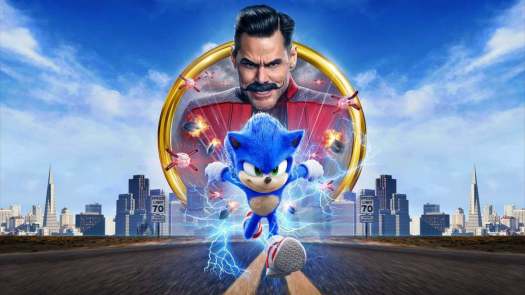
Rich Reviews- Sonic the Hedgehog

ob_f13f3a_stmyfcugd8iy6kambr6amwqx8bq.jpgSpecial thanks to this month’s new patron for joining others in supporting this and other “Rich Reviews”-
Doreen Gerold

Controversy surrounding the release of a film based on a popular video game franchise is certainly nothing new, but few were as initially groaned at by fans as the 2020 film based on Sega’s flagship character, Sonic the Hedgehog. This film is possibly most infamous for its initial teaser trailers, which was teeming with watered-down set pieces, a ridiculously out-of-place insertion of Coolio’s “Gangsta’s Paradise”, and Sonic’s horridly over-detailed redesign. So mocked was this grotesque looking, “realistic” (read: creepy) appearance of the film’s take on the Blue Blur that Paramount actually had the film delayed so that the film’s visual effects team could give the character a much-needed visual overhaul. From there, the film seemed to gradually change between trailers, and not just in the case of the hedgehog’s final design- gone was the overemphasis on the more realistic elements, replaced with more scenes of Sonic running in various locales- some real, and some based on the original games’ levels. While reception to the strange, uneven tonal changes were mixed, audiences’ reactions to the supposed increase in faithfulness to the games were certainly met with praise.

Prior to these changes, “Sonic the Hedgehog” seemed to have the markings of a typical failed video game-to-film adaptation: a license is picked up by a major studio that has so little faith in the IP that it tries to make the film more crowd-pleasing and realistic, which results in their fears of failure becoming a self-fulfilling prophecy. Instead, “Sonic the Hedgehog ended up breaking the finished project actually ended up in a strange middle ground between Hollywood realism and relative faithfulness to the look and feel of the games. Shockingly, this approach rendered the movie much better that it had any business being, though it’s not completely safe from the drawbacks of this adaptation approach. So, what’s the story of this take on the fastest character in gaming?

After escaping to Earth from a world beyond our own, Sonic (voiced by Ben Schwartz), a blue hedgehog with the ability to run at supersonic speeds, lives in hiding away from human society to avoid being exploited for his power. He lives a free, yet lonely life running across the town of Green Hills, Montana, and an emotional running mishap results in a great energy discharge followed by a city-wide power outage. Following this, the U.S. Department of Defense enlists the brilliant, yet deranged and egotistical Dr. Ivo Robotnik (Jim Carrey) to investigate the source of the outage, and the mad doctor sees this as an opportunity to harness the hedgehog’s speed as a power source. On the run for his life and left with few options, Sonic travels to San Francisco with Tom Wachowski (James Marsden), the local police sheriff, who is forced to aid the hedgehog’s escape and put his plans to changes departments on hold when Sonic’s missing portal rings and Robotnik’s reckless pursuit both pose a threat to Green Hills and possibly the world.

“Sonic the Hedgehog” is probably one of the most difficult video game licenses to adapt into any sort of film narrative, since the title character and his supporting cast have been subjected to all sorts of changing story beats and settings. The earlier, more cartoonish  games, for instance, were more or less consistently set on the animal-populated world of Mobius, while later games attempted (with mixed results) to place the characters in a comparatively grounded world resembling our own. With all of the incarnations and tonally different games that occupy the “Sonic” series, it’d be an understatement to say that picking any one approach to a film adaptation would be a difficult task, but what makes this film even stranger than the more modern “Sonic” games is the decision to fall into that aforementioned middle ground. Granted, there are both positives and negatives to the execution of the final release, so I’m going to first discuss what this film does right, since it actually manages to be entertaining in several ways.

Though I came in knowing that this film was aimed at the average children audience, there were some points in the movie’s favor that made in remarkably enjoyable. The first and most obvious of those positives is the film’s portrayal of Sonic himself. Even though the new design must have really thrown the film’s visual team through a loop, its implementation here is quite impressive. This movie’s Sonic is expressive, fluidly animated, and charmingly cartoonish while having just enough realistic detail as to look more impressive than uncanny. He’s also voiced well by Ben Schwartz, who manages to channel some of Sonic voice actor Roger Craig Smith’s wisecracking charm into the blue blur in spite of “movie Sonic” being more naive and curious than in the original games. The jokes in the movie are very hit-or-miss, but Schwartz delivers them with enough energy that even the cringe-worthy one liners are charming. The performances of the human actors are also on-point and chuckle worthy, and what could have been a dull non-entity of a human deuteragonist in Sheriff Wachowski manages to be a likable character thanks to James Marsden’s charming, down-to-earth performance. The story they’re in may be a fairly standard buddy road trip narrative, but Tom and Sonic manage to have some surprising chemistry despite the film’s brisk pace, and they end up making an amusing double act. The best performance here, however, in unmistakably that of Jim Carrey as Dr. Robotnik. At first, it seems like he’s falling into the same manic shtick that made him famous in films like “The Mask” and “Ace Ventura”, but as the film progresses, he delivers an ideal interpretation for an alternate take on the mad doctor, and he’s at his best when he gets to portray Robotnik’s trademark megalomania and gleeful villainy. What stuck out as the film’s greatest strength to me, however, was its action cinematography and direction. Director Jeff Fowler should be commended for his composition of the running and chase scenes, and given that this is his feature directorial debut, it’s especially impressive. When Sonic runs fast enough to make time seem to slow, it’s directed with manic energy and style, and there are some great POV running shots in this film that evoke fond memories of Sonic Adventure for me. It’s clear that there was some real passion for the character and his game series among the filmmakers, and when that passion is on display (via the aforementioned action scenes and the use of musical leitmotifs from the games), it makes for a fun, undemanding popcorn movie.

It’s when the film tries to spin its own narrative, however, that the flaws in the product as a whole start to show. Nowhere is the movie’s weakness more apparent than in its pacing, which, much like its title character, goes a mile a second without much in the way of slow scenes. While its true that most children’s films are briskly paced by most standards, the introduction of Sonic’s origins, his loneliness, and the catalyst to Robotnik’s entrance into the story are all thrown out much too quickly, and the encroachment of Robotnik’s robots means that the main characters aren’t given too much time to interact in spite of that aforementioned chemistry. Plot elements like Sonic’s home world, Robotnik’s reasons for descending into crazed villainy, and story homages to the world of the games are all hand-waved and given but minor glimpses, even though those are exactly what makes the film even stand out in the first place. It genuinely feels like these distinguishing story elements were cut down to make room for that “buddy road comedy” story, which is fairly predictable and standard when left on its own. The average viewer will likely predict where everyone will end up by the end, and when the world of the movie will actually start resembling the world of the game. In other words, this movie was severely crippled by its decision to be set on Earth, because it’s at its worst when its trying to be more conventional.

To paraphrase a tired expression, “Sonic the Hedgehog” is a movie that takes two steps forward, then nervously takes one and a half steps back. Kids, Sonic fans, or anyone looking for a reasonably entertaining and relatively impressive video game movie will probably enjoy this, but after seeing the passion and sense of wonder injected into “Detective Pikachu”, the film only comes across as slightly above average.

If you enjoy my reviews, please consider supporting me and becoming a patron for acknowledgements, requested reviews, and more via the link below-

https://www.patreon.com/user?u=23167206


Rich Reviews- Dolittle


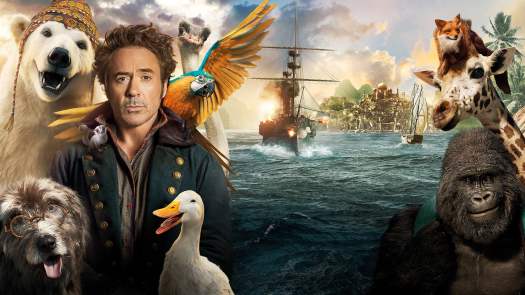
xcUf6yIheo78btFqihlRLftdR3M.jpg

There seems to be a sort of curse attached to any film adaptation of the “Doctor Dolittle” books by Hugh Lofting. For instance, the best one could say about the most fondly remembered musical movie from 1967 is that it had a catchy song, considering the borderline-legendary production issues and personality conflicts surrounding it, and the effects that it had on the popularity of films in its genre. Similarly, the best thing one could say about the 90’s Eddie Murphy film is that it was cute and supported enough by Murphy’s performance to be a passable children’s film. What’s remarkable about this 2020 box office dud, however, is how it manages to be a witless chore of a movie by even the standards of your average children’s film. History, it seems, repeats itself with this “Dolittle” film, as the long production delays and unmistakable lack of quality were both the death knells and the most noteworthy things about it. While I’d much rather talk at length about the failed attempts at salvaging this waste of theater projectors, the time for that is neither here nor there, so I’ll have to settle for pumping out an analysis of 2020’s “Dolittle” to fill the gap in between reviews of actually interesting material.

Dr. John Dolittle (Robert Downey Jr.) is an exceptional veterinarian, not only for his talents as a physician, but his ability to directly talk to the animals in his care. He’s also in the midst of a twilight in his career, however, following the death of his wife Lily during a lone voyage at sea. Broken and trusting only his animal helpers, he closes himself off from the human world and locks the door to his mansion. All of this changes, however, when two children stumble upon his home- Tommy Stubbins (Harry Collett), a kindhearted son of a hunter who brings an injured squirrel into his ward, and Rose (Carmel Laniado), maid of honor to Queen Victoria, who informs the acerbic doctor that the Queen is dying from a mysterious ailment. Though reluctant at first, Dolittle is inspired by the advice of his parrot Polynesia (Emma Thompson) and Tommy’s persistence in becoming his apprentice to set out on a voyage for the antidote for her poison, all while the hazardous waters, hostile islands, and malicious conspirators led by Dr. Blair Müdfly (Michael Sheen) threaten to doom both the Doctor’s crew and the Queen to fall.

Given the over-saturation of sequels to the admittedly charming modern take on the story starring Eddie Murphy, part of me was happy to see a “Doctor Dolittle” movie return the bilingual veterinarian to his Victorian roots. Unfortunately, I was unhappy to find that the film had little else going for it, and that its attempts at humor were somehow even staler than those present in the previous movies. In fact, the jokes riddled throughout the script here are all dull at best and cringe-worthy at worst, made all the more unbearable by their tendency to directly intrude on theoretically serious scenes. One notable example occurs midway through the film, wherein Dolittle talks an otherwise-hostile animal into divulging its internal grief… only to lead into a joke about clearing out its bowels. This and other scenes are emblematic of a bigger problem with the film as a whole- its erratic pacing and tone. Gone is the kind of character building and natural  introduction one would normally expect for a character like Dr. Dolittle, replaced instead with ham-fisted Emma Thompson narration and a hackneyed animated introduction that made me wonder why the rest of the film couldn’t be rendered in that admittedly nice-looking art style. From there, the pacing and editing problems only worsen, with the film attempting to build up to Doctor Dolittle’s animal-speaking… mere minutes after the introduction explains this ability, and the supposed main characters being sidelined to make room for the obnoxious, anachronistically voiced comic relief animals. One minute, you’ll endure a paint-by-numbers island adventure movie with stale attempts at drama and character interaction; when suddenly, the already-overburdened English-accented cast is cut off by American comedic actors lending voices to the animals that sound more like discount Dreamworks characters than the animal friends of an English veterinarian.

This haphazard combining of comedy designed for one movie and Victorian adventure set-pieces made for another gives me the impression that production on “Dolittle” had no real vision behind it, and the film as a whole seems to try so hard at appealing to everyone that it appeals to no one. No better sign is there of this than the amateur editing and mediocre at best effects. Narrative elements are set up without being paid of, like the injured squirrel Kevin’s mistrust of humans, and the story doesn’t progress so much as it jumps from scene to scene without any real transitioning between them. The CGI is also shockingly sub-par, with green screens looking painfully obvious behind the poorly-lit actors and the computer-generated critters briefly glitching past the live actors. CGI is a tenuous effects element that’s tough for any film to handle, but the hundreds of millions of dollars that went into this makes the sloppiness on display inexcusable. In fact, the fact that so much money went into a project this lacking in energy or real care is baffling to me, and I probably would have avoided this one like the plague had there been a theater screening “Parasite” nearby.

All in all, “Dolittle” plays almost like a parody of big-screen children’s adventure movies. It’s unfunny, tonally inconsistent, and only noteworthy by virtue of being emblematic of “Doctor Dolittle’s” troubled history with big-screen adaptations. More on that story shall come another day, and perhaps in a different format, but until then, I’ll leave you all with a warning to give this a shrugging skip.

If you enjoy my reviews, please consider supporting me and becoming a patron for acknowledgements, requested reviews, and more via the link below-

https://www.patreon.com/user?u=23167206