
WARNING: The subject of the following review (and the review itself) contains references to graphic violence, torture, and disturbing imagery. Reader discretion is advised.
“Laugh, and the world laughs with you. Weep, and you weep alone.”
Such a sad, cynical sequence of words seems to ring increasingly true in these harrowing times, and these are the words that Park Chan-wook’s celebrated thriller “Oldboy” begins with. Based loosely on the Japanese manga of the same name, this film about isolation, madness, and the emptiness and destruction of vengeance kept crawling back to my unconscious thoughts as our current climate of social distancing continues. With naught but streaming services and the occasional digital release to cull the shortage of recent review material, I’ve had to look back on either relatively recent films that slipped out of my reach in the past year, or on terrifyingly resonant films made even more so during the last several weeks. Just a few days ago, Daulton, my partner in filling schedule gaps, had revisited the bleak, yet beautiful modern classic “The Lighthouse”, and having seen that movie after his review, I couldn’t help but dwell on the horror of isolation and its portrayal in film. I’m sure every film enthusiast has that one film that evokes such dread in them, and having revisited “Oldboy” for this review, I can safely say that the movie is that such film for me.
This Korean mystery/thriller tells the story of Oh Dae-su (Choi Min-sik), an alcoholic businessman who, following an arrest for public drunkenness, is mysteriously imprisoned in a sealed, discreet hotel room. He has no idea who his kidnapper is, how long he is doomed to be imprisoned, or why he even did it, and to make matters worse, he’s completely sealed off from the outside world, with naught but the daily delivery meal and a T.V. to accompany him. After fifteen years of shadowboxing and tunneling through his wall to escape, Dae-su is released into the world with few clues as to who his captor could be. The year is now 2003, and Dae-su has been framed for the murder of his wife, leaving him with little choice but to embark on a violent and brutal investigation to find his assailant and answers regarding his motive. Aided by the kind hospitality of a young sushi chef (Kang Hye-jung) and driven into vengeful madness by isolation, Dae-su is nonetheless in for more pain than he could have ever imagined.
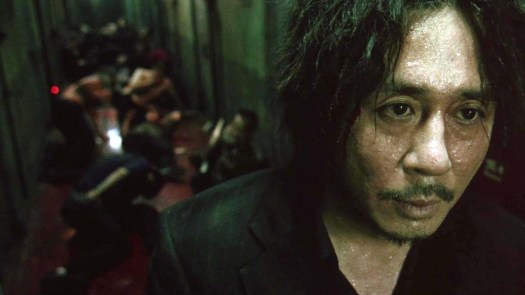
Admittedly, description alone does little to separate “Oldboy” from the typical revenge story (after all, it is the second installment in director Park Chan-wook’s “Vengeance” trilogy), but the film is nonetheless distinct from other films of this narrative by its unapologetic brutality and grim atmosphere. To that end, the cinematography and editing are both masterful. “Oldboy” is one of a few films that I can safely claim to utilize jump cuts to great effect, as they are used to wonderful effect in demonstrating the passage of time, no matter how short said passage may be. Park Chan-wook seems quite knowledgeable on when to make cuts and when to let a shot drag on, and no better example is there in this film than in its more violent scenes, especially the fights. When Dae-su is forced to fight for his life, the film takes its time more than it does establishing his initial arrest, and while this could be considered filler in most films, it only aids “Oldboy’s” grittiness and harrowing tone. In particular, the iconic hallway fight scene is still a masterwork of action cinema, if not for its goriness, then for the claustrophobic and nerve-wracking tone set by that single, prolonged tracking shot. Also aiding the grim realism of the film’s narrative is the performances, most especially that of Choi Min-sik as Dae-su. Through facial expressions and body language alone, we see firsthand the maddening and toxic effects that total isolation have had on Dae-su’s psyche, and the single-mindedness and pain in his eyes become even more palpable whenever he’s allowed dialogue. All in all, Min-sik’s performance is spot-on, and what’s already a gruesome script is made all the more so by his portrayal of Dae-su’s struggle.
As mentioned before, however, there’s much more to “Oldboy” than directionless cynicism and bloody violence. What separates the movie from other revenge stories is how thoroughly it deconstructs the very concept of vengeance, and it does so wonderfully with its narrative and atmosphere, both of which are aided by the performances and film-making. This atmosphere, at first, is comparable to a nightmare, in which Dae-su is trapped by threats that only he is aware of, before his journey to find escalates so far beyond the point of no return that it has to be seen to be believed. That’s not to say “Oldboy” is the first movie about revenge to comment on its futility- far from it. Still, the mystery at the center of its plot is so uniquely twisted and depraved that it audibly speaks to the intent of its writer/director- putting the ugliness and ripple effect of revenge on full display for his audience. By the time the credits roll, chances are you’ll be thinking about its examinations for hours (once you’re finished taking a nice, long post-screening shower), because few revenge stories are as brutally comprehensive and layered as this one.
I could go on and on about “Oldboy’s” successes, but I do believe it deserves to be seen firsthand. It’s claustrophobic, ghoulishly gory, and certainly not for the faint of heart or squeamish in constitution, but I feel safe in saying that it’s hailed as a classic for a reason.
If you enjoy my reviews, please consider supporting me and becoming a patron for acknowledgements, requested reviews, and more via the link below-
https://www.patreon.com/user?u=23167206
 Rich Reviews