
There seems to be a sort of curse attached to any film adaptation of the “Doctor Dolittle” books by Hugh Lofting. For instance, the best one could say about the most fondly remembered musical movie from 1967 is that it had a catchy song, considering the borderline-legendary production issues and personality conflicts surrounding it, and the effects that it had on the popularity of films in its genre. Similarly, the best thing one could say about the 90’s Eddie Murphy film is that it was cute and supported enough by Murphy’s performance to be a passable children’s film. What’s remarkable about this 2020 box office dud, however, is how it manages to be a witless chore of a movie by even the standards of your average children’s film. History, it seems, repeats itself with this “Dolittle” film, as the long production delays and unmistakable lack of quality were both the death knells and the most noteworthy things about it. While I’d much rather talk at length about the failed attempts at salvaging this waste of theater projectors, the time for that is neither here nor there, so I’ll have to settle for pumping out an analysis of 2020’s “Dolittle” to fill the gap in between reviews of actually interesting material.
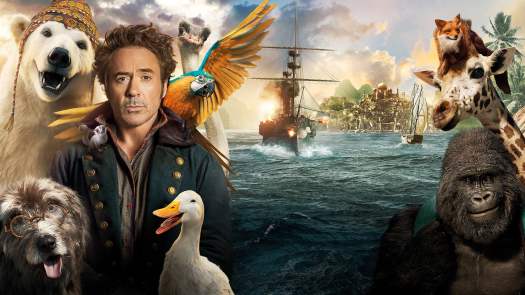
Dr. John Dolittle (Robert Downey Jr.) is an exceptional veterinarian, not only for his talents as a physician, but his ability to directly talk to the animals in his care. He’s also in the midst of a twilight in his career, however, following the death of his wife Lily during a lone voyage at sea. Broken and trusting only his animal helpers, he closes himself off from the human world and locks the door to his mansion. All of this changes, however, when two children stumble upon his home- Tommy Stubbins (Harry Collett), a kindhearted son of a hunter who brings an injured squirrel into his ward, and Rose (Carmel Laniado), maid of honor to Queen Victoria, who informs the acerbic doctor that the Queen is dying from a mysterious ailment. Though reluctant at first, Dolittle is inspired by the advice of his parrot Polynesia (Emma Thompson) and Tommy’s persistence in becoming his apprentice to set out on a voyage for the antidote for her poison, all while the hazardous waters, hostile islands, and malicious conspirators led by Dr. Blair Müdfly (Michael Sheen) threaten to doom both the Doctor’s crew and the Queen to fall.
Given the over-saturation of sequels to the admittedly charming modern take on the story starring Eddie Murphy, part of me was happy to see a “Doctor Dolittle” movie return the bilingual veterinarian to his Victorian roots. Unfortunately, I was unhappy to find that the film had little else going for it, and that its attempts at humor were somehow even staler than those present in the previous movies. In fact, the jokes riddled throughout the script here are all dull at best and cringe-worthy at worst, made all the more unbearable by their tendency to directly intrude on theoretically serious scenes. One notable example occurs midway through the film, wherein Dolittle talks an otherwise-hostile animal into divulging its internal grief… only to lead into a joke about clearing out its bowels. This and other scenes are emblematic of a bigger problem with the film as a whole- its erratic pacing and tone. Gone is the kind of character building and natural introduction one would normally expect for a character like Dr. Dolittle, replaced instead with ham-fisted Emma Thompson narration and a hackneyed animated introduction that made me wonder why the rest of the film couldn’t be rendered in that admittedly nice-looking art style. From there, the pacing and editing problems only worsen, with the film attempting to build up to Doctor Dolittle’s animal-speaking… mere minutes after the introduction explains this ability, and the supposed main characters being sidelined to make room for the obnoxious, anachronistically voiced comic relief animals. One minute, you’ll endure a paint-by-numbers island adventure movie with stale attempts at drama and character interaction; when suddenly, the already-overburdened English-accented cast is cut off by American comedic actors lending voices to the animals that sound more like discount Dreamworks characters than the animal friends of an English veterinarian.
This haphazard combining of comedy designed for one movie and Victorian adventure set-pieces made for another gives me the impression that production on “Dolittle” had no real vision behind it, and the film as a whole seems to try so hard at appealing to everyone that it appeals to no one. No better sign is there of this than the amateur editing and mediocre at best effects. Narrative elements are set up without being paid of, like the injured squirrel Kevin’s mistrust of humans, and the story doesn’t progress so much as it jumps from scene to scene without any real transitioning between them. The CGI is also shockingly sub-par, with green screens looking painfully obvious behind the poorly-lit actors and the computer-generated critters briefly glitching past the live actors. CGI is a tenuous effects element that’s tough for any film to handle, but the hundreds of millions of dollars that went into this makes the sloppiness on display inexcusable. In fact, the fact that so much money went into a project this lacking in energy or real care is baffling to me, and I probably would have avoided this one like the plague had there been a theater screening “Parasite” nearby.
All in all, “Dolittle” plays almost like a parody of big-screen children’s adventure movies. It’s unfunny, tonally inconsistent, and only noteworthy by virtue of being emblematic of “Doctor Dolittle’s” troubled history with big-screen adaptations. More on that story shall come another day, and perhaps in a different format, but until then, I’ll leave you all with a warning to give this a shrugging skip.
If you enjoy my reviews, please consider supporting me and becoming a patron for acknowledgements, requested reviews, and more via the link below-
https://www.patreon.com/user?u=23167206
 Rich Reviews