One of the most difficult things about film criticism, especially in regards to an entry in a long-running franchise such as “Star Wars”, is separating one’s methodical analyses of the “objective” quality of its production and narrative from one’s own personal attachments to that particular brand or setting. One can only accomplish so much in the way of legitimate insight on a film’s achievements and failures if they are hyper-focused on their attachment to a greater canon, after all. This is part of the reason why I wait as long as I do to review a film after I see it in theaters: initial impressions and theater reactions serve as flimsy foundations at best for an opinion worth writing about. Another obstacle in the field of criticism is separating one’s own opinion of a film from the discourse surrounding it, as it can be easy for the base-breaking debates about a film’s merits to inform an individual’s opinion about a movie they haven’t even seen before. As such, I’d like to think I do my best to view a movie as a critic and an analyst, and not as a purveyor or fan of any established franchise or filmography the film occupies.
As one could probably guess, both difficulties were very much present in reviewing “Star Wars: The Rise of Skywalker”, especially when one considers the vastly different receptions of the previous film, “The Last Jedi”, among professional critics and audiences, specifically longtime fans of the greater “Star Wars” canon. Speaking as a somewhat lapsed fan of the franchise, I enjoyed the previous entry in the Disney-helmed sequel trilogy of “Star Wars” films, for in spite of some major flaws, “The Last Jedi” was an ambitious entry in a series steeped in spectacle and escapist science fiction that sought to subvert audiences’ expectations of characters and the narrative they occupy. As one could probably imagine, however, this direction made “The Last Jedi” a veritable magnet for controversy among fans expecting a more straightforward and traditional “Star Wars” narrative, and as time ticked down to the release of the “Skywalker Saga’s” conclusion, Disney, J.J. Abrams and those involved in the screenwriting process were faced with a difficult choice:
A. Continue in the direction set by the previous film, keeping things fresh and unpredictable in spite of the obvious risks to audience retention,
Or…
B. Cater to the previously-subverted expectations of the fans and return to the technically impressive, yet safe and shallow spectacle set by “The Force Awakens”, guaranteeing the type of film the fans will enjoy (and spend money on) in the short term.
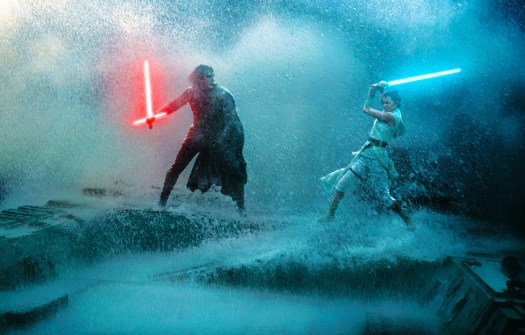
Seeing as how the film clearly sticks to choice B, it’s safe to say that sticking to spectacle has worked in some way, because I am in utter awe at the unmitigated, inept disaster that has resulted from the narrative decisions going into “Rise of Skywalker”. The film meant to cap off this sequel trilogy seems to be exactly what the fan have demanded their continuation be, and is a perfect demonstration as to why this kind of pandering approach is so poisonous to a film’s overall quality and longevity. With maximum consideration for spoilers, I’ll attempt to explain why fan service does not make a movie.
Shortly after the death of Supreme Leader Snoke at the hands of Kylo Ren (Adam Driver), The First Order once again mobilizes for galactic domination. Worse yet, the war between the Order and the Resistance seems to be leaning in the favor of the former, thanks to the reemergence of an ancient enemy of the free galaxy and the Jedi. The Resistance’s last hope is to find the location of the First Order’s home base and their secret weapons, both of which have remained uncharted for generations. Amidst this struggle, Rey (Daisy Ridley) is facing another conflict on a personal scale, torn between her vow to continue the Jedi legacy and the inexplicable pull that Kylo and the dark side seem to be exerting over her. Whatever choice she makes and whichever side remains victorious, one thing is made achingly clear: the end of the struggle is nigh, and the Force shall persist, one way or another…
And it will do so in the most hackneyed, predictable and ham-fisted way immaginable.
Inclined as I am to do so, I will NOT be spoiling anything about the plot of this film. I believe it completely unprofessional to ruin the contents of a story for anyone, regardless of its quality, because I feel it’s best for my criticisms to speak for itself, and because some of the bad material needs to be seen to be believed. Without context, however, I must recount how baffling it was for me when the first major retcon and abortion of plot logic occured in the first thirty seconds, during the traditional intro text crawl. If that was not indication enough, “The Rise of Skywalker’s” pacing problems are as inconceivably apparent as they are constant. The aforementioned returning threat is not established at all prior to this film, and the opening is dedicated to the rushed, hand-waving explanation of this return until cutting away to an action scene that wraps up in an equally rushed and baffling way. From there on out, “Rise of Skywalker” dedicates itself to being less a cohesive film and more an unnecessary apology for “The Last Jedi”, as characters that were once crucial to the development of the protagonists are barely even given the dignity of a line because of poor fan reception, and potential threats are immediatelly doused before they have a chance to allow the audience to doubt the outcome of each plot point and character arc. One awful (spolier-light) recipient of this is Finn, whose entire development under the struggle of being alone in his defection from the Order is quickly wrapped up barely halfway through the film, and the other characters fair even worse than that. Rather than dedicate itself to anything unpredictable or thought-provoking, the film wastes its admittedly amazing effects and cinematography and the talented performances of its misdirected cast on shallow fan service that ceases to make sense if thought about for even a second. In fact, I’d dare say this blind dedication to making a “movie for fans to enjoy” is a worse approach than even the malligned prequel trilogy helmed by George Lucas himself, since there were not nearly as many structural and artistic problems with the redactions forced into JJ Abrams’ narrative this time around. “The Rise of Skywalker”, in essence, is just a typical “Star Wars” movie, and that is what its deadly flaw is.
I may be skimping a bit on the technical points of its quality a bit, since those are admittedly on point when taken on its own. But the lengths that this film goes to in its horribly written, horribly implemented and thematically damning conclusion to appeal to the supposedly let down fans who expected more of the same is as soulless as it is infuriating to witness. I’m not one to say anything ruined the idea of “Star Wars” or the art of filmmaking to me, but knowing that the kind of complaints directed at aspirational films like “The Last Jedi” had an actual effect on the filmmaking process speaks volumes to me about the proliferation of the soulless design of “film as product” that’s only getting worse among big production companies. It’s sad to me that this is what I end the year with, but I’m hoping I’ll have to be exposed to less of this the next time around.
Avoid “The Rise of Skywalker” at all costs, and if you see it, don’t be surprised if you’re enraged for hours on end.
If you enjoy my reviews, please consider supporting me and becoming a patron for acknowledgements, requested reviews, and more via the link below-
https://www.patreon.com/user?u=23167206
 Rich Reviews