
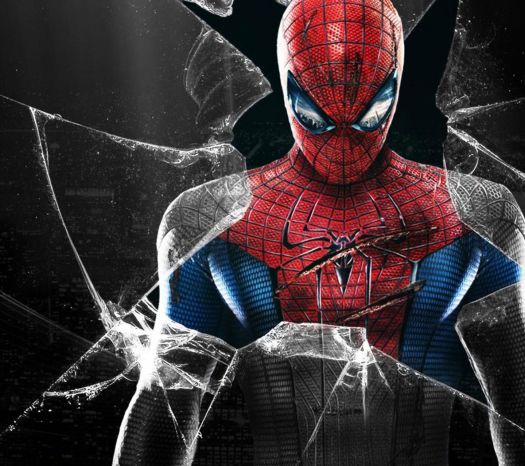
After time came and went for the Sam Raimi “Spider-Man” films, Sony opted for a new reboot series of Spider-Man films, dubbed “The Amazing Spider-Man”, headed by director Marc Webb. The planned series, however, ended with just two movies after Sony and Marvel came to a sort of impasse with the “Spider-Man” film license, resulting in the previously-discussed Spider-Man: Homecoming and several Marvel Cinematic Universe appearances. Prior to this, however, this new take on “Spider-Man” seemed to be a profitable feather in Sony’s cap, and in spite of mixed reception soon to follow, the first of these films received decently positive reviews overall. Looking back, I can see where the positive reaction came from. The first “Amazing Spider-Man” film does capture the wonder and essence of the character in places, and is populated with a likeable, talented cast. Still, in numerous other ways, I can’t help but believe that Sony took a self-inflicted shot to the proverbial foot with the decision to make a more “grounded” and less theatrical take on the character. When it wants to be a “Spider-Man” movie, it succeeds fairly often, but when it’s trying to be a “different” movie than its predecessors, it completely face-plants just as much.
Beginning at an earlier stage of the life of Peter Parker, The Amazing Spider-Man sets the stage for the story we know by showing an orphaned Peter Parker (Andrew Garfield) rendered an orphan upon the murder of his parents and adopted by Ben and May Parker (Martin Sheen and Sally Field). Upon growing up, he comes to be a brilliant student of science, but ostracized by his peers for his (supposed) eccentricity and nerdy tendencies, with even his romantic efforts towards the beautiful and intelligent Gwen Stacy (Emma Stone) falling flat with her policeman father (Dennis Leary) looming over them. Things take a turn from the thrilling, however, when he is bitten by a genetically modified spider while investigating Oscorp for signs of his parents’ history and granted its proportional strength, senses, and climbing ability. He also manages to invent bio-mechanical web-shooters from schematics retrieved from the laboratory. Peter learns to use his newfound powers to more selfless ends, however, when his Uncle Ben is killed by a robber he ignored on the street, and soon finds that New York truly needs a hero when the experiments of Dr. Curt Connors (Rhys Ifans) lead to the rise of a reptilian menace birthed from his desire to regenerate a lost limb.
Before I begin the review proper, I want to clarify that the darker take on the Spider-Man character need not necessarily be a bad thing (See MTV’s Spider-Man Animated Series for proof positive of that). That said, like all things, the quality of such a decision is all in execution. Still, there are a lot of good scenes peppered throughout this one. The web-swinging scenes, for instance, are well-executed, as are quite a few of the action and heroic scenes. One such (fairly spoiler-free) humanizing moment is a scene in which Spider-Man struggles to save a scared boy stuck in a car hanging alongside a highway bridge, only succeeding in doing so by unmasking to calm him down. Moments like this tap into the spirit of Spider-Man, and it’s one of only a few scenes that I can remember being edited much better than a majority of the plot-centered scenes. In fact, it doesn’t take long for the editing problems to make themselves terrifyingly apparent. Quick fades to black are used where they’re not necessary, and the scenes setting up the origins of Peter as Spider-Man are erratically, often comically rushed. I can understand trimming such scenes in order to avoid origin fatigue, but the problem here is that the establishment of Peter as a character takes a back seat to the overarching mystery of Peter’s parents, which goes nowhere save for setting up future movies. Even then, this version of Peter Parker is too conventionally “appealing” and inconsistently characterized to be wholly likable. Andrew Garfield is a fantastic actor, and when he finally gets a chance to be Spider-Man, he delivers well in the way of quips and one-liners.
As Peter Parker, though, he lacks the awkwardness and nerdy ineptitude that defines Peter throughout every adaptation, and he flip-flops between “quiet, cool intellectual” and “angry, vengeful narcissist” according to the tone of the plot as it progresses. Gone is the self-reflection following Uncle Ben’s death, replaced with pure vengeance, and the Spider-Man costume setup becomes less about crafting a heroic identity and more about avoiding the authorities. The result starts Peter out as mean-spirited, and it takes far too long for Garfield’s natural charisma to finally render this Peter Parker sympathetic. The romance between Peter and Gwen Stacy also ranges from passable to unbearable, and even when their romantic improvisation is passable, the scenes in which they take place drag on for much too long, and probably would have benefited from a more concise script. This is to say nothing of the film’s villain, whose blasé motivations and franchise-mandated connection to the uninteresting mystery render him completely superfluous until he reveals his hilarious plans to turn the population of New York into lizards. That’s not to say there’s absolutely nothing to enjoy here: Andrew Garfield does an admirable job in spite of the odds being against him, and the rest of the cast (Emma Stone especially) manage natural and on-point performances, but The Amazing Spider-Man tries much too hard to be “not the Sam Raimi movie” that it ends up having no distinct identity of its own. Still, there was potential for expansion, and Sony clearly had the want for it. More on how that completely failed in the next review.
 Rich Reviews