
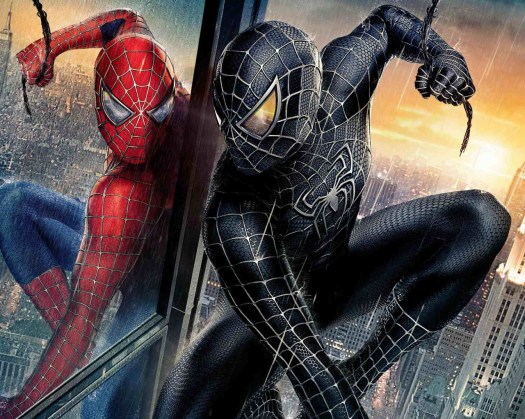
Sometimes, an audience just doesn’t know what it truly wants, and this is especially true of adaptation. If there’s anything that past superhero adaptations have proven, it’s that being at the mercy of what would draw in the biggest crowd is just as risky as going in a different direction than expected with an iconic hero. It was probably easy for people in 2007 to say they wanted to see even more iconic Spider-Man villains in the next movie, but in execution, the realization of that wish ended up as messy and cluttered as these sorts of cinematic fan service inevitably tend to be. The first film wore its heart on its sleeve, and its strength came from its focus on the wonder and thrills of Spider-Man’s origins. The second one was flawed, but admirable in its bid to expand on the dramatic themes of the character, and both films benefited from a strong sense of focus on both its characters and the threats against them, something the third film simply lacked by comparison. That said, I’m in the camp of people who believe that retrospective criticism of Spider-Man 3 was fairly pedantic in hindsight, and while it is certainly a flawed conclusion to Sam Raimi’s trilogy, it’s fairly reassuring to see that the core spirit of the first two movies is still fairly present in this one.
A year has passed since the defeat of Doctor Octopus, and Peter Parker (Tobey Macguire) now has a semblance of stability in his life, having cemented his relationship with Mary Jane (Kirsten Dunst) and even planning to propose to her. Even with this upturn in his luck, however, the problems that his identity as Spider-Man breeds are still lurking ever closer, as petty criminal Flint Marko (Thomas Haden Church) gaining sand manipulating powers from experimental particle technology and Harry Osborn (James Franco) discovering the true identity of Spider-Man and using his father’s old tech to avenge his death. To make matters even worse, Spider-Man himself begins walking an anti-heroic path after a meteorite-born alien symboite attaches itself to Peter and begins fusing itself to the spider suit. This symbiote, though generous with the powers its grants, also begins corrupting Peter’s mind, and even if Peter manages to shake free from this mental grips, the entity may already have another host waiting in the wings: disgruntled journalist Eddie Brock (Topher Grace). With three villains gunning for him and the symbiote’s effects putting a strain on life outside of his costume, Peter Parker is undoubtedly in for the greatest struggle of his life.
Now, the first two movies have provided an abundance of evidence that a Spider-Man movie can be supported by just one antagonist, so the decision to shoehorn Goblin-Harry and the Venom symbiote into a story already juggling the Sandman and the requisite Peter drama is a rather iffy decision that I can only chalk up to studio mandate. I said that this movie was quite unfocused compared to its predecessors, and that is an understatement. That I was able to compress a premise synopsis into one paragraph is a miracle, because Spider-Man 3 (in this exact order) uses its run time to cover:
- Peter’s continued struggles at a legitimate relationship with Mary Jane
- The Black Suit Spider-Man arc
- The super villain origins of Sandman
- Harry Osborn’s lust for revenge and rise to villainy
- The love triangle between Spider-Man, Mary Jane Watson and Gwen Stacy
- …and the origin of Eddie Brock/Venom
The pacing and story problems don’t just end with the overarching plots, though. Individual scenes come and go at the blink of an eye, and while many have poked fun at the “Emo Peter dance scene”, my problems with it do not concern its hokey nature (though it certainly is that). Rather, the quick transition from that scene into Peter’s shocked realization that he is becoming more villainous is emblematic of the film’s greater problem of lacking a focus and moderation. That’s certainly not to say the movie doesn’t have its strengths, since James Franco was more than able to carry the conflicted nature of Harry’s character in spite of his compressed screen time, and Thomas Haden Church works equal wonders as Marko/Sandman. The character’s subplot about stealing for his poor, sick family is about as rushed as everything else in the movie, but Church gives the character sympathy coated in gruffness that feels like its coming from a genuine place. Its in areas like this (along with the continued excellence of the action scenes and effects) that Spider-Man 3 continues in the series’ heartfelt ethos, and it’s because of those moments that I’m not inclined to call it the disaster that fans have labeled it over the years. That said, if there’s one criticism that definitely does hold up about the film, it’s the ones surrounding Venom. Peter’s arc concerning the rejection of the symbiote is fine enough, but Venom himself is so shoehorned into the story that Brock’s turn to villainy by the film’s end is just laughable. I won’t blame Topher Grace too much for this, but the lack of meaningful development given to Brock means that he had to overcompensate in his performance by way of hammy acting (even for Spider-Man) and cringe-worthy attempts at humor and one-liners.
So, all in all, Spider-Man 3 can’t be accused of being overtly bad, but over-ambition crippled its narrative more than it ever did for the second film. While not a bad “Spider-Man” film, it’s certainly a bad sequel, and it’s a shame that Sam Raimi never got that planned fourth film to recover from it. More on what replaced that concept in the next review for “Spider-Month”.
 Rich Reviews