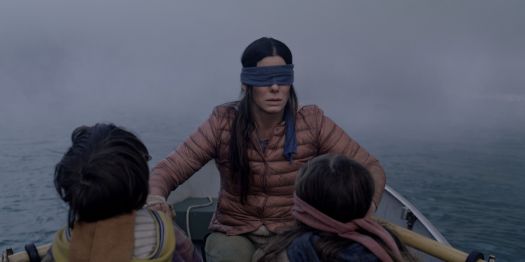
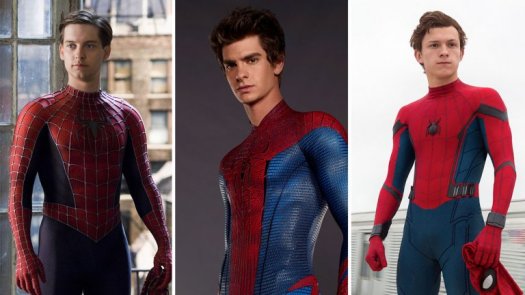
Rich Retrospectives- Top 10 Peter Parker Portrayals

spidermen_masks_off.jpg

With the recent Into the Spider-Verse review said and done, “Spider-Month” is on the verge of coming to a close. Before that, though, there’s tribute to pay for the science major that started the line of spider-men (and women, and pigs). And what better way is there to give the original his dues than looking at some of the best portrayals in all of media? Seeing as how Into the Spider-Verse is proof positive of countless successors to the original web-slinger, I thought I’d have some fun to cap off “Spider-Month” with a top 10 list of the best non-comic portrayals of Peter Parker. For this list, I’ll be ranking portrayals of the original Spider-Man in major motion pictures, video games, and animated series, based on the performances of the actors, their resonance with the character himself, and the quality of the film, show or game he stars in. Sadly, comic book takes on Parker are so numerous that I’m streamlining it to the examples in other media. That said, welcome to the end of Spider-Month. The #10 slot goes to…

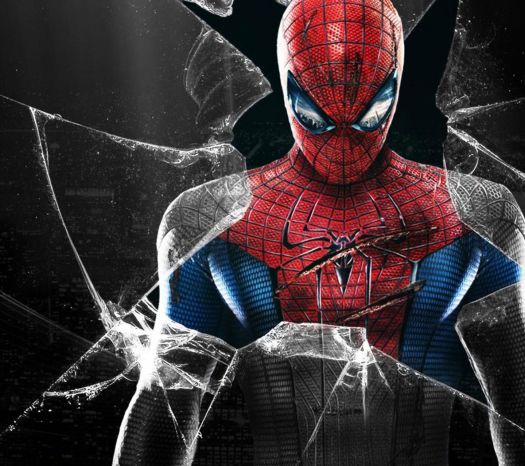
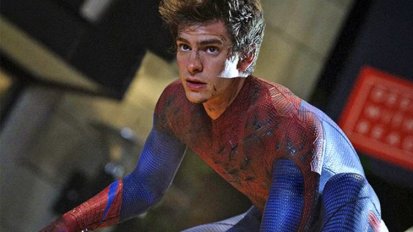
10. Andrew Garfield (The Amazing Spider-Man movies, 2012-2014)
andrew-garfield-spider-man-bisexual-fired.jpg

…Someone who really deserved to be in better movies. Though I’ve had more than simply mixed thoughts about the way this take on Peter was written, I can never take away from the performance itself. When he’s allowed the opportunity, Andrew Garfield manages some funny lines while donning the Spider-suit, and even manages some tender, humanizing moments during his interactions with civilians (especially children). Even in the second “Amazing” movie, where everything good about its predecessor was completely removed, Garfield managed to be an unambiguous silver-lining, due to some of the quips coming much more naturally to him. A good actor can even earn compliments under a bad script, and for giving it his all at making a relatable take on Spider-Man, Andrew Garfield hangs on tight to this countdown at #10.

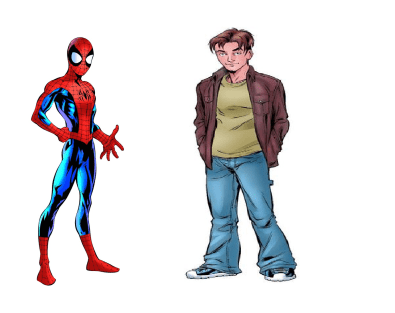
9. Sean Marquette (Ultimate Spider-Man, 2005)
spidey.png

The #9 entry goes to a more obscure entry in a long line of “Spider-Man” video games. Much like the comic after which it was titled, the PlayStation 2 game Ultimate Spider-Man is framed as a soft reboot of the character and his origins, and so this Peter Parker starts out in his teenage years once again. To this end, voice actor Sean Marquette gives the young hero a peppier, youthful voice befitting a superhero with just a couple of years under his belt. One can even hear him channeling his character Mac from the animated series Foster’s Home for Imaginary Friends, which fits Peter’s characterization here as a beleaguered bookworm character. What really surprised me, though, was his ability to convey stress and occasional rage that comes with the superhero territory. While Marquette doesn’t light the world on fire with any sort of new approach to the boy who would be Spider-Man, he certainly knows how to carry the drama (much of it Venom-related) of the game’s story, and for managing to stand out among many a voice actor for many a Spider-Man game, he definitely earns a place on this list.

8. Drake Bell (Ultimate Spider-Man, 2012-2017)
1c56de-db_post_master.jpg

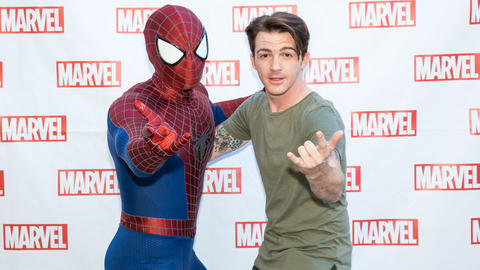
There’s not much to explain about this entry, except for me to say that Drake Bell is just funny as Spider-Man. The animated series Ultimate Spider-Man is something of a mixed bag due to some basic humor and an overabundance of Marvel character cameos, Spider-Man himself is fairly well-written and energetically voiced by Drake Bell, and while the show leans more on the comedic side, Bell also manages some heartwarming and endearing moments whenever Peter begins to question his spot in the greater Marvel pantheon of heroes. Listening to Peter’s energy and snappy dialogue, you’d probably get the sense that Drake Bell had a lot of fun recording for the character, and for making an otherwise okay show all the more engaging, he more than earns a spot on this list.

7. Christopher Daniel Barnes (Spider-Man: The Animated Series, 1994-1998)
e5cc767a583e25c853301f7cceaa366a2214b95bv2_hq.jpg

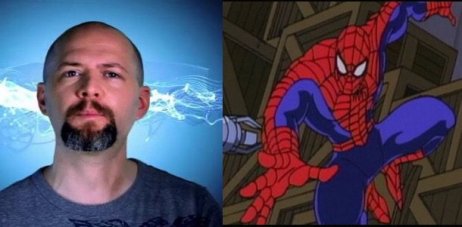
I know there’s a lot of nostalgia for the 90’s Spider-Man animated series, but there’s a lot of flaws to it (namely in the way of animation and accidentally campy presentation). Sadly, I don’t think that Christopher Daniel Barnes is free from those flaws, either. In fact, he gives a relatively low-key, everyman voice to this show’s Peter Parker which, while not necessarily bad, fails to truly be remarkable in comparison to higher entries on this list. Still, that’s no fault of Mr. Barnes, who nonetheless manages to be fairly believable whenever Peter is out of his spider-suit. In fact, while his delivery as Spider-Man is somewhat stilted in more dramatic episodes, his handling of the quips Spider-Man is most famous for seems to be channeling the likes of Dan Gilvezan from the old cartoons, which is something to be admired. Similarly, later entries on this list seem to be channeling his take of the character, so Christopher Daniel Barnes makes this list out of historical significance more than anything. Special mention should also be made of his performance as the “Noir” Spider-Man in the Shattered Dimensions video game. Truly, his history with the franchise runs deep.

6. Neil Patrick Harris (Spider-Man: The New Animated Series, 2003)
latest.jpg

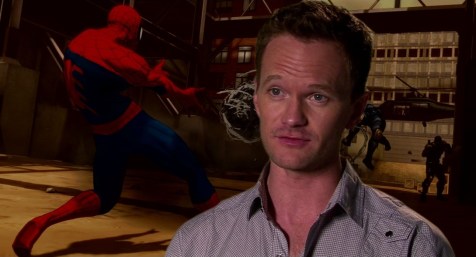
On the opposite end of the spectrum from the #8 entry is a Peter Parker performance from a much, much darker animated series. Billed as a sort of tangential sequel to the first Sam Raimi Spider-Man movie, Spider-Man: The New Animated Series is nonetheless a darker take on the Spider-Man mythos, with iconic villains offer suffering more permanent, costly defeats than in previous adaptations. Thus, Neil Patrick Harris had no easy task on his hands: present a more grounded and troubled Peter Parker without losing the character’s inherent charm both in and out of the costume. Thankfully, Harris has proven numerous times that he has the natural charisma to strike an almost perfect balance between those two sides, and his voice work creates the idea that Spider-Man’s impish, wisecracking charm and Peter’s dry, yet reserved sense of humor are essentially one in the same. Actually, : “natural” is the best way to describe his performance here- Neil Patrick Harris is neither too theatrical nor too wooden as Peter or Spider-Man, and his might actually be my personal favorite take on the character. Pretty much the only thing keeping him from being higher on this list is that the show he was in was as short as it was. Still, there’s an actor just as good as him in the role of Peter Parker, and he’s had more than enough material to demonstrate that…

5. Josh Keaton (The Spectacular Spider-Man, 2008-2009)
spotlight-interview-with-josh-keaton-of-spectacular-spider-man_feat.jpg

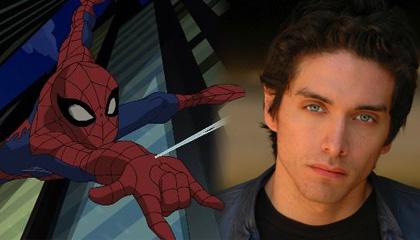
As far as portrayals of the traditional Peter Parker go, Josh Keaton’s take on the character in The Spectacular Spider-Man may truly be the best in terms of performance, writing, and tonal approach. Though the story of Peter’s spider-bite, loss of Uncle Ben, and rise to heroics aren’t modified too much here, their execution is as meticulous and well-handled as an animated series could hope to be, and Josh Keaton’s experience with youthful, cocky characters makes for a spot-on and endearing performance. It’s not all fun and games here, either. Sure, Keaton does well to make Spider-Man’s quips funny, but he’s got just as much of a grip on the character’s vulnerability in the face of his tougher foes and everyday adversities. A personal highlight of mine is his voice acting during the Venom arc, and Keaton is perfectly on-point when Peter attempts to shake Eddie Brock loose from the mental grip of the symbiote that once formed the black suit. This show was also cut short fairly quickly, but it’s easily the best written and acted for a show of its length, and thanks to its focus on the already well-performed Peter Parker, ranks high up as one of my personal favorite “Spider-Man” media.

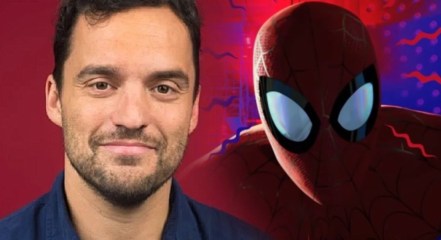
4. Jake Johnson (Into the Spider-Verse, 2018)
spider-man-into-the-spider-verse-jake-johnson-peter-parker-1115676-1280x0.jpeg

The latest “Spider-Man” film took a reverent approach to Spider-Man as a symbol of accessible heroism, which makes its approach to Peter Parker himself all the more remarkable for how deconstructive it was in its portrayal of him. This Peter Parker is more or less the one we know, albeit one suffering from a sort of twilight period of his career: he vehemently fears commitment to his recently-divorced wife Mary Jane, and his current, lonely run as Spider-Man was a direct result of his fear of having children. What makes portraying this Peter so difficult, though, is the task of naturally conveying his growth into a different role: that of a mentor to Spider-Man newcomer Miles Morales. Jake Johnson, however, gives a hilarious and nuanced performance that effortlessly evokes the kind of regret that needs to be glimpsed through the snide remarks and laid back approach to danger. Self-aware as this portrayal is, however, he still very much is the Peter Parker we know: cocky, resourceful, and ultimately heroic. I’d talk at greater length about Jake Johnson’s spot on work for this Peter’s character arc, but I’d rather just tell everyone to go see Spider-Verse. So go see Spiderverse after this list.

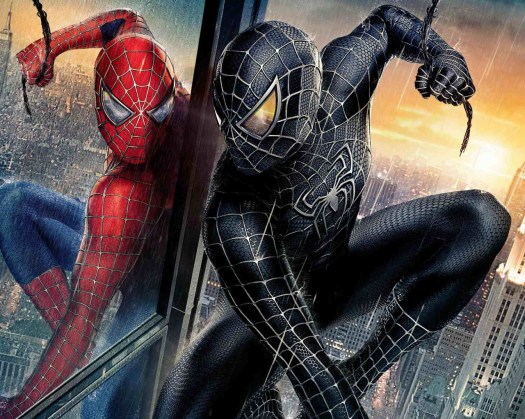
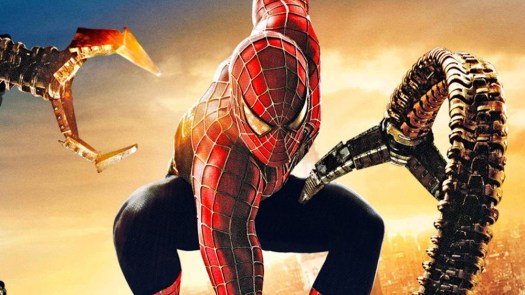
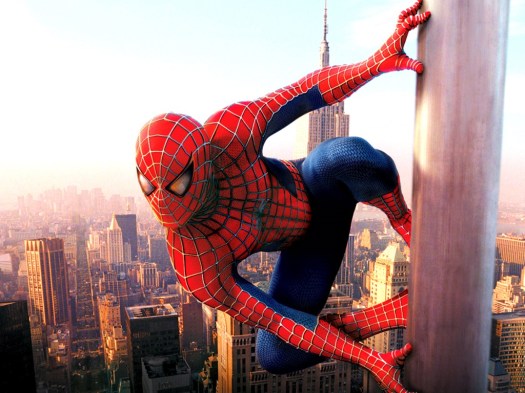
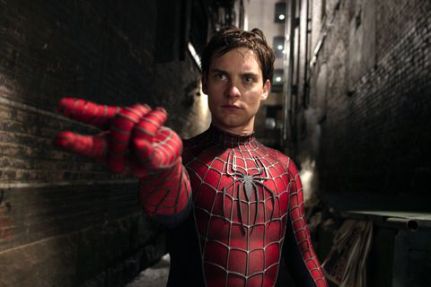
3. Tobey Macguire (The Sam Raimi Trilogy, 2002-2007)
1466160850-tobey-maguire-spider-man-2.jpg

Yes, Tobey Macguire’s performance as Peter Parker can hardly be described as nuanced, or subtle, or technically good, in harsher eyes. That doesn’t change the fact that this Spider-Man was a standard-setter for future Spider-Man movies, or the fact that Macguire is still engaging in spite of that engagement sometimes being for the wrong reasons. His Spider-Man dialogue does go overboard in terms of cheesiness several times, but as Peter Parker, he never ceases to be endearing or relatable in his own ways. In Tobey Macguire, we see a perfect reflection of one of the most forgotten aspects of Spider-Man: he is an everyman and a wallflower, powers or no powers. He might not be the perfect Spider-Man, but he is the perfect Spider-Man for the kinds of thematic elements and stylistic choices the Sam Raimi movies wore on their sleeves. In fact, I’d say that this was the best live-action Spider-Man in terms of being the most “human” had it not been for…

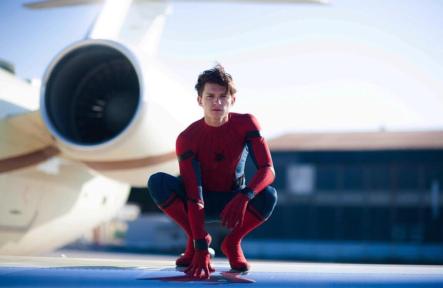
2. Tom Holland (The Marvel Cinematic Universe, 2016-Present)
tw8g98x8pzkz.jpg

He might be fighting for screen time with the rest of the sprawling cast of the “Marvel Cinematic Universe”, but that should never take away from the fact that Tom Holland has turned in veritable tour de force performances as Peter Parker in Captain America: Civil War, Spider-Man: Homecoming, and Infinity War. For quite a while, he unquestionably had the number one spot in my eyes, since his seemingly effortless balance of wallflower insecurity and witty charm struck me less as “acting” and more as “channeling the character into reality”. Holland’s is a performance I consider pretty much perfect, and that extends to little elements, such as his subtle New York accent and his slightly stammering, Bob Newhart-esque delivery. Never once does he let the man or the mask eclipse each other, and my complaint that there isn’t enough of his seems to be a short-lived one with the announcement of Spider-Man: Far From Home. Though I can’t wait to see more of Holland’s Spider-Man, though, only one can top the list, and what’s so remarkable is how the final entry encapsulated the essence of “Spider-Man” so perfectly… in something I just reviewed a few months ago.

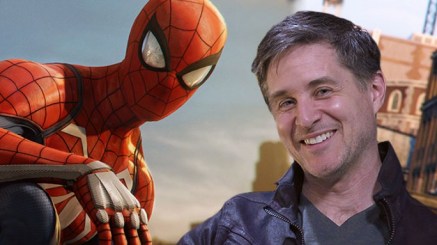
1. Yuri Lowenthal (Marvel’s Spider-Man, 2018)
yuri_2D00_610_0.jpg

Oh, how the internal debate raged within me about whether Tom Holland or Yuri Lowenthal deserved the number one spot. After all, the voice acting juggernaut could be described with every adjective that Holland’s Peter Parker encapsulates: hilarious, inspiring, entertaining, and above all, painfully vulnerable. What Mr. Lowenthal has working in his favor, though, is the screen time his Peter is given, and the weight of Spider-Man’s themes as conveyed by the interactive medium through which he portrays him. Playing the Insomniac “Spider-Man” game means a lot of things: having a blast with the web-swinging, facing off with iconic villains, and hearing every quip and observation that Peter has for every occasion. That last point, however, is what really matters, because more than any of the previous Peter Parker’s, we get to see firsthand what goes through his mind as he juggles the weight of his heroics and his relationships. From the gameplay’s channeling of Spider-Man’s spirit to the writing and acting’s perfect capturing of Peter Parker’s strengths and weaknesses as a hero and as a human being, the recent Spider-Man game has given us the most vivid picture of New York’s hometown hero, and that rings especially true of Yuri Lowenthal’s voice work. I’m glad, too, that I was able to end Spider-Month on such a high note. More on different movies next time.
Rich Reviews- Spider-Man: Into the Spider-Verse

spidey11.jpg

That films like Spider-Man: Into the Spider-Verse don’t happen more often is a sad state of affairs, especially given the long and storied history of both the Spider-Man character and other superheroes under the pop culture radar. Still, if any hero were to get the loving, multiverse-wide film treatment, the first probably would have been Spider-Man. After all, as we’ve covered over the last few reviews, the character and the costume have seen many a different interpretation for decades on end between comic books, film, video games, and other such commercial and artistic media. Into the Spider-Verse had no small task in its narrative: Encapsulate everything that made the hero that made him (or her, in many stories) so enduring and popular, and make that sort of ethos the core of the film’s thematic ambitions. This film is not only remarkable for succeeding on those fronts, but for reminding its audience that potential for films (and not just films about Spider-Man) have limitless potential if people are willing to do something new and passionate. There’s a lot to talk about, so pardon the lack of an extensive, ramping intro. Oh, and the potential for light, albeit marketed spoilers.

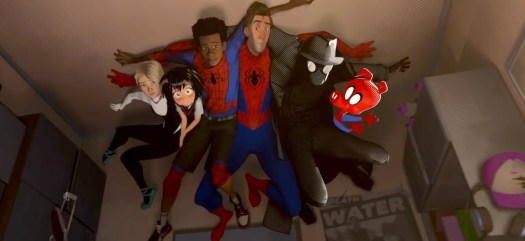
Miles Morales (Shameik Moore) is an impending boarding school student whose high school-bred anxieties could be considered the biggest concern in his life had he not lived in a New York populated by crime of both the typical and super-powered varieties. That’s not to say school is any easier for him, though: his police officer father, Jefferson Davis (Brian Tyree Henry) has colossal expectations for him, which only heightens Miles’ fear of failure, and after a walk through the city, Miles’ fear for his own safety becomes just as omnipresent after gaining powers from a familiar spider bite and being tasked with stopping an experimental dimensional portal by a dying Spider-Man, soon revealed to be college graduate Peter Parker. Though all of New York’s in mourning, Miles has little time to ruminate, as the portal Spider-Man discovered leads the primary universe Peter Parker (Jake Joshnson) right to Miles. He’s asked by Miles to show him the ropes (or webs, as it were), but Peter refuses at first, having suffered his own heartbreak involving a divorce in his own world and being determined to return home. Still, Miles’ determination soon sways Peter into becoming his mentor, and it’s not long before the collision of universes leads them to Spider-Gwen (Hailee Steinfeld), an alternate, spider-powered incarnation of Gwen Stacy on her own mission to stop the villains behind the creation of the portal. Joining them still are spider-based heroes from other universes, including future born, Japanese-American mech pilot Peni Parker (Kimiko Glenn), a hard-boiled, trench coat clad Spider-Man from a black and white world set in the 1930s (Nicolas Cage), and a cartoon pig with spider powers, dubbed “Spider-Ham” (John Mulaney). Simultaneously amazed and terrified at the prospect of being his world’s hero, Miles is faced with a choice with all of the odds against him: rise to the daunting standards set by the “Spider-Men (and women)” of the worlds endangered by the portal… or refuse the call, and doom those heroes to disintegration and his city to crime.

As I implied in the intro to this review, Into the Spider-Verse is a fantastic movie, taken both as a love letter to the character and as a standalone film making use of the medium of animation. I’ll naturally be discussing the second category first, since the movie’s distinction as a mainstream animated film means that the Hollywood higher-ups might actually give the medium some long-overdue credit for what kind of stories can be told with it. To start, first impressions of the movie’s toying with frame-rate and choppy motion might have been mixed at first, but its execution as a whole has surpassed all expectations, as the animation as a whole is colorful, vibrant, and still dripping with energy, especially in the action scenes, and those frame-rate tricks mean the more restrained scenes of dialogue flow unnaturally smoothly into the fights and web-swinging set-pieces. What’s also remarkable about the visual elements is the use of comic book effects and formats: dialogue boxes will pop up when a character’s thoughts are being spoken, sound effect captions will subtly pop up in the middle of an action, and the transitions are framed like moving along comic panels. What’s going on here is a bold act of defiance against conventional Hollywood animated movies: a sacrifice of realism in exchange for bold and dynamic style. Against any odds, this style of animation has few, if any, hiccups, and the result is the perfect cinematic equivalent of an “animated comic book”. What’s more, the story being told through these visuals is unambiguously intended for broader audiences. That’s not to say that kids couldn’t enjoy it (after all, it is a “Spider-Man” movie), but the increase in darker storytelling elements and how they’re balanced against the typical beats hit by other children’s animated movies means that there’s universal enjoyment to be had with it.

Visuals and direction are far from the only things going for this movie, though. The narrative elements here really do serve as a veritable love letter to Spider-Man, and not just as a superhero character. Everything encompassing the history of the Spider-Man name is encompassed here through the use of the multiverse framing: Spider-Man as a hero, as a pop culture icon, and as an object of commercial tie-ins is put up into one giant display, and the story wears its love for all of this on its sleeves. The film’s thematic ambitions are far from subtle, but it’s an understated one about Spider-Man as a hero: anyone (be they men, women, children, or… pigs) with the means and the heroic spirit has the potential to be at least a little bit like Spider-Man. None of this message would have resonated without likeable characters, but Into the Spider-Verse has no shortage of that, as each of them are wonderfully written, well-voiced, and endlessly endearing in their own ways. Jake Johnson’s take on Peter Parker is a primarily de-constructive one, as he puts the immaturity and sarcasm of the character on full display, but it’s hard to outright hate the character thanks to the charm he exudes and the focus the story puts on his growth alongside Miles’s own arc. Speaking of which, Miles’s growth as his world’s Spider-Man and as an adolescent protagonist lends itself a a cavalcade of hilarious, heartwarming, and heart-wrenching moments, and this is due in no small part to Shameik Moore’s natural youthfulness and painfully authentic vulnerability. Hailee Steinfeld also continues to be a master of nuance even in animated form as Gwen Stacy, as her initially rough, detached demeanor is deceptively difficult to sell like she does in this movie. Special mention must also be made of Kimiko Glenn’s cheerful, charming voice work as Peni, along with the hilarity of Nicolas Cage’s channeling of Humphrey Bogart as the Noir universe Spider-Man and John Mulaney’s channeling of Mel Blanc as Spider-Ham. The only criticism I could muster for any of these characters is that I wanted more of them, but even that seems like a complaint that will soon be short-lived with how well the movie is doing.

There’s so much to praise and gush about in Into the Spider-Verse that I feel bad even approaching it with my typical review format, but I’ll conclude that the film is a beautifully animated, hilarious, and emotionally overcharged send-up of Marvel’s flagship superhero, and thanks to the universal nature of the lessons it breeds, it’s one that everyone, Spider-Man fan or not, should treat themselves to. I hope my dancing around spoilers has encouraged you to do so. See this as soon as you can.

Rich Retrospectives- The Amazing Spider-Man 2

tmFDgDmrdp5DYezwpL0ymQKIbnV.jpg

…And people still say that “dancing emo Peter Parker” is as bad as it gets for Spider-Man. To those readers, I say:

“Was this the alternative you wanted?”

After the messy, yet still enjoyable Spider-Man 3, one would think the polarized reactions and jokes at that movie’s expense would have bred some sort of lesson about the dangers of over-reaching franchises. Because there must always be a time in which a studio like Sony just can’t help themselves, though, The Amazing Spider-Man 2 sets itself up as a franchise starter that shoots for the stars, only for the proverbial spaceship to hit a meteor on the way due to the drunken, complacent driving of its crew. Flawed as it was, The Amazing Spider-Man was still a good film in enough places that it at least could be classified as “decent”. Still, with how much the characters took a back seat to the overarching plot of the attempted series, one could be forgiven for believing that all the good from the first film happened in spite of the story and creative process, and not because of it. One could make the argument that the old “Spider-Man” movies had just as much enterprise-born cynicism behind it, but their presentation, writing and pulpy energy at least made it impossible to be bored, even in its most flawed installment. The Amazing Spider-Man, flawed as it was, could have some energy pumped into it by the sequel, and it could have made for a step in the same sort of fun direction. Instead, what we got in The Amazing Spider-Man 2 was an utterly unfocused, thoughtless, and desperate movie that simply exists to set up a future cash flow it so desperately wants, but never truly earns.

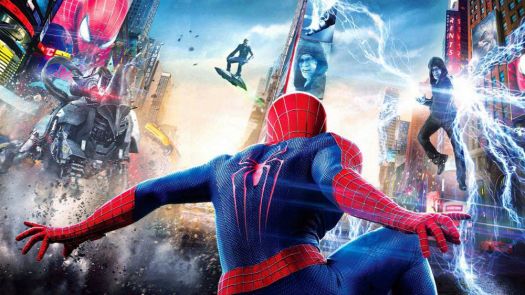
A year or so after the events of the first film, Peter Parker (Andrew Garfield), haunted by the final wishes of Gwen Stacy’s (Emma Stone) father, decides to end the relationship he’s since started with her. Understandably heartbroken, Peter decides to continue protecting New York as Spider-Man and investigating the scientific efforts of his deceased parents, finally getting a much needed lead in the form of lifelong friend (and by “lifelong”, I mean “never mentioned in the last film“), Harry Osborn (Dane DeHann). It’s through exchanges with Harry that Peter learns that his parents were working on a long-term project: a cure for a genetic disease that Norman Osborn is currently dying of. This project somehow resulted in the creation of the arachnid that bit Peter, and Harry theorizes that Spider-Man’s powers are somehow linked to the cure. Not wanting to be doomed as his father is, Harry becomes determined to obtain a blood sample from Spider-Man in order to heal himself (something that Peter has a problem with for no decipherable reason).  To make matters even more complicated, Oscorp worker and nerdy Spider-Man fan Max Dillon (Jamie Foxx), is rendered a human mutate by a freak accident involving electric eels at the Oscorp labs, and takes out his supposed neglect from the hero he deemed his friend by turning to super-powered crime as Electro. Peter has yet to realize is, but Dillon is far from the only threat he’ll face, as it becomes increasingly apparent that tragedy, hardship, and a cavalcade of villains are lurking not far behind him.

Oh, and The Rhino (Paul Giamatti) is in this movie.

Now, in my attempts to be fair and balanced, I will begin this review by listing all of the positives of The Amazing Spider-Man 2:

  • This movie has the unambiguously best costume of any live-action “Spider-Man”.
  • Andrew Garfield and Emma Stone manage to be occasionally adorable in their interactions.

If my prior plot synopsis seemed a bit haphazard and all over the place, the blame cannot be placed strictly on me. That sort of structure is, in fact, how the movie deliberately plays out, and the only signs of actual pathos are in the aforementioned romance scenes, which are at least better paced and written than in the first movie. Every other narrative element serves to hinder whatever central conflict there is. Electro, for instance, is a laughable side character turned villain. His pre-transformation screen time totals maybe ten minutes, the entirety of which only establishes that his is socially inept and that being saved by Spider-Man once made him a rabid fan. Harry Osborn/Green Goblin doesn’t fair much better, either. Dane DeHaan’s best efforts don’t change the fact that his turn to main antagonist is an easily preventable plot point that Peter had no reason for instigating other than the script demanding it. Speaking of flowing as the script demands, the over-hyped, under-cooked mystery surrounding Peter’s parents dominates much of his motivation and the film’s run time, and even though it’s had two movies to tug viewers along, it still lacks any bearing on the story of Peter’s struggles as Spider-Man. Furthermore, what once was hackneyed and uninteresting in the last film becomes infuriating in this one upon the revelation that Harry Osborn exists in this continuity, since the investigation that ate up so much screen time could have ended the second he entered the narrative. And what, pray tell, does the years-long mystery of the death and work of the Parker parents lead to?

Somehow, against all logic, the creation of the tech meant to be used by the Sinister Six in future films. There’s “suspension of disbelief”, and then there’s just “suspension of human patterns of logic”.

I’m usually not one for being this caustic in my written reviews, and I really wanted to count all the positives of The Amazing Spider-Man 2, but the complete ineptitude of this film is on display in every big point and every small point (such as the self-destructive nature of the lemmings they call civilians in this movie, and the shoehorned, immeasurable instances of Sony product placement). I might have forgiven all of this, except the movie never tries to have fun or wear its heart on its sleeve like any of the previous few scenes do. I may have been lighter on it when it came out, but history has only vindicated my hindsight criticisms of this waste of talent and concepts. The Amazing Spider-Man 2 is possibly remarkable for being the stupidest in a series of movies that had the Tobey Macguire emo dance, but that’s about it. Avoid.


Rich Retrospectives- The Amazing Spider-Man

16851020.jpg

After time came and went for the Sam Raimi “Spider-Man” films, Sony opted for a new reboot series of Spider-Man films, dubbed “The Amazing Spider-Man”, headed by director Marc Webb. The planned series, however, ended with just two movies after Sony and Marvel came to a sort of impasse with the “Spider-Man” film license, resulting in the previously-discussed Spider-Man: Homecoming and several Marvel Cinematic Universe appearances. Prior to this, however, this new take on “Spider-Man” seemed to be a profitable feather in Sony’s cap, and in spite of mixed reception soon to follow, the first of these films received decently positive reviews overall. Looking back, I can see where the positive reaction came from. The first “Amazing Spider-Man” film does capture the wonder and essence of the character in places, and is populated with a likeable, talented cast. Still, in numerous other ways, I can’t help but believe that Sony took a self-inflicted shot to the proverbial foot with the decision to make a more “grounded” and less theatrical take on the character. When it wants to be a “Spider-Man” movie, it succeeds fairly often, but when it’s trying to be a “different” movie than its predecessors, it completely face-plants just as much.

Beginning at an earlier stage of the life of Peter Parker, The Amazing Spider-Man sets the stage for the story we know by showing an orphaned Peter Parker (Andrew Garfield) rendered an orphan upon the murder of his parents and adopted by Ben and May Parker (Martin Sheen and Sally Field). Upon growing up, he comes to be a brilliant student of science, but ostracized by his peers for his (supposed) eccentricity and nerdy tendencies, with even his romantic efforts towards the beautiful and intelligent Gwen Stacy (Emma Stone) falling flat with her policeman father (Dennis Leary) looming over them. Things take a turn from the thrilling, however, when he is bitten by a genetically modified spider while investigating Oscorp for signs of his parents’ history and granted its proportional strength, senses, and climbing ability. He also manages to invent bio-mechanical web-shooters from schematics retrieved from the laboratory. Peter learns to use his newfound powers to more selfless ends, however, when his Uncle Ben is killed by a robber he ignored on the street, and soon finds that New York truly needs a hero when the experiments of Dr. Curt Connors (Rhys Ifans) lead to the rise of a reptilian menace birthed from his desire to regenerate a lost limb.

Before I begin the review proper, I want to clarify that the darker take on the Spider-Man character need not necessarily be a bad thing (See MTV’s Spider-Man Animated Series for proof positive of that). That said, like all things, the quality of such a decision is all in execution. Still, there are a lot of good scenes peppered throughout this one. The web-swinging scenes, for instance, are well-executed, as are quite a few of the action and heroic scenes. One such (fairly spoiler-free) humanizing moment is a scene in which Spider-Man struggles to save a scared boy stuck in a car hanging alongside a highway bridge, only succeeding in doing so by unmasking to calm him down. Moments like this tap into the spirit of Spider-Man, and it’s one of only a few scenes that I can remember being edited much better than a majority of the plot-centered scenes. In fact, it doesn’t take long for the editing problems to make themselves terrifyingly apparent. Quick fades to black are used where they’re not necessary, and the scenes setting up the origins of Peter as Spider-Man are erratically, often comically rushed. I can understand trimming such scenes in order to avoid origin fatigue, but the problem here is that the establishment of Peter as a character takes a back seat to the overarching mystery of Peter’s parents, which goes nowhere save for setting up future movies. Even then, this version of Peter Parker is too conventionally “appealing” and inconsistently characterized to be wholly likable. Andrew Garfield is a fantastic actor, and when he finally gets a chance to be Spider-Man, he delivers well in the way of quips and one-liners.

As Peter Parker, though, he lacks the awkwardness and nerdy ineptitude that defines Peter throughout every adaptation, and he flip-flops between “quiet, cool intellectual” and “angry, vengeful narcissist” according to the tone of the plot as it progresses. Gone is the self-reflection following Uncle Ben’s death, replaced with pure vengeance, and the Spider-Man costume setup becomes less about crafting a heroic identity and more about avoiding the authorities. The result starts Peter out as mean-spirited, and it takes far too long for Garfield’s natural charisma to finally render this Peter Parker sympathetic. The romance between Peter and Gwen Stacy also ranges from passable to unbearable, and even when their romantic improvisation is passable, the scenes in which they take place drag on for much too long, and probably would have benefited from a more concise script. This is to say nothing of the film’s villain, whose blasé motivations and franchise-mandated connection to the uninteresting mystery render him completely superfluous until he reveals his hilarious plans to turn the population of New York into lizards. That’s not to say there’s absolutely nothing to enjoy here: Andrew Garfield does an admirable job in spite of the odds being against him, and the rest of the cast (Emma Stone especially) manage natural and on-point performances, but The Amazing Spider-Man tries much too hard to be “not the Sam Raimi movie” that it ends up having no distinct identity of its own. Still, there was potential for expansion, and Sony clearly had the want for it. More on how that completely failed in the next review.


Rich Retrospectives- Spider-Man 3

16848722.jpg

Sometimes, an audience just doesn’t know what it truly wants, and this is especially true of adaptation. If there’s anything that past superhero adaptations have proven, it’s that being at the mercy of what would draw in the biggest crowd is just as risky as going in a different direction than expected with an iconic hero. It was probably easy for people in 2007 to say they wanted to see even more iconic Spider-Man villains in the next movie, but in execution, the realization of that wish ended up as messy and cluttered as these sorts of cinematic fan service inevitably tend to be. The first film wore its heart on its sleeve, and its strength came from its focus on the wonder and thrills of Spider-Man’s origins. The second one was flawed, but admirable in its bid to expand on the dramatic themes of the character, and both films benefited from a strong sense of focus on both its characters and the threats against them, something the third film simply lacked by comparison. That said, I’m in the camp of people who believe that retrospective criticism of Spider-Man 3 was fairly pedantic in hindsight, and while it is certainly a flawed conclusion to Sam Raimi’s trilogy, it’s fairly reassuring to see that the core spirit of the first two movies is still fairly present in this one.

A year has passed since the defeat of Doctor Octopus, and Peter Parker (Tobey Macguire) now has a semblance of stability in his life, having cemented his relationship with Mary Jane (Kirsten Dunst) and even planning to propose to her. Even with this upturn in his luck, however, the problems that his identity as Spider-Man breeds are still lurking ever closer, as petty criminal Flint Marko (Thomas Haden Church) gaining sand manipulating powers from experimental particle technology and Harry Osborn (James Franco) discovering the true identity of Spider-Man and using his father’s old tech to avenge his death. To make matters even worse, Spider-Man himself begins walking an anti-heroic path after a meteorite-born alien symboite attaches itself to Peter and begins fusing itself to the spider suit. This symbiote, though generous with the powers its grants, also begins corrupting Peter’s mind, and even if Peter manages to shake free from this mental grips, the entity may already have another host waiting in the wings: disgruntled journalist Eddie Brock (Topher Grace). With three villains gunning for him and the symbiote’s effects putting a strain on life outside of his costume, Peter Parker is undoubtedly in for the greatest struggle of his life.

Now, the first two movies have provided an abundance of evidence that a Spider-Man movie can be supported by just one antagonist, so the decision to shoehorn Goblin-Harry and the Venom symbiote into a story already juggling the Sandman and the requisite Peter drama is a rather iffy decision that I can only chalk up to studio mandate. I said that this movie was quite unfocused compared to its predecessors, and that is an understatement. That I was able to compress a premise synopsis into one paragraph is a miracle, because Spider-Man 3 (in this exact order) uses its run time to cover:

  • Peter’s continued struggles at a legitimate relationship with Mary Jane
  • The Black Suit Spider-Man arc
  • The super villain origins of Sandman
  • Harry Osborn’s lust for revenge and rise to villainy
  • The love triangle between Spider-Man, Mary Jane Watson and Gwen Stacy
  • …and the origin of Eddie Brock/Venom

The pacing and story problems don’t just end with the overarching plots, though. Individual scenes come and go at the blink of an eye, and while many have poked fun at the “Emo Peter dance scene”, my problems with it do not concern its hokey nature (though it certainly is that). Rather, the quick transition from that scene into Peter’s shocked realization that he is becoming more villainous is emblematic of the film’s greater problem of lacking a focus and moderation. That’s certainly not to say the movie doesn’t have its strengths, since James Franco was more than able to carry the conflicted nature of Harry’s character in spite of his compressed screen time, and Thomas Haden Church works equal wonders as Marko/Sandman. The character’s subplot about stealing for his poor, sick family is about as rushed as everything else in the movie, but Church gives the character sympathy coated in gruffness that feels like its coming from a genuine place. Its in areas like this (along with the continued excellence of the action scenes and effects) that Spider-Man 3 continues in the series’ heartfelt ethos, and it’s because of those moments that I’m not inclined to call it the disaster that fans have labeled it over the years. That said, if there’s one criticism that definitely does hold up about the film, it’s the ones surrounding Venom. Peter’s arc concerning the rejection of the symbiote is fine enough, but Venom himself is so shoehorned into the story that Brock’s turn to villainy by the film’s end is just laughable. I won’t blame Topher Grace too much for this, but the lack of meaningful development given to Brock means that he had to overcompensate in his performance by way of hammy acting (even for Spider-Man) and cringe-worthy attempts at humor and one-liners.

So, all in all, Spider-Man 3 can’t be accused of being overtly bad, but over-ambition crippled its narrative more than it ever did for the second film. While not a bad “Spider-Man” film, it’s certainly a bad sequel, and it’s a shame that Sam Raimi never got that planned fourth film to recover from it. More on what replaced that concept in the next review for “Spider-Month”.

Rich Retrospectives- Spider Man 2

static1.squarespace.com.jpeg

The previous review for “Spider-Month” saw me revisiting the first movie in Sam Raimi’s series of “Spider-Man” movies, and I was happy to see that there was more than my own personal attachment to enjoy about it. Even after being rendered somewhat dated, I still believe that the first “Spider-Man” movie was an entertaining, emotionally charged movie with a lot of great action scenes spot-on performances, and a lot of love for its source material. It was also a record-breaking hit at the box office, rendering a sequel almost inevitable. Spider-Man 2, released just two years after the first film, is considered by many fans to be the best “Spider-Man” film ever made, citing the root of its acclaim as the increased focus on the tragedy and inherent dramatic tension that Spider-Man as a character is cursed with. Indeed, this film’s focus has shifted away from the wonder and joy of Peter Parker’s super-heroism, opting instead to focus on the stress of that heroism following the loss of numerous loved ones and the expected stress of everyday life outside his dangerous superhero career. Remember, a major theme of Spider-Man’s conception is that power breeds responsibility, so it’s only natural that a continuation of his story would be about the trials interwoven between both of his identities. All of that said, Spider-Man 2 is far from free of the melodrama that was present in the first movie, and the tonal shift does come with its own set of flaws, but the film still manages to hit the same beats as the first film while doing much, if not all, of what it sets out to do.

Set a few years after the defeat of the Green Goblin in the first movie, Spider Man 2 shows that continued heroics have taken their toll on the now college-bound Peter Parker (Tobey Macguire), whose relationships with Mary Jane Watson (Kirsten Dunst) and Harry Osborn (James Franco) have been greatly strained. To make matters worse, his Aunt May (Rosemary Harris) is in danger of eviction, and stress outside of his heroics have had restrictive effects on Spider-Man’s powers. His choice to hang up the suit, however, may have been made too soon, since a new villain has emerged in the form of Dr. Otto Octavius (Alfred Molina), a scientist and former mentor to Parker who lost his wife to a failed fusion generator test and his sanity to his malfunctioning robotic arms. No doubt headed for the toughest phase of his career as a superhero, the man who would be Spider-Man must choose between his attachments and his newfound responsibilities as the recently-dubbed “Dr. Octopus” threatens to swallow whole everything he hold dear.

As one could tell from the plot synopsis above, the stakes of this film have been significantly raised since the last installment, as have the thematic ambitions. In my review of the Insomniac “Spider-Man” game, I talked about how some of the best Spider-Man stories are the ones that explore the difficulties of balancing Parker’s double life and responsibilities between both identities. So, what do I think about its execution here? Well, my thoughts are somewhat mixed. Spider-Man 2 works quite well as a continuation of the first film’s narrative, and the story itself is well-paced and well acted enough that nothing seems unnatural or contrived (unlike another installment we’ll soon be discussing). Still, what worked so well about the melodramatic and theatrical style of the first Raimi film was that it was kept in perfect moderation with the more lighthearted elements of the Spider-Man mythos. Here, the adventurous and fun elements are turned down a notch, and the dramatic ones are brought up about two notches. In many ways, this works perfectly, and much of that is due to the performances once again. Naturally, Tobey Macguire and Kirsten Dunst continue to completely nail their characters along with the rest of the cast, but something I see as an unambiguous high point of the second movie is Alfred Molina as Octavius. Molina went on record as saying he enthusiastically prepared for the role and was ecstatic to be cast in it, and it shows, since he perfectly balances sympathy and cold villainy in spite of the transitions between those two sides being somewhat rushed. The tragedy of Otto’s situation could easily have come across as heavy-handed, but Molina being the master of nuance that he is made it feel genuine in spite of the destruction his character sows.

On the other hand, there are moments that push the limits of cheesiness, and the risk the movie often runs at being heavy-handed becomes a reality whenever the topic of Peter and Mary Jane’s romance pops back up. That’s not to say you don’t come to care for them, but Mary Jane is not particularly well-written this time around, and the extent of her perspective we get in this film is that she resents Peter’s aloofness. The on/off again tension, while effective in the film’s final moments, becomes rather tedious at times, and that’s especially true of an engagement subplot that ends up going nowhere and only serves to remind us that Mary-Jane is hurting on the inside. If I had to describe the bad side of Spider-Man 2 in one word, it would definitely be “overambitious”. It’s clear that the cast and crew continued in their investment with this story, and that they made an admirable attempt to expand on the themes established by the first film. “Admirable” truly is an apt description, and Spider-Man 2 will still get an enthusiastic recommendation from me, but I urge any readers to take that recommendation with a grain of salt. It’s an excellent sequel, to be sure, but being a sequel, you’ll probably only enjoy it as much as I and others did after watching the first movie. Between the two, you’ll get plenty of great action set pieces, charming performances, and heartfelt comic book storytelling, but their strength as a whole kind of detracts from Spider-Man 2‘s individual strengths.

Rich Retrospectives- Spider-Man (2002)

spider-man-2002.jpg

After the difficult and long-delayed review of Bird Box (for which I’d like to vehemently apologize), the best thing I thought of as a way to recover from that messy review process was to review every major theatrical take on arguably the most popular Marvel superhero of all time, in preparation for a review of a certain related cinematic outing. Ladies and gentlemen, welcome to Spider-Month.

I’ve always had something of an attachment to the web-slinging, wisecracking Spider-Man, and seeing as how I’ve reviewed both Spider-Man: Homecoming and the recent PS4 video game on this blog, I thought it only natural to treat myself to a review of every other “Spider-Man” movie to come out prior to the latest one, Into the Spider-verse. Naturally, however, the aforementioned “Spider-Man” outings will not be discussed this month in the interest of avoiding repetition. That said, I’m happy to begin with the first installment of a trilogy of “Spider-Man” films by acclaimed director Sam Raimi. This first “Spider-Man” film, often considered a standard-setter for modern superhero films, is also criticized for cheesiness in equal measure. Still, while the first of Peter Parker’s many cinematic efforts is quite dated in some regards, I’d nonetheless confident in saying that Spider-Man is still important, entertaining, and heartwarming enough to be dubbed a modern classic of superhero cinema.

The story of Raimi’s first “Spider-Man” movie is lifted almost wholly from the comic story that started it all: Peter Parker (Tobey Macguire) is a hapless, nerdy, and unimposing teenager whose life outside of academics is low on luck and high in stress. He’s awkward around the girl of his dreams, Mary Jane Watson (Kirsten Dunst), and is a popular target of bullying, and the only consolations he has are his friendship with Harry Osborn (James Franco) and the loving support of his Aunt May and Uncle Ben Parker (Cliff Robertson and Rosemary Harris). His life takes a major turn for the exciting, however, when a mishap at a local science exhibition ends in him being bitten by a genetically modified spider, the exposure to which grants him superhuman strength, a precognitive “Spider-Sense”, and the ability to stick to walls and shoot organic webs. Feeling great about life, Peter uses his newfound strength to make a profit out of professional wrestling, only to be rewarded for his youthful carelessness when an armed robber he neglects shoots and kills his Uncle Ben shortly after. This experience ingrains in him an unmistakable lesson: “with great power comes great responsibility”. Using that as his creed, the formerly meek Parker takes up a new identity (and new costume) as the friendly neighborhood Spider-Man, and receives his first true test as a superhero when a longtime family friend (Willem Dafoe) emerges as a new villain that threatens the peace in New York.

If any strength of Spider-Man could be called its greatest, it would be its faithfulness and masterful translation of the earliest comic stories. The origin story of Peter Parker is well-trodden, and was even very familiar when the film first came out, but Sam Raimi and the rest of the film-making staff adapted the story with panache and enthusiasm, and the cinematography does well to translate iconic Spider-Man moments to the big screen in ways that really give the film its own identity. That’s not to say the effects utilized to this end are flawless (with the early-2000’s CGI rendering Spider-Man weightless and awkward in certain scenes), but when Raimi’s iconic camera work and art direction are on point, they are very on point, and nowhere is that more apparent than in those iconic swinging scenes. Spot-on tributes to the original comic are also peppered throughout the spot-on casting, and though I previously mocked Tobey Macguire’s occasionally overwrought acting, there’s no denying that he perfectly encapsulated the wallflower tendencies of Peter Parker and does a decent job with Spider-Man’s deadpan wisecracks in spite of some rough reads here and there. The rest of the cast also slips fairly flawlessly into their roles, and special mentions go to Kirsten Dunst as Mary Jane, Rosemary Harris as May Parker, and J.K. Simmons as the gruff Daily Bugle publisher, J. Jonah Jameson. Additionally, while Willem Dafoe does frequently ham it up as Norman Osborn/The Green Goblin, special note must be made of his ability to credibly portray Osborn’s split personality and inner conflicts.

On top of the combined zeal of the cast and crew of this film, Spider-Man’s creative direction is also inspired in many scenes. There’s always a memorable set piece waiting in the wings as the film progresses, from Peter Parker’s first taste of web-swinging and the iconic upside-down kiss scene. Even in the film’s most overwrought moments, it never ceases to be entertaining or becomes too stale. In other words, where Spider-Man lacks in subtlety, it more than compensates through sheer melodramatic style. “Melodramatic” is the operative word here, though, and there are times where superhero cheese does detract a bit from the narrative. Still, it’s that kind of flair that came to define the modern superhero movie, and that alone shouldn’t take away from the importance of Sam Raimi’s first Spider-Man movie. It’s vibrantly made, well-acted, and did much more good than harm for superhero movies to come. More on that in the next review.

Rich Reviews- Bird Box

image.jpg

WARNING: The subject of the following review contains references to suicide and the endangerment of child characters. Reader discretion is advised.

ADDITIONALLY: The review itself contains light, non-specific spoilers. Those wanting a quick, spoiler-safe review should only read the intro and concluding statement.

I’m aware that I’ve probably said this for many a subject of review, but Bird Box is possibly the most difficult movie I’ve ever had to talk about. Even seeing it when it first came out on Netflix in early December didn’t grant me sufficient time to properly develop my thoughts on the platform’s latest hit. Based on the post-apocalyptic novel of the same name by Josh Malerman, Bird Box (much like the book that inspired it) was released years after a string of such stories grew in frequency and popularity in literature and film, so as to stand out and not get “caught in the wave”. Smart as this decision was, it’d be reductive logic to say that’s all the movie had going for it. The reason for Bird Box’s popularity isn’t one I find difficult to explain: the premise it presents is  unique one in its genre, and its execution in the film is thrilling, suspenseful, and presents worthwhile themes concerning the human condition. Still, for all the intrigue involved in this movie, there’s just as many things that kept me from absolutely loving it, which is why it took me well over two weeks after seeing it to properly give my own unique take on it. I want to make it clear that the reviews and articles calling the movie’s success a “fluke” are being way too snooty towards its audience, but Bird Box is flawed, and there’s a lot to dissect about it. With that, I apologize for the delays of this little review.

Bird Box starts in media res, following a cataclysmic event of which pregnant amateur painter Malorie Hayes (Sandra Bullock) is a major survivor. Though criticized in the past for shutting herself off from the world around her, Malorie’s withdrawn tendencies end up being challenged when an unseen, indescribable force starts driving people to gruesome, self-inflicted deaths upon seeing it. Though she escapes after a checkup and manages to find shelter with other survivors, she loses her sister in the chaos and finds that the neighborhood survivors are completely at odds with each other, being a diverse bunch under the roof of a vindictive and aggressive old man (John Malkovich) who himself is determined to keep the disaster (and any other survivors) out. To make matters worse, the world outdoors is impossible to navigate unless one is blindfolded to it, and survivors have naught but the frantic chirping of birds to detect the presence of the entity spreading the madness. Surrounded by death, betrayal, and an ever-increasing sense of detachment, Malorie must decide who to trust and how to trust in this blind, mad world.

In the interest of being balanced, I’m going to be talking about the good and bad of Bird Box in equal measure, since the two seem to cancel each other out at every other scene. First off, the first unambiguously good thing going for Bird Box is its cast and acting. The dialogue handed to much of the movie’s cast is quite a mixed bag (as I’ll soon be explaining) but every actor gives it their all and really sells their individual characters, no matter how cliched they can be at times. Sandra Bullock, for instance, was given a difficult character to make 100% palatable or sympathetic, but she slips rather naturally into Malorie’s character as a vulnerable, yet hard-nosed woman in the midst of panicked survivors. It’s a fairly seamless performance, and it was imperative that an actress like Bullock was cast in this kind of leading role. The movie also delivers well on its unique spin on the “disaster/apocalypse” genre, and save for the vaguest of hints towards the second half, the entity/force behind the mass suicides is never directly seen or depicted on screen. To that end, the cinematography and editing work wonders at setting up the kind of tension that already exists with having to be blind to the elements in the story, and what’s truly inspired in this respect is how the film plays with perspective. We never vividly see the world outdoors from outside the view of the main characters, and in spite of the difficulties that must have followed shooting those outdoor scenes, they never do lose steam or become too dull. All in all, it seems like everyone on production really cared about Bird Box in spite of operating with a few cliches, and there’s a lot done here that really makes it stand out.

Unfortunately, the thematic beats and the cliches that follow are still a problem, and the narrative’s execution and strengths can only do so much to compensate for Bird Box’s numerous flaws. For a start, while the movie does have a lot to say about human interaction and societal detachment, it sometimes goes too far in order to weave those themes into the narrative, and this usually manifests through the actions of the characters. Minor characters and even major ones get themselves into danger through embarrassingly avoidable ways at times, and they seem to occur against logic in service of those aforementioned themes. Also, though most of the cast manages to at least be engaging (thanks once again to the excellent acting across the board), the characters themselves tend to fall into well-worn and sometimes outright annoying cliches. Lil Rel Howery’s character in particular is shoehorned into being comic relief, and took away from a lot of the film’s earliest tension. The larger problem, however, lies in Bird Box’s narrative presentation. As stated earlier, the film begins in media res, during the aftermath of Malorie’s initial struggles, and I can’t understand why it was put together this way since such an intro renders much of the film leading up to that so predictable. I’m being quite vague on the contents of that intro for that reason, since knowing what happens in the present day will straight-up ruin the lead-in to that time frame. To borrow and revise a worn-out metaphor, it’s as if the production team on Bird Box took two steps forward, only to trip one step back on all the weaker narrative elements. I’d still say the movie as a whole is still enjoyable, tense, and interesting enough to warrant a watch (especially given the ease of access via Netflix), but Bird Box is just too bound by its own themes and framing to be quite as profound as its popularity would have you believe.

In short, Bird Box is good, but not great, and for maximum enjoyment, it’s best to go in as blind as its main cast.