
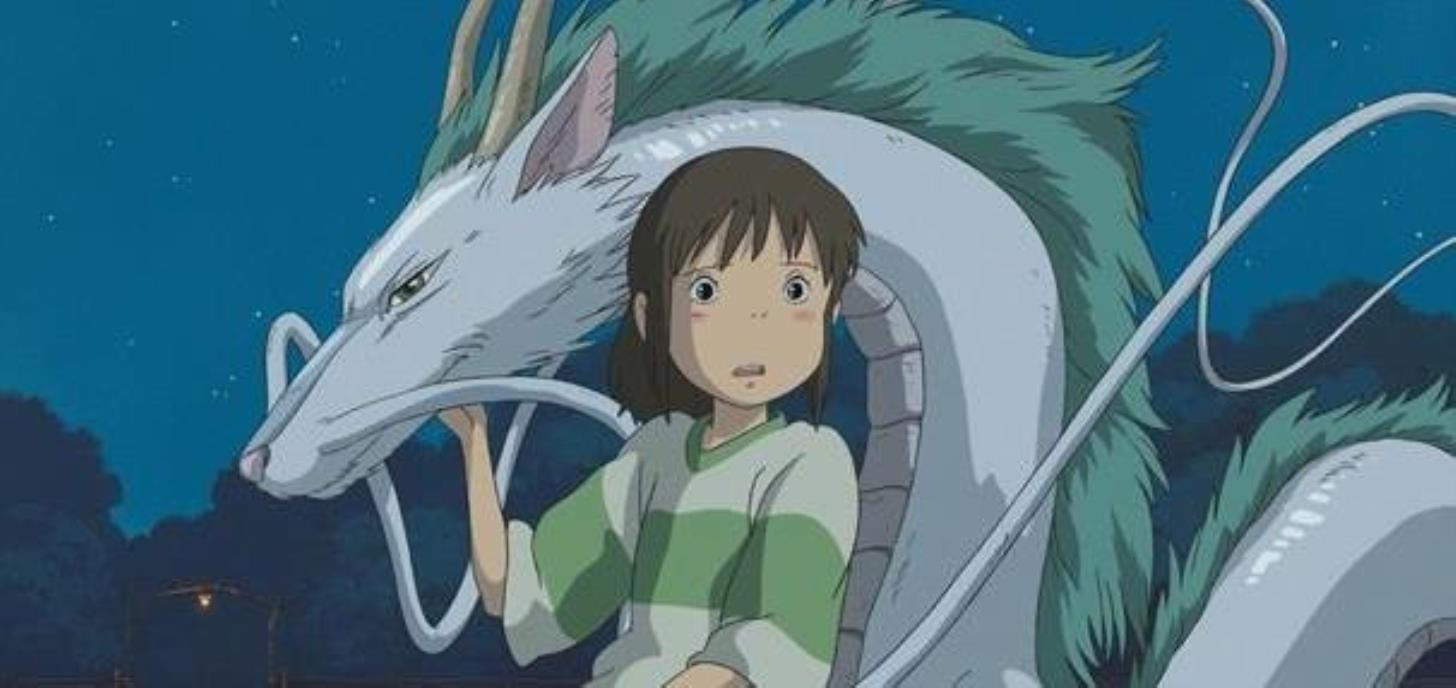
One of the most frustrating questions to ask any critic or enthusiast of narrative media like film is “What’s your favorite movie?”. This isn’t to say the question shouldn’t be asked to critics, but it does make for a rather protracted reflection on their part, since it’s impossible to name an encapsulating example of everything an individual loves about film. Still, in the interest of breaking the hiatus that I imposed on myself for way too long, I’d like to use my birthday as a platform to discuss a movie that has shaped my tastes for film as art and a narrative media since I was young: Hayao Miyazaki’s “Spirited Away”. At once a surrealist journey into the Japanese spirit world, a coming-of-age story, and a showcase for the underestimated power of hand-drawn animation, this film is something that has followed me to this day in spite of all the media I’ve consumed, and it’s unlikely to disappear from what place it has in my heart. I hope you’ll all forgive me, then, for the length at which I’ll need to gush about this one.
Ten-year-old Chihiro Ogino is on her way to move to a new home with her family, and far from happy about it. Reasonably bitter and sad about leaving home, she nonetheless punctuates the trip with petulant whining and apathy. The trip takes a bizarre detour, however, when Chihiro’s family comes across a supposedly abandoned amusement park, and while her parents gorge themselves on the food from one of the somehow-functioning restaurants, she is warned by a mysterious boy named Haku to leave the park before sundown. Chihiro heeds his warning without hesitation and rushes to the exit to leave with her parents, only to discover that the food has turned them both into pigs, and that the park thought to be defunct is actually a bathhouse and resort for spirits and deities of Japanese mythology. With no exit in sight and her transformed parents at the mercy of the bathhouse’s ethereal staff, Chihiro is left with no other choice but to secure a job at the resort and put her literal name on the line to reach her parents. To make matters worse, allies are scarce among the gods, as the resort is run by the name-stealing Yubaba, the miserly witch that runs the bathhouse and has even the most benevolent spirits under her thumb. With every possible odd against her in this strange new world, Chihiro, now called “Sen”, develops courage, perseverance, and maturity on the journey to save her family.
Explaining why this film in particular is the most important to me is ultimately a matter of personal investments and appreciations, but those are far from the only things that make me love “Spirited Away” as I do. For instance, the animation and visual storytelling are among the best of Miyazaki’s work, which truly means something given the director’ and his studio’s track record. Basing the world and characters off of yokai (Japanese ghosts) and other spirits of Japanese folklore lends itself wonderfully to hand-drawn animation, but what’s especially impressive about this film’s animation in art is how fluidly and borderline realistically the characters all move in spite of their varied designs. Every background is reminiscent of an expertly-composed painting, and every character as expressive in their movements as they are through dialogue. That level of visual expressiveness is in service of a story with a wonderfully-built world, which manages to be beautiful in spite of (or perhaps because of) its bizarre and unwelcoming atmosphere. The spirit world Miyazaki sets up in “Spirited Away” is a restful retreat to spirits, but a deathtrap for those who stumble into it, and the visuals do wonders in balancing both of these dimensions of the film’s setting. Topping all of this off is a masterful score crafted by veteran composer Joe Hisashi, which strikes a natural balance of whimsy and intensity from scene to scene.
Given the atmosphere set up in the bathhouse, it should come as no surprise that the story is mainly concerned with the cast’s struggles in adjusting to or working in the spirit world, and to this end, the characters are wonderfully written into that story. The film has a truly brilliant protagonist in Chihiro, who manages to be an endlessly sympathetic protagonist in spite starting out as a spoiled brat in many respects. Her growth as a character is made all the more compelling and endearing by the dangers of the world she’s forced to work in, and this world is populated by a diverse cast of side characters that do wonders in driving home the themes of the story. Like Chihiro, these characters (from the helpful, yet troubled Haku to grumpy, yet compassionate bathhouse workers like Lin and Kamaji) are not defined by being on either side of “good vs. evil”, but by their interactions with one another and by what good points they have amidst their unwavering self-interest. Even Yubaba, the clear antagonist of the story, manages to be entertaining and even sympathetic in some places, thanks to her interactions with the protagonist and some of the main cast. The beauty of this cast is equally apparent in either language, but the localization is especially commendable for how perfectly it captures the essence of the cast in spite of the obvious hard work that goes into translations. The cast was perfectly assembled, thanks to a choice combination of staple Disney voice actors and only a few noteworthy Hollywood actors, with Daveigh Chase’s feisty and vulnerable Chihiro being a readily apparent standout along with Jason Marsden’s nuanced Haku and Susanne Pleshette’s deliciously slimy and imposing take on Yubaba.
Obviously, the production and writing has given many a critic a reason to gush over “Spirited Away”, but upon reflection, I’ve found this film is as resonant with me as it is due to when I first saw it, and due to how well it’s held up since then. I first saw this film in the 6th grade, just a few years before high school), and I distinctly remember the story and message being different than most movies I watched at that age. For one thing, the characters were more neutral in their moralities, and there was no clear hero besides Chihiro, who herself had more than a few flaws starting out. In addition, I found myself endeared to the distinguishing elements (both visually and story-wise), and to the protagonist’s instinctual ability to survive and assist others in spite of the obvious risks. In those respects, “Spirited Away” taps into two ageless themes: the perpetual presence of adversity in life, and the natural human want to do as much good as possible in the face of that adversity. While tenacity, compassion, and openness manage to persist in this film’s story, selfishness and greed are not defeated, but rather pushed aside. Those narrative aspects are what compose the movie’s ultimate message: the value of endurance and compassion. Though I’ve been somewhat vague in the interest of averting spoilers, it’s only because seeing this movie succeed in these ways is something that changes viewers, and because everyone deserves to see that for themselves.
All of that said, I’m glad to finally be back, and (hopefully) to share one of my favorite film memories with all of you. I can’t thank you all enough for reading, and for allowing me that luxury.
 Rich Reviews