
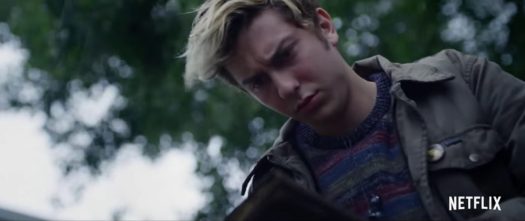
The recent Netflix film adaptation of “Death Note”, as with most American film adaptations of popular anime, was something of a controversial subject among recent films, since its two-hour structure and americanized take on the eponymous award-winning manga/anime franchise rendered changes from the source material as inevitable as the scrutinization those changes would receive from fans. Still, “Death Note” is a grounded enough thriller-mystery that an American adaptation wouldn’t be utterly impossible, and speaking as a casual fan of the beloved anime, the makers of filmed seemed to have really cared about delivering a fresh and faithful take on the story. While that dedication is shown in places, however, the American “Death Note” film falls apart due to its shortcomings in others.
High school student Light Turner (Nat Wolff) finds himself endlessly bored with his life of academic achievement as he witnesses rampant crime both in his hometown and around the world shown to him by the news. Equally bored is the “shinigami” (death-god) Ryuk (Willem Dafoe), who haphazardly drops his own “Death Note” into the mortal realm to see what it does in the hands of whatever human gets their hands on it. This notebook has the power to kill whoever’s name is written onto the pages, and Light ends up being that human. While skeptical at first, Light finds that the power is very real, and soon becomes dedicated to the elimination of evil and the rise of a new god. The string of supernatural deaths that follow catches the world’s eye, as Light is recognized as the far-reaching, invisible force of justice known as “Kira”. Roped into the clash of justice and the cycle of death is Mia Sutton (Margaret Qualley), an idealist cheerleader who discovers Light’s secret and joins him as a partner/girlfriend, as is the Interpol detective known only as “L” (Keith Stanfield), who quickly comes to a conclusion that “Kira” is one person and must face true justice.
As one could probably tell, this story is something that should be carefully and deliberately handled due to how much plot is going on at once, and certainly not the type of narrative that should start off with Light obtaining the Death Note within the first two minutes. In fact, it’s truly remarkable how quickly the film’s pacing problems become apparent, as the rules of the Note, Light’s background (and that of his family), and his transformation into Kira are all rushed out much too quickly. Compression of the plot was inevitable, given its standard theatrical length, but Light’s deliberation on the moral issues at play are completely absent, as are the charisma and honor student charm that defined the original Light Yagami in the anime. This Light is much more overt and bitter about the problems surrounding him, which can lead one to wonder how he hasn’t been traced to the killings. While this take on the character works better for an two-hour American interpretation, it makes the character much less relatable as a result of the cut time. The same rings true for Mia (named Misa in the original), for while I agree with the decision to make her a cheerleader as a smaller-scale equivalent to a pop idol, I also feel that her “romance” with Light was much too idealized and rosy in comparison to the visibly unhealthy dynamic in the original. Nat Wolff and Margaret Qualley try their best, but the off-putting takes on their characters and the rapid pace of the narrative undermine their efforts considerably.
That said, the movie is far from being bereft of positives. The direction and cinematography are both eye-catching on a visual level and reminiscent of Death Note without being stale. The shots of the Note-induced deaths, for instance, are appropriately wince-inducing and well-framed. In addition, Willem Dafoe was cast perfectly as the voice of Ryuk, as he balances otherworldly menace and borderline childish fun-seeking quite well. What really caught my attention, though, was Keith Stanfield as L, who nails the characters brilliance, quirkiness, and curiosity while making his more public appearances totally believable from an adaptational standpoint. Such elements make me feel bad about designating it as just mediocre, for while the the creators really tried, there’s simply too much going on for one movie, to the point where I can only wonder how much it would have improved if it were a full Netflix series.
By itself, the film is as compelling as it is unfocused and muddled. As a “Death Note” adaptation, it’s a loving one, but ultimately misguided. Watch at your own risk.
 Rich Reviews